Learn how to protect your Facebook posts, videos, and pages. Discover how Copyright01 offers free, legal protection for your social media content today.
In the digital age, social media has become the primary stage for creators, businesses, and influencers to showcase their work. However, the ease of sharing also makes it incredibly easy for others to steal your intellectual property. Navigating Facebook content copyright can be a complex endeavor, especially when you realize that a simple 'share' button is often used as an excuse for unauthorized redistribution. Whether you are a photographer sharing high-resolution images, a filmmaker posting viral videos, or a writer crafting insightful long-form posts, ensuring your creative output is legally protected is no longer optional—it is a necessity.
While social media platforms provide internal tools to report infringement, these are often reactive rather than proactive. To truly secure your work, you need a method that establishes an indisputable legal date of creation. This is where Copyright01 comes in, offering a free, instant, and globally recognized solution to safeguard your digital assets before they even hit the newsfeed. By leveraging advanced SHA-256 timestamping, you can create a permanent record of your authorship that holds weight in 181 countries.
Understanding Facebook Copyright Basics
Many users mistakenly believe that by posting on Facebook, they relinquish their rights to their content. This is a common misconception that can lead to a lack of vigilance regarding intellectual property. Understanding the distinction between ownership and licensing is the first step in a robust protection strategy.
Does Facebook Own Your Content?
According to Facebook’s Terms of Service, you own the intellectual property rights (such as copyright or trademarks) in any content that you create and share on Facebook and other Meta Company Products you use. However, to provide their service, you grant them a non-exclusive, transferable, sub-licensable, royalty-free, and worldwide license to host, use, distribute, modify, run, copy, publicly perform or display, translate, and create derivative works of your content.
📋 Key takeaway: You remain the owner of your content, but you grant Facebook a broad license to use it within their ecosystem. This license ends when your content is deleted, unless it has been shared by others who have not deleted it.
What is Protectable on Facebook?
Copyright law protects original works of authorship fixed in a tangible medium of expression. On Facebook, this includes:
- Written Posts: Original articles, poems, or unique brand storytelling.
- Visual Media: Photos, illustrations, and graphic designs.
- Video Content: Original reels, live streams, and produced videos.
- Audio: Original music or voice recordings included in your posts.
If you are a writer, it is highly recommended to Protect Your Writing with Copyright Deposit before publishing your best work on social media to ensure you have proof of original authorship.

The Risks of Unprotected Social Media Content
The viral nature of Facebook is a double-edged sword. While it can bring massive exposure, it also exposes your work to "content scrapers" and bad actors who profit from your creativity without permission.
Content Scraping and Reposting
Automated bots and manual "copy-pasters" frequently scan popular Facebook pages to steal high-performing content. They often repost your videos or images on their own pages to drive traffic and ad revenue. Without a formal copyright registration, proving that you were the original creator can become a "he-said, she-said" battle that platform moderators may not resolve in your favor.
Brand Impersonation and Page Cloning
One of the most dangerous forms of theft is page cloning, where an entire Facebook page is copied—including the profile picture, cover photo, and recent posts—to scam your followers. Protecting your visual identity is crucial. You should Protect Your Visual Works: Image Copyright Guide to ensure your brand assets are legally tied to your identity.
⚠️ Warning: Once content goes viral, it is nearly impossible to track every unauthorized use. Establishing a timestamped certificate of authorship before posting is the only way to maintain control over your intellectual property.
How to Legally Protect Your Facebook Posts and Videos
To defend your rights, you must move beyond the basic platform settings and look toward international law. The most powerful tool in your arsenal is the legal presumption of ownership.
The Importance of the Berne Convention
The Berne Convention is an international agreement governing copyright, which ensures that protection is automatic across 181 member countries. However, while protection is automatic, the proof of when the work was created is not. If someone in another country steals your Facebook video, having a certificate that is legally recognized in their jurisdiction is vital for a successful takedown or legal claim.
Creating a Digital Paper Trail
A digital paper trail consists of evidence that links you to the work at a specific point in time. While Facebook timestamps your posts, these can be manipulated or deleted if an account is hacked. An external, independent registration provides a secondary, tamper-proof layer of security. This is especially important for video creators; you should learn How to Copyright Your YouTube Video Content and apply similar principles to your Facebook uploads.
Using Copyright01 to Secure Your Facebook Intellectual Property
Copyright01 provides a streamlined, free service designed for the modern digital creator. By registering your Facebook content here, you gain a level of protection that social media platforms simply cannot offer.
Instant SHA-256 Timestamping
When you deposit a file—whether it’s a screenshot of a post, a video file, or a PDF of your page layout—Copyright01 applies a SHA-256 cryptographic hash. This acts as a digital fingerprint. This fingerprint is then timestamped, creating an unalterable record. If a dispute arises, you can Verify a certificate to prove your work existed in its current form on a specific date.
Global Legal Recognition
Because Copyright01 adheres to the standards set by the Berne Convention, your certificate is valid evidence in courts across 181 countries. This is essential for creators whose content is shared globally. Whether you are looking to Protect Music and Video Copyright Online or secure a simple text post, the global reach of our registry ensures your rights are respected worldwide.
Step-by-Step Registration Process
- Prepare your file: Export your Facebook post as a PDF or save your video/image file.
- Upload to Copyright01: Create a free account and upload your content.
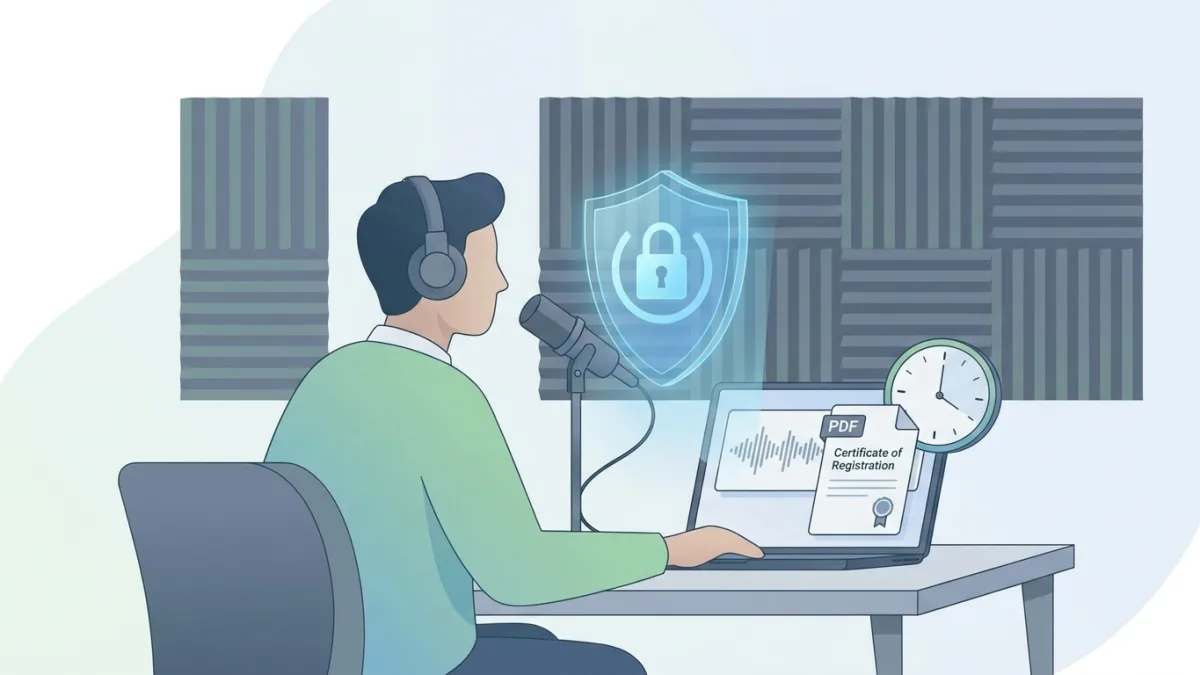
- Receive your certificate: You will immediately receive a PDF certificate containing the SHA-256 fingerprint and timestamp.
- Public Registry: Optionally, you can list your work in our Public deposit registry to deter potential thieves by showing your work is officially registered.
💡 Tip: Register your content in batches. If you post daily on Facebook, create a weekly compilation of your posts and images into a single document and register it to save time.
Comparison: Platform Tools vs. Independent Registration
| Feature | Facebook Rights Manager | Copyright01 Registration |
|---|---|---|
| Cost | Free (but restricted access) | Free for everyone |
| Legal Weight | Platform-specific policy | International Law (Berne Convention) |
| Evidence Type | Internal database logs | SHA-256 Timestamped Certificate |
| Scope | Only within Meta platforms | Valid for all platforms and offline |
| Permanence | Lost if account is banned | Permanent independent record |
As the table shows, while Facebook's internal tools are useful for automated takedowns, they lack the broad legal authority and permanence of an independent registration. If you also manage a website for your brand, you should Secure Your Website Content with Copyright to ensure your entire digital presence is covered.
Practical Strategies for Deterring Content Theft
Legal protection is your shield, but practical deterrents are your first line of defense. Combining both creates an environment where thieves are less likely to target your Facebook page.
Watermarking and Metadata
Always place a subtle watermark on your images and videos. While a determined thief can crop it out, it prevents casual theft and makes it harder for them to claim 'innocent infringement.' For more details, see our guide on How to Protect Your Images from Online Theft. Additionally, ensure your metadata (EXIF data for photos) contains your name and copyright notice.
Cross-Platform Protection
If you share your Facebook content on other platforms, you need a cohesive strategy. Many creators sync their Facebook and Instagram accounts. In these cases, it is vital to Protect Your Instagram Content from Theft simultaneously. Consistency in your copyright notices across all platforms reinforces your ownership.
What to Do When Your Facebook Content is Stolen
If you discover that your content has been stolen, do not panic. Follow these steps to resolve the issue efficiently:
- Document the Infringement: Take screenshots of the unauthorized post, including the URL and the date it was posted.
- Gather Your Proof: Locate your Copyright01 certificate for the original work. This is your primary evidence of prior creation.
- Contact the Infringer: Sometimes, a polite 'Cease and Desist' message mentioning your official copyright registration is enough to make them remove the content.
- File a DMCA Takedown: Use Facebook’s official Intellectual Property reporting form. When they ask for proof of rights, provide your Copyright01 certificate link or PDF.
- Legal Action: For high-value theft, consult an attorney. Your timestamped certificate will be the cornerstone of your legal case.
For those dealing with stolen documents or e-books shared on Facebook groups, you should Register Your Documents for Copyright to ensure you have the necessary documentation for a legal claim.
📋 Key takeaway: Why register your copyright? Because it shifts the burden of proof. With a certificate, you don't have to argue that the work is yours; the burden is on the other party to prove it isn't.
In conclusion, your Facebook presence is a valuable asset that deserves professional-grade protection. By combining Facebook's internal reporting tools with the legal certainty of Copyright01's timestamped registration, you can share your creativity with the world without the constant fear of theft. Don't wait for your content to be stolen—secure your digital legacy today.
Copyright01
Free copyright protection service. PDF certificate with SHA-256 fingerprint, recognised in 181 countries.