Copyright, Author's Rights and Intellectual Property
Whether you are an author, photographer, developer, musician or entrepreneur, understanding copyright is essential to protecting your creations. This complete guide covers everything you need to know: definition, © symbol, protection duration, Berne Convention and free deposit methods.

What is copyright?
Copyright ("right to copy") is a set of exclusive rights automatically granted to the author of an original work. It allows them to control the reproduction, distribution, adaptation and communication of their creation to the public.
Copyright applies to any creative work that shows originality, with no requirement for merit or artistic quality. Here are the main categories of protected works:






Key takeaway
Warning
Copyright vs Moral Rights: key differences
The terms "copyright" and "droit d'auteur" (moral rights) are often used interchangeably, but they cover distinct legal systems. For more details, see our copyright definition page.
Moral rights (civil law)
Droit civil
Copyright (common law)
Common law
🇫🇷 Droit d'auteur
Protects the author's personality
🇺🇸 Copyright
Protects economic investment
🇫🇷 Droit d'auteur
Perpetual, inalienable (attribution, integrity, disclosure, withdrawal)
🇺🇸 Copyright
Limited (attribution right only)
🇫🇷 Droit d'auteur
Always the individual author
🇺🇸 Copyright
Can be the employer (work for hire)
🇫🇷 Droit d'auteur
Economic rights transferable, moral rights not
🇺🇸 Copyright
All rights are transferable
🇫🇷 Droit d'auteur
No formality required
🇺🇸 Copyright
Registration recommended (US Copyright Office)
In practice, the Berne Convention harmonizes both systems: a work created in one member country is automatically protected in all 180 others.
Good to know
Why protect your creations?
In intellectual property law, your work is theoretically protected the moment it is created. However, this automatic protection falls short in a dispute. If a third party claims ownership of your work, the court will require you to prove that you created it first. Without undeniable proof of anteriority, your automatic rights become impossible to enforce. This is where timestamping comes in, a process that digitally seals your file to provide a fixed, indisputable date.
Imagine: a photographer whose viral image is plagiarized by a major brand, a developer who discovers their code is copied by a competitor, or a musician who hears their melody reproduced identically. Without dated proof, these creators will watch thieves walk away with impunity, and could even face infringement accusations themselves. Protecting your work proactively is the only way to prevent these nightmares.
My work is automatically protected, I don't need to do anything else.
The reality
Protection is indeed automatic (Berne Convention), but without dated proof of creation, it's impossible to prove your anteriority in case of dispute. A timestamped certificate with SHA-256 fingerprint is the only way to build verifiable proof.
Sending a registered letter to myself is sufficient as proof.
The reality
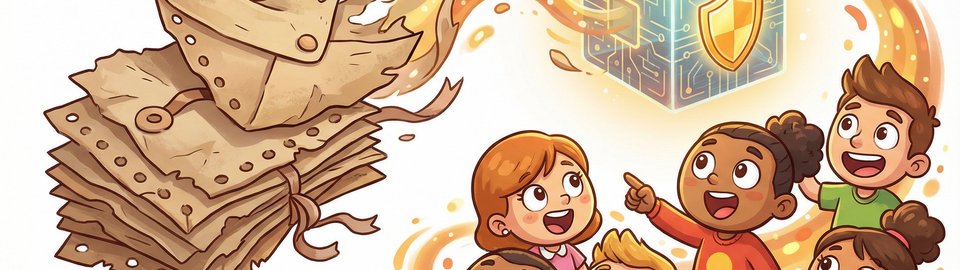
This is "poor man's copyright": a letter is easily falsifiable (you can send an open envelope and seal it later). Courts give it little evidentiary value. A timestamped SHA-256 digital fingerprint is mathematically verifiable.
Without proof
No certain date to prove your anteriority
The plagiarist can claim to be the original author
Long, costly procedure with uncertain outcome
Impossible to send a credible DMCA takedown
With Copyright01
Timestamped certificate with SHA-256 fingerprint
Proof of anteriority enforceable in 181 countries
Deposit in 5 minutes, PDF certificate immediately
DMCA takedown with verifiable proof
Key takeaway
The copyright symbol ©
The © symbol (a C enclosed in a circle) is the universal sign of copyright. It is used to inform the public that a work is protected. For everything about this symbol (keyboard shortcuts, HTML codes, SVG and PNG versions), see our dedicated copyright symbol © page.
The standard format for a copyright notice is:
© 2026 Rights holder name. All rights reserved.To learn more about the "All rights reserved" notice and use our free generator, visit our All Rights Reserved page.
Reminder: the © symbol is not mandatory in Berne Convention countries. Copyright applies automatically.
Good to know
The Berne Convention
The Berne Convention for the Protection of Literary and Artistic Works (1886) is the pillar of international copyright law. It establishes three fundamental principles:
Berne Convention
181 signatory countries, hover to explore
Today, 181 countries are signatories to the Berne Convention, covering virtually the entire planet.
Key takeaway
Duration and validity of protection
Copyright duration varies by country and type of work:
| Region / Country | Protection duration | Notes |
|---|---|---|
| European Union | 70 years post-mortem | Directive 2006/116/EC |
| United States | 70 years post-mortem | Works created after 1978 |
| Canada | 70 years post-mortem | Since December 30, 2022 |
| Japan | 70 years post-mortem | Since 2018 (TPP agreement) |
| Berne minimum | 50 years post-mortem | Floor guaranteed by the Convention |
After expiration, the work enters the public domain: it can be freely reproduced, adapted and distributed by anyone.
Frequently asked questions about copyright
Yes. Copyright is an automatic and free right. You don't need to pay anything to benefit from copyright protection. Depositing proof of prior existence on Copyright01.com is also free for your first works.
Copyright protects creative works (texts, images, music, software). A patent protects technical inventions. Copyright is automatic; a patent requires filing with an industrial property office (USPTO, EPO).
An original logo can be protected by copyright. A business name or brand does not fall under copyright but under trademark law (registration with the USPTO or EUIPO).
Yes. Copyright applies to all works, regardless of their medium. A text, image or video published on the Internet is protected exactly like a work published on paper.
Start by documenting the violation (screenshots, URLs). Send a takedown request (DMCA in the United States, cease and desist in other countries). If necessary, present your Copyright01 certificate as proof of prior existence in court.
The Berne Convention covers 181 countries, representing virtually the entire planet. The few non-signatory countries often provide protection through other treaties (Universal Copyright Convention, TRIPS/WTO agreements).

Test your copyright knowledge
Question of
Explanation :
Is copyright automatic or do you need to register?
It is automatic upon creation of the work
You must register with an official body
You must display the © symbol to be protected
Copyright is automatic upon creation of the work in a tangible form (Berne Convention, Art. 5). No formality is required. However, having proof of anteriority is essential in case of dispute.
How many countries are covered by the Berne Convention?
50 countries
181 countries
Only European countries
The Berne Convention has 181 signatory countries, covering virtually the entire planet. Your Copyright01 proof of anteriority is therefore recognized internationally.
Does copyright protect ideas?
Yes, all ideas are protected
No, only the form of expression is protected
Only innovative ideas
Copyright does not protect ideas, concepts or methods. Only the concrete and original form of expression is protected. For example, the idea of a detective novel is not protectable, but the text of the novel is.
What is the duration of copyright protection in the EU?
50 years after publication
70 years after the author's death
Lifetime protection only
In the European Union, protection lasts 70 years after the author's death (post-mortem auctoris), in accordance with Directive 2006/116/EC.
What does Copyright01 provide?
An official copyright registration with an authority
A timestamped proof of anteriority with SHA-256 fingerprint
A patent on your creation
Copyright01 provides enforceable proof of anteriority: a certificate with SHA-256 fingerprint and certified timestamp. It is neither an official registration nor a patent, it is proof that your work existed at a specific date, valid in 181 countries.
Sources and references
The information in this guide is based on the following official texts:
-
1
U.S. Copyright Law, Title 17 of the United States Code copyright.gov
- 2
-
3
Directive 2019/790 sur le droit d'auteur dans le marché unique numérique eur-lex.europa.eu
- 4
-
5
Le droit d'auteur, Vue d'ensemble wipo.int
Related guides



Protect your creations now
Join creators who trust Copyright01 to protect their works in 181 countries.