The Copyright Symbol ©
Copy the © symbol in one click. Whether you call it the copyright sign, mark or character, discover the keyboard shortcuts for every operating system and the difference between ©, ™ and ®.

Copy the copyright sign © and related symbols in one click
Click a symbol to copy it to your clipboard.
Good to know
Keyboard shortcuts by system
The shortcut for your system is pre-selected automatically.
| Symbol | Shortcut | Copy |
|---|---|---|
| © | Alt + 0169 |
|
| ® | Alt + 0174 |
|
| ™ | Alt + 0153 |
| Symbol | Shortcut | Copy |
|---|---|---|
| © | Option + G |
|
| ® | Option + R |
|
| ™ | Option + 2 |
| Symbol | Shortcut | Copy |
|---|---|---|
| © | Ctrl + Shift + U, 00A9, Enter |
|
| ® | Ctrl + Shift + U, 00AE, Enter |
|
| ™ | Ctrl + Shift + U, 2122, Enter |
| Symbol | Shortcut | Copy |
|---|---|---|
| © | © or © |
|
| ® | ® or ® |
|
| ™ | ™ or ™ |
Good to know
Copyright © logo to download
Need the © symbol as an image for a website, a video or a document? Download the copyright logo as PNG (transparent background) or SVG. Free to use, the © symbol belongs to the public domain.

Good to know
© vs ™ vs ® : understanding the differences
These three symbols are often confused. They protect very different things.
| Criteria | © Copyright | ™ Trademark | ® Registered |
|---|---|---|---|
| Protects | Creative works (texts, images, music, code, videos) | A commercial name, logo or slogan (informal claim) | An officially registered name, logo or slogan |
| Formality | None, automatic protection | None, informal use | Mandatory registration (INPI, USPTO, EUIPO) |
| Duration | Author's life + 70 years (EU) | As long as the brand is in use | 10 years, renewable indefinitely |
| Cost | Free | Free | Paid (190€ at INPI, $250 at USPTO) |
| Example | A novel, a photograph, a software | A startup name not yet registered | Nike®, Apple®, Google® |
Key takeaway
Myths and facts about the © symbol
You must display the © symbol for your work to be protected
The reality
False. In the 181 countries that signed the Berne Convention, copyright is automatic upon creation. The © symbol is informational, it does not create rights.
If an image online has no ©, it is free to use
The reality
False. The absence of the symbol does not mean absence of rights. Any original photo, illustration or creation is protected, with or without the © notice.
The ™ symbol and the © symbol protect the same thing
The reality
False. © protects creative works (texts, music, code). ™ protects commercial names and logos. These are two completely different legal regimes.
Mailing your work to yourself with a © replaces an official deposit
The reality
False. The "poor man's copyright" (registered mail to yourself) has no recognized evidentiary value in court. Only a deposit with certified timestamping constitutes enforceable proof.
Frequently asked questions about the © symbol
Test your knowledge of the © symbol

Test your copyright knowledge
Question of
Explanation :
What is the keyboard shortcut for © on Windows?
Alt + 0169
Ctrl + C
Alt + 169
On Windows, hold Alt and type 0169 on the numeric keypad (not the number row at the top of the keyboard).
What does the ® symbol protect?
An officially registered trademark
An artistic work
An industrial patent
The ® (Registered) indicates that a trademark has been officially registered with an intellectual property office (INPI, USPTO, EUIPO).
Is the © symbol required for copyright protection?
No, protection is automatic
Yes, it must always be displayed
Only in France
The Berne Convention guarantees automatic protection without formalities in 181 countries. The © symbol is purely informational.
What is the HTML entity to display ©?
©
©right;
&c;
The HTML entity © displays the © symbol. You can also use the numeric code © or the Unicode escape \u00A9.
What is the difference between ™ and ®?
™ is an informal claim, ® is an officially registered trademark
™ is newer than ®
There is no legal difference
™ (Trademark) indicates an unregistered trademark claim. ® (Registered) indicates official registration with an intellectual property office.
Sources and references
-
1
U.S. Copyright Office, Copyright Basics copyright.gov
-
2
Berne Convention, WIPO wipo.int
- 3
-
4
Symbole Copyright © : copier-coller, raccourcis et codes symbole-copyright.com
Related Guides



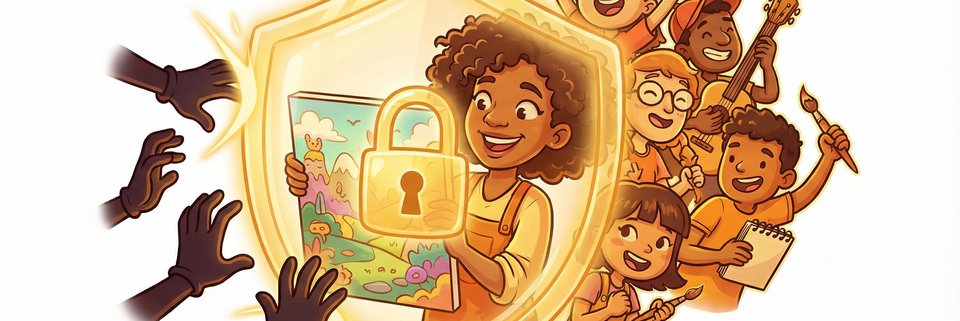

Protect your creations
The © symbol informs, but proves nothing. Deposit for free and get a certificate with certified timestamp.