Understand the EU Copyright Directive 2019/790. Learn how new digital single market rules impact creators, platforms, and intellectual property rights.
The digital landscape has evolved drastically over the past two decades, prompting lawmakers to update intellectual property frameworks. At the heart of this modernization is the EU Copyright Directive 2019/790, formally known as the Directive on Copyright in the Digital Single Market (CDSM). If you are a content creator, developer, or digital entrepreneur, understanding this legislation is critical to safeguarding your work.
Before exploring the nuances of these new rules, it is important to consider Why register your copyright?. Establishing a clear date of creation is the foundational step to enforcing your rights under any modern legal framework.
What is the EU Copyright Directive 2019/790?
The Shift to a Digital Single Market
The European Union designed Directive 2019/790 to harmonize copyright laws across member states and adapt them to the realities of the modern internet. Prior to this directive, the governing framework was established in 2001, an era before social media giants, streaming services, and artificial intelligence dominated the web.
The core objective of the EU Copyright Directive 2019/790 is to close the "value gap"—the disparity between the profits generated by large tech platforms hosting user-uploaded content and the compensation received by the original creators. By updating these rules, the EU aims to foster a fairer marketplace while respecting international standards like the Berne Convention, which provides global copyright protection across 181 countries.
💡 Tip: Even with strong legislative frameworks in place, you must proactively manage your intellectual property. Always maintain a secure archive of your raw files and drafts.
Key Articles Impacting Creators and Platforms
Article 17: Platform Liability (The "Value Gap" Clause)
Previously known as Article 13 during the drafting phase, Article 17 is arguably the most debated section of the directive. It fundamentally shifts the responsibility of copyright enforcement from the individual creator to the online content-sharing service providers (OCSSPs).
Under the old rules, platforms operated under a "safe harbor" principle, meaning they were not liable for copyright infringement unless they failed to remove the content after receiving a specific takedown notice.
Article 17 changes this. Platforms like YouTube, Instagram, Facebook, X, and TikTok are now considered to be performing an act of communication to the public when they host user-uploaded content. Consequently, they must obtain authorization from rightholders (usually via licensing agreements). If no agreement is in place, the platform must demonstrate "best efforts" to prevent the availability of unauthorized content.
For visual artists and photographers, this means platforms must be more proactive in preventing unauthorized uploads of your work. To learn more about protecting visual assets on these platforms, read our guide on how to Stop Social Media Photo Theft.
Article 15: Press Publishers' Rights
Often referred to as the "link tax," Article 15 (formerly Article 11) aims to protect journalism and press publishers. It grants publishers direct copyright over the digital use of their press publications by news aggregators and media monitoring services.
This means that platforms displaying snippets of news articles must compensate the publishers. However, this does not apply to private, non-commercial uses by individual users, the sharing of mere hyperlinks, or the use of "very short extracts."
Articles 3 and 4: Text and Data Mining (TDM) and AI
With the rapid rise of Artificial Intelligence, Text and Data Mining (TDM) has become a critical issue. TDM involves automated computational analysis of information in digital form to uncover patterns, trends, and correlations—essentially, how AI models are trained.
Directive 2019/790 introduces specific exceptions:
- Article 3: Allows TDM for the purposes of scientific research by research organizations and cultural heritage institutions.
- Article 4: Allows TDM for commercial purposes, unless the rightholder has explicitly opted out (reserved their rights) in an appropriate manner, such as machine-readable metadata.
For software engineers and tech startups, managing how your code and data are scraped is essential. You can explore our Open Source Copyright Guide for Developers and learn How to Protect Your Mobile App Copyright to navigate these TDM exceptions effectively.
📋 Key takeaway: If you do not want your online content or source code used to train commercial AI models, you must explicitly reserve your rights using machine-readable opt-outs on your websites and repositories.
How the Directive Protects Authors and Performers
The Principle of Appropriate and Proportionate Remuneration
Articles 18 through 22 of the EU Copyright Directive 2019/790 focus heavily on the contractual relationships between creators and the publishers or producers who exploit their works.
- Article 18: Establishes that authors and performers are entitled to appropriate and proportionate remuneration when they license or transfer their exclusive rights.
- Article 19 (Transparency Obligation): Requires publishers and producers to provide creators with up-to-date, comprehensive information on the exploitation of their works, including revenues generated.
- Article 20 (Contract Adjustment Mechanism): Often called the "bestseller clause," this allows creators to claim additional remuneration if the original compensation agreed upon turns out to be disproportionately low compared to the unexpected success and revenues of the work.
- Article 22 (Right of Revocation): Allows creators to revoke their licenses or transfer of rights if their work is not being exploited after a reasonable timeframe.
These protections are highly relevant for independent creators, writers, and audio producers. For instance, if you are launching an audio series, you should review our Complete Podcast Copyright Protection Guide. Similarly, authors should understand How to Protect Your Book Before Publishing to maximize the benefits of these contract adjustment mechanisms.
Comparing the Frameworks: Before and After
To fully grasp the impact of the EU Copyright Directive 2019/790, it helps to compare it to the previous legal landscape.
| Feature | Pre-2019 Directive (Safe Harbor Era) | Post-Directive 2019/790 |
|---|---|---|
| Platform Liability | Platforms not liable until notified of an infringement. | Platforms are directly liable unless they secure licenses or use best efforts to block content. |
| Press Publishers | Aggregators could freely use snippets and headlines. | Aggregators must negotiate licenses to display news snippets (Article 15). |
| Data Mining (AI) | Legal gray area; heavily restricted without explicit permission. | Permitted for research; permitted commercially unless rightholders explicitly opt-out. |
| Creator Contracts | Standard contracts often lacked ongoing transparency. | Mandatory transparency, bestseller clauses, and revocation rights (Articles 18-22). |
Securing Your Digital Assets Under the New Rules
The Importance of Proof of Prior Existence
While the EU Copyright Directive 2019/790 provides powerful tools to demand fair compensation and hold platforms accountable, these rights are useless if you cannot prove you are the original author. Whenever a dispute arises—whether a platform algorithm flags your video, or a competitor copies your design—the burden of proof falls on you.
This is where securing a clear date of creation becomes vital. Utilizing Digital Timestamping and Copyright Evidence provides a robust foundation for asserting your rights.
⚠️ Warning: Relying solely on poor-man's copyright (like mailing a letter to yourself) is risky and often insufficient in modern digital disputes. You need professional digital evidence.
Using Copyright01 to Protect Your Work
To effectively enforce your rights under the new EU rules, you need a reliable way to establish proof of prior existence. Copyright01 offers a comprehensive solution tailored to the needs of modern digital creators.
When you deposit your work with Copyright01, the file is processed using server-side AES-256 encryption to ensure privacy. The system then generates a PDF certificate featuring an SHA-256 fingerprint and digital timestamping. This creates strong evidence recognized across the 181 countries of the Berne Convention.

We support a wide array of deposit types to match the diverse output of today's creators:
- Documents & Text: Manuscripts, screenplays, and business plans.
- Visuals: Images, graphics, and designs. (If you are a brand owner, also read Protect Your Logo: Trademark vs Copyright).
- Audio & Video: Music tracks, podcasts, and short films.
- Tech & Web: Source code, entire websites, and GitHub repositories.
- Social Media: Content from YouTube, Instagram, Facebook, X, and TikTok.
All deposits are preserved for a minimum of 10 years, ensuring long-term availability of your evidence. Third parties and legal professionals can easily Verify a certificate to confirm the authenticity and exact timestamp of your registration.
Affordable and Accessible Protection
Protecting your intellectual property should not be prohibitively expensive. Copyright01 is designed to be accessible for freelancers, startups, and established businesses alike.
You can start by claiming your 3 free deposits when you Create a free account. For ongoing needs, we offer flexible credit packs starting from EUR 4.90, or cost-effective subscriptions at EUR 9.90/month or EUR 79/year.
For those operating in the e-commerce space facing rampant copying, securing your designs is paramount. Check out our guide on How to Stop Etsy and Amazon Design Theft to see how timestamped evidence can expedite takedown requests.
Additionally, if you are exploring Web3 and blockchain digital assets, understanding how traditional copyright intersects with new technologies is crucial. Read our insights on Protecting Your NFT Intellectual Property.
Transparency and Public Verification
In the spirit of the transparency obligations outlined in the EU Copyright Directive, creators can choose to make their copyright claims visible to the public. By utilizing our Public deposit registry, you can deter potential infringers by publicly displaying that your work is protected and timestamped.
If you are evaluating different services to secure your work in Europe, you can read our comprehensive review of the Best French Copyright Platforms Compared to see why Copyright01 stands out in features and value.
Conclusion: Adapting to the Digital Single Market
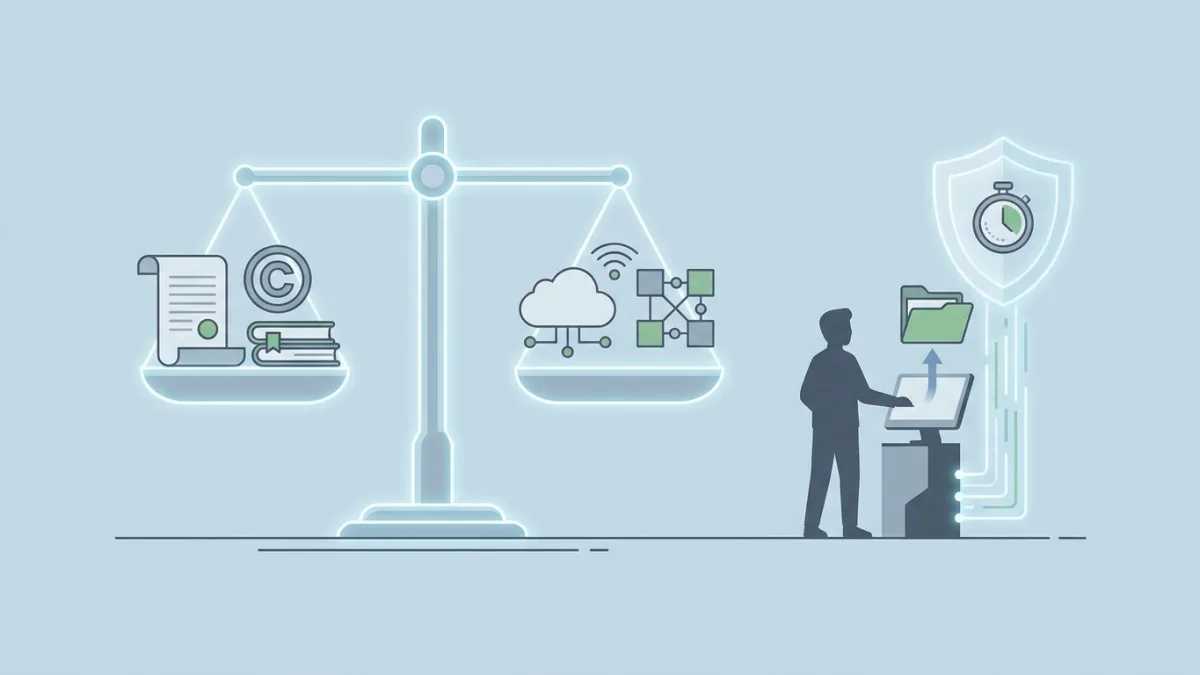
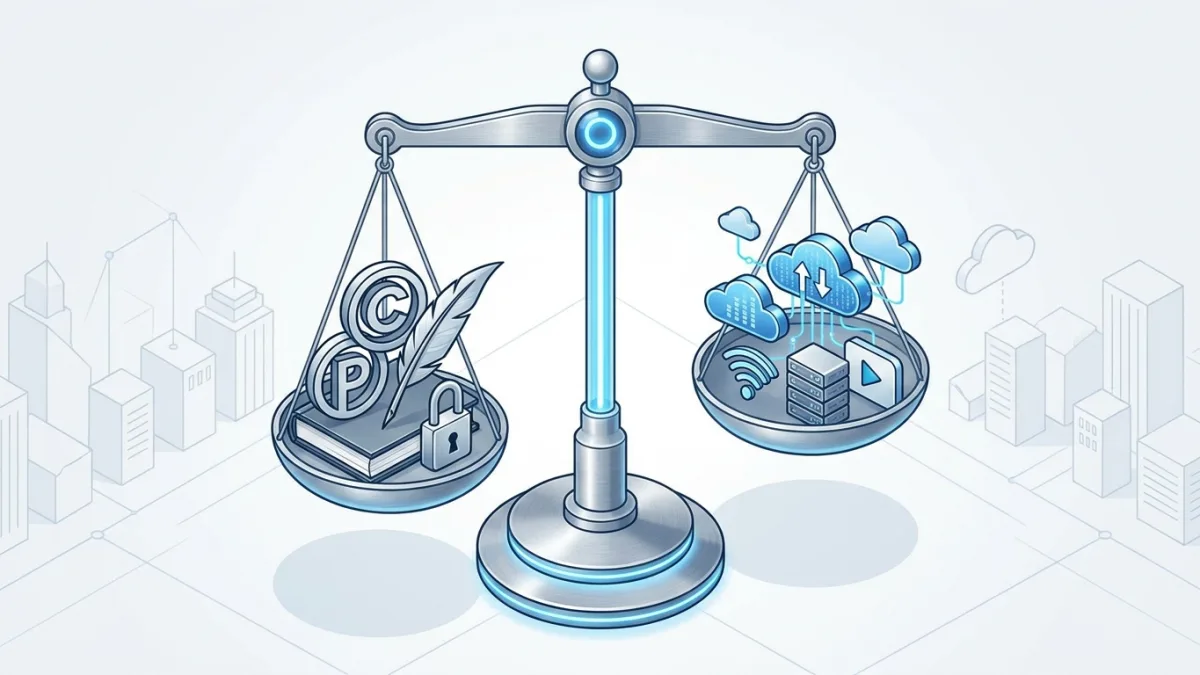
The EU Copyright Directive 2019/790 represents a massive step forward in balancing the scales between massive tech platforms and individual creators. By enforcing platform liability, demanding fair remuneration, and clarifying rules around AI data mining, the European Union has created a more equitable digital single market.
However, legislation alone cannot protect your work. Proactive intellectual property management is essential. By establishing proof of prior existence through robust digital timestamping, you equip yourself with the evidence needed to leverage these new EU laws to their fullest extent. Secure your creative output today and ensure you are positioned to thrive in the modern digital economy.
Copyright01
Free copyright protection service. PDF certificate with SHA-256 fingerprint, recognised in 181 countries.