Learn how to protect your freelance work before delivery. Discover practical strategies, digital timestamping, and copyright tips to secure your assets.
Freelancing offers incredible flexibility and creative freedom, but it also comes with unique vulnerabilities. One of the most common anxieties independent professionals face is sending completed projects to a client, only to face payment delays, ghosting, or unauthorized use. If you want to protect your freelance work before delivery, you need a proactive and strategic approach.
Whether you are a graphic designer, a software developer, a copywriter, or a consultant, safeguarding your intellectual property is an essential part of running a successful freelance business. Far too often, freelancers operate purely on trust, handing over high-value assets without securing their rights first. In this comprehensive guide, we will explore practical methods, contractual safeguards, and copyright registration techniques to ensure your creations remain yours until the final invoice is settled.
The Risks of Delivering Work Unprotected
Operating a freelance business means you are both the creator and the legal department. When you deliver work without proper precautions, you expose yourself to several professional risks that can impact your income and your reputation.
Ghosting and Non-Payment
The most prevalent risk in the freelance world is the disappearing client. You spend weeks developing a project, you send the final high-resolution files or the complete source code, and suddenly, the client stops responding to emails. They have what they need, and you are left with an unpaid invoice. This scenario is particularly common in digital fields where assets can be downloaded and deployed instantly. If you want to avoid this, understanding why register your copyright? is the first step toward establishing ownership before the handover.
Unauthorized Modifications and Usage
Sometimes, a client will pay for a preliminary draft or a basic concept but then decide to finish the project internally to save money. They might alter your code, modify your design, or rewrite your article without your permission. Worse, they might use the work for a purpose far beyond what was agreed upon—such as taking a logo designed for a small local shop and using it for a national franchise.
⚠️ Warning: Never hand over raw source files (like PSDs, AI files, or uncompiled source code) unless it is explicitly stated in your contract and the client has paid for them in full.
Practical Strategies to Secure Your Digital Assets
Before you attach a file to an email or share a cloud drive link, you should implement technical barriers that allow the client to review the work without taking full possession of it.
Use Watermarks and Low-Resolution Files
For visual artists, photographers, and graphic designers, watermarking remains a highly effective deterrent. Placing a semi-transparent logo or text across your image ensures that the client can evaluate the design without being able to use it commercially.
Additionally, always send drafts in low resolution. A 72-dpi JPEG is perfectly fine for screen viewing but useless for high-quality printing. If you are sharing photography or digital art, this prevents the client from taking your draft and running with it. If you find your work being used without permission, you might need to learn How to Stop Etsy and Amazon Design Theft.
Send Partial Work or Locked Formats
If you are a writer, never send an editable Word document for a first review. Send a locked PDF instead. While text can still be copied, it adds a layer of friction. For audio and video creators, sending a compressed file with an audio watermark (a voiceover saying "draft" every 10 seconds) is a standard industry practice.

For software developers, never send the raw, uncompiled source code for review. Host the project on your own staging server or provide a compiled, executable version that the client can test but not edit. If you are working on open-source projects or complex software, refer to the Open Source Copyright Guide for Developers to understand how to share code safely.
Establish Clear Contracts and Terms
A solid contract is your first line of defense. Technical barriers can be bypassed, but a well-drafted contract sets the rules of engagement and clearly defines the rights of both parties.
Define Ownership Transfer Conditions
Many clients mistakenly believe that because they are paying you, they automatically own the copyright to the work from the moment you start creating it. This is not true. As the creator, you own the copyright until you explicitly transfer it in writing.
Your contract must include a "Transfer of Rights" clause. This clause should clearly state that the copyright and ownership of the final deliverables transfer to the client only upon receipt of full and final payment.
💡 Tip: Include a specific clause stating that all preliminary drafts, unused concepts, and rejected ideas remain your exclusive intellectual property. This prevents the client from using your discarded ideas later without paying you.
Implement Milestone Payments
Never wait until the end of a project to get paid. Implement a milestone payment structure. A common approach is the 40/40/20 rule: 40% upfront before work begins, 40% upon approval of the initial draft, and 20% before the final, unwatermarked files are delivered. This ensures you are compensated for your time even if the project is canceled halfway through.
Register Your Copyright Before Sending
Even with a solid contract and technical barriers, you still need concrete proof that you are the original creator of the work. If a dispute arises, having an independent, timestamped record of your creation is invaluable.
Establish Proof of Prior Existence
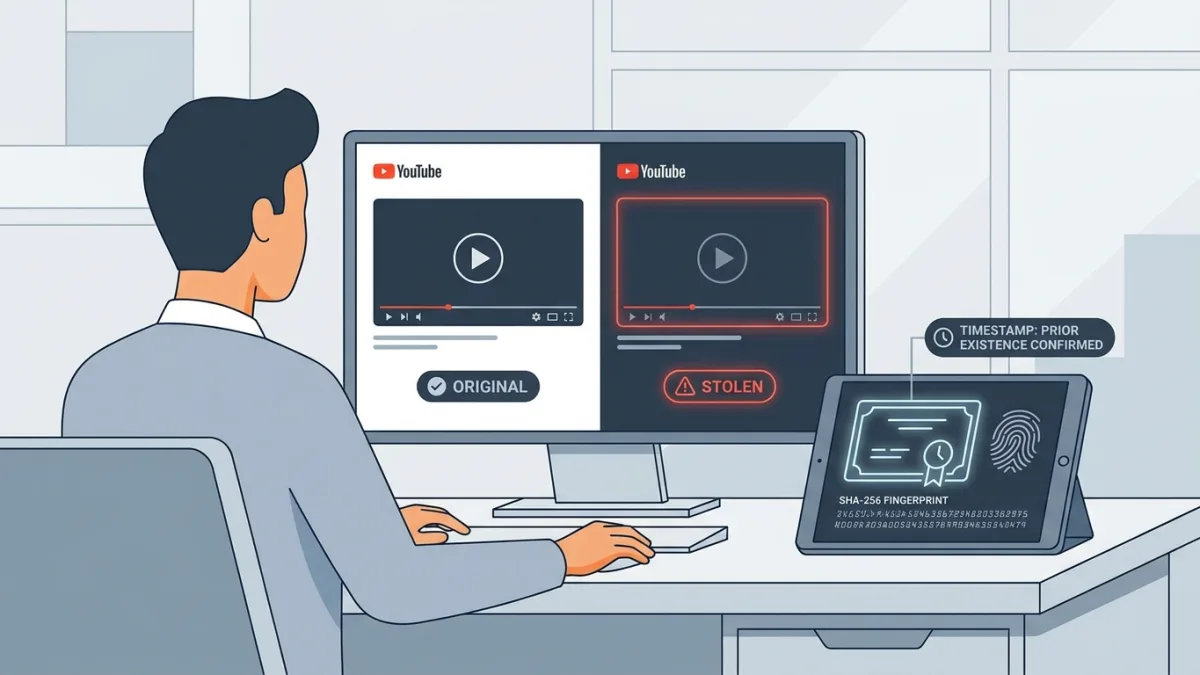
Before you send any deliverable to a client, you should register it to establish proof of prior existence. By depositing your files with a dedicated service, you create a verifiable record that you possessed this specific file at a specific date and time.
When you use Copyright01, you receive a PDF certificate with a SHA-256 fingerprint. This acts as a digital seal on your work. Your deposits are preserved using server-side AES-256 encryption for a minimum of 10 years, ensuring your evidence remains accessible long after the project is completed.
How Digital Timestamping Secures Your Rights
The core of modern copyright protection is the timestamp. When you upload your text, image, audio, video, or source code, the system applies a Digital Timestamping and Copyright Evidence protocol. This provides a clear, documented date of creation.
Because Copyright01 operates in accordance with the Berne Convention, this proof of prior existence is recognized in 181 countries. Whether your client is in London, New York, or Tokyo, your timestamp serves as strong evidence of your authorship.
📋 Key takeaway: A digital timestamp provides strong evidence of prior existence, making it much easier to assert your rights if a client attempts to claim your work as their own without paying.
Compare Protection Methods
To effectively protect your freelance business, you should combine multiple strategies. Here is how the different methods compare:
| Protection Method | Implementation Time | Level of Evidence | Best Used For |
|---|---|---|---|
| Watermarking | Fast | Low | Visual drafts, initial concepts, photography |
| Staging Servers | Medium | Medium | Web development, app design, interactive media |
| Ironclad Contracts | Slow (initial setup) | High | All freelance projects and client relationships |
| Digital Timestamping | Fast | High | Final deliverables, source code, written content |
How to Handle Specific Types of Freelance Work
Different freelance niches require different protection strategies. Here is how to apply these concepts to specific fields.
Writers, Bloggers, and Content Creators
If you write articles, scripts, or books, your main risk is plagiarism. Before sending your final draft, deposit the text document. If you are producing audio content, you should read the Complete Podcast Copyright Protection Guide to understand how to secure your audio files. For social media managers creating visual content, learning how to Stop Social Media Photo Theft is crucial before handing over a content calendar.
Developers, App Creators, and Web Designers
Developers face the risk of clients taking source code and having another, cheaper developer finish the project. Always register your code repositories. If you are building applications, check out How to Protect Your Mobile App Copyright. For those working in the Web3 space, ensuring your digital assets are secured is paramount; see the guide on Protecting Your NFT Intellectual Property.
Graphic Designers and Brand Strategists
Designers often create logos and brand identities that become highly valuable. It is important to know the difference between copyright and trademark when delivering these assets. You can learn more in our article: Protect Your Logo: Trademark vs Copyright.
The European Legal Context for Freelancers
For freelancers operating in or working with clients in Europe, the legal landscape has evolved to offer better protection for creators. The EU Copyright Directive 2019/790 Explained highlights new rules designed to ensure fair remuneration for authors and performers. Understanding these directives can help you draft better contracts and negotiate stronger terms with European agencies and publishers.
If you are looking for the right platform to secure your work in Europe, you might want to review the Best French Copyright Platforms Compared to see how different services handle digital timestamping and evidence preservation.
What to Do If a Client Steals Your Work
Despite your best efforts, a bad client might still try to use your work without paying. If this happens, you need to act professionally but firmly.
Communication and Cease-and-Desist
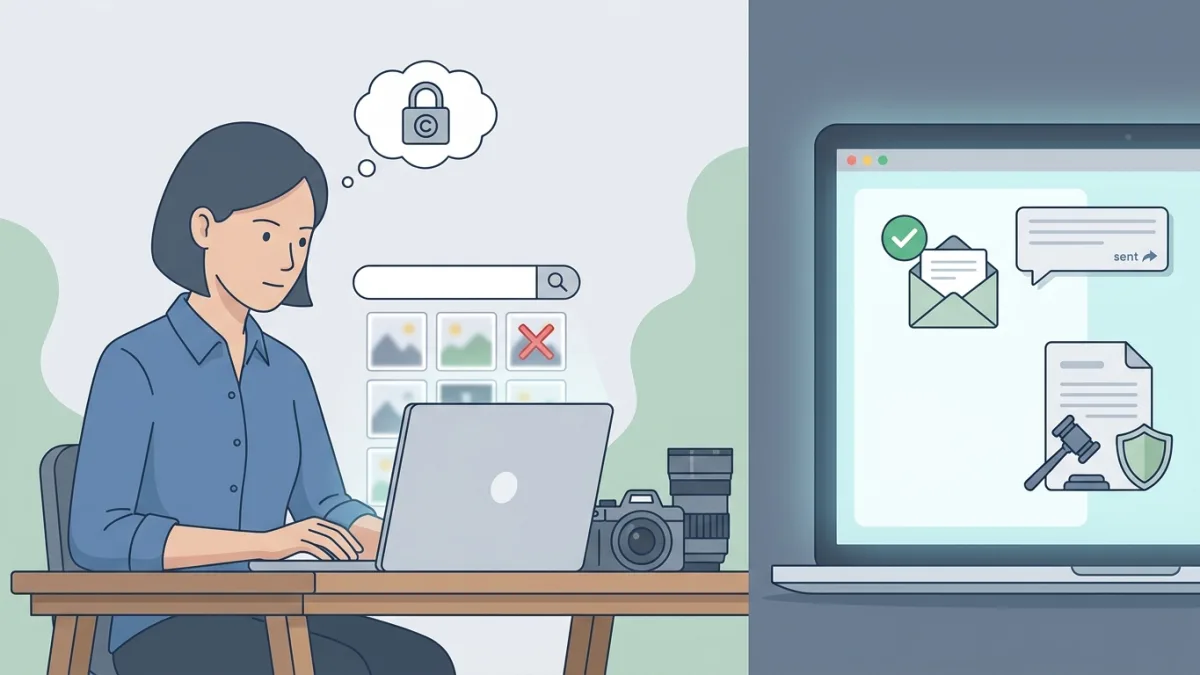
Start by sending a formal email reminding them that the invoice is outstanding and that, per your contract, they do not have the right to use the work. If they ignore you, you can escalate to a formal Cease-and-Desist letter. Often, the threat of legal action is enough to prompt payment.
Leveraging Your Copyright Evidence
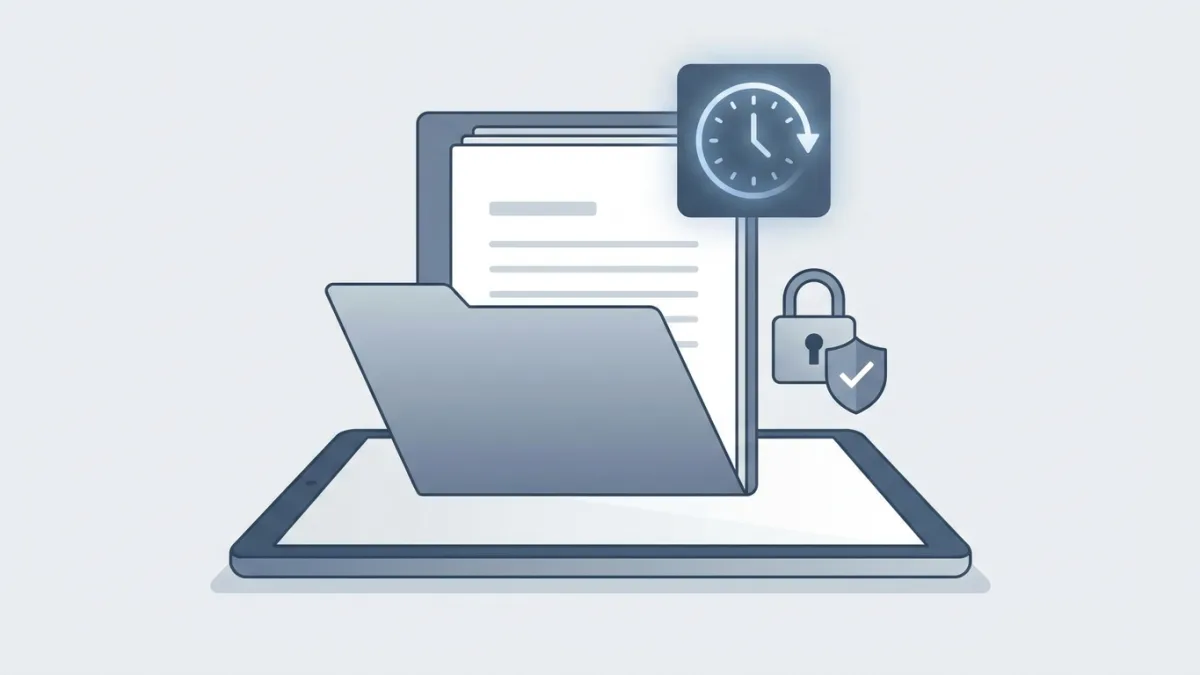
This is where your prior registration becomes your strongest asset. You can send the client a copy of your PDF certificate, showing the exact date and time you registered the work. You can direct them to Verify a certificate on the platform, proving that the evidence is recorded and maintained by a third party.
Furthermore, if you chose to make your deposit visible, you can point them to the Public deposit registry. Confronted with clear, timestamped evidence of your authorship, most clients will realize they cannot falsely claim the work as their own and will settle the invoice.
Conclusion
Protecting your freelance work before delivery is not about distrusting your clients; it is about running a professional business. By combining technical barriers like watermarks, enforcing strong contractual clauses, and securing your assets with digital timestamping, you ensure that you are always in control of your intellectual property.
Do not wait until you have been burned by a bad client to start protecting your creations. Take action today. You can Create a free account on Copyright01 and get 3 free deposits to test the service. After that, you can secure your ongoing projects with flexible credit packs starting from EUR 4.90, or opt for a subscription at EUR 9.90/month or EUR 79/year to cover all your freelance deliverables.
Copyright01
Free copyright protection service. PDF certificate with SHA-256 fingerprint, recognised in 181 countries.