Learn how to successfully remove stolen images online using a DMCA takedown notice. Discover our step-by-step case study to protect your creative work.
Discovering that your creative work has been used without permission is a frustrating and all-too-common experience for modern creators. Whether you are a professional photographer, a digital artist, or a freelance graphic designer, knowing how to execute a successful DMCA takedown for a stolen image is an essential skill in today's digital landscape.
In this comprehensive case study, we will explore a real-world scenario of image theft, breaking down the exact steps taken to have the infringing content removed. By understanding the mechanics of copyright enforcement and the importance of establishing prior existence, you can effectively protect your visual assets from unauthorized commercial use.
Understanding the DMCA Takedown Process
Before diving into our specific case study, it is crucial to understand the legal framework that empowers creators to protect their work online. The internet moves fast, but copyright laws have mechanisms designed to keep pace with digital infringement.
What is the Digital Millennium Copyright Act?
The Digital Millennium Copyright Act (DMCA) is a United States copyright law that implements two 1996 treaties of the World Intellectual Property Organization (WIPO). While it is a US law, its reach is effectively global. Because the vast majority of the world's web hosting companies, search engines, and social media platforms operate within or have significant ties to the United States, they comply with DMCA regulations to maintain their "Safe Harbor" status.
This Safe Harbor provision protects internet service providers (ISPs) and web hosts from being held liable for copyright infringement committed by their users, provided they act expeditiously to remove the infringing material upon receiving a valid takedown notice.
💡 Tip: Even if you are based in Europe or Asia, you can use the DMCA process to remove content hosted on US-based servers. For broader international context, understanding the Berne Convention is vital, as it establishes recognized copyright principles across 181 countries.
How the Notice and Takedown System Works
The notice and takedown system is a direct communication channel between the copyright owner (or their authorized agent) and the hosting provider. You do not send the DMCA notice to the person who stole your image; instead, you send it to the company hosting their website.
Once the host receives a properly formatted notice, they are legally obligated to disable access to the infringing content. If they fail to do so, they risk losing their Safe Harbor protection and could be held liable alongside the infringer. This creates a powerful incentive for hosting companies to act quickly, making the DMCA process highly effective for creators Winning Your Copyright Dispute Online.
Case Study Background: The Stolen Photograph
To illustrate the practical application of this process, let us examine a specific case study involving Sarah, a freelance architectural photographer. Sarah makes her living licensing high-resolution images of modern building interiors to design magazines and real estate firms.
The Discovery of the Infringement
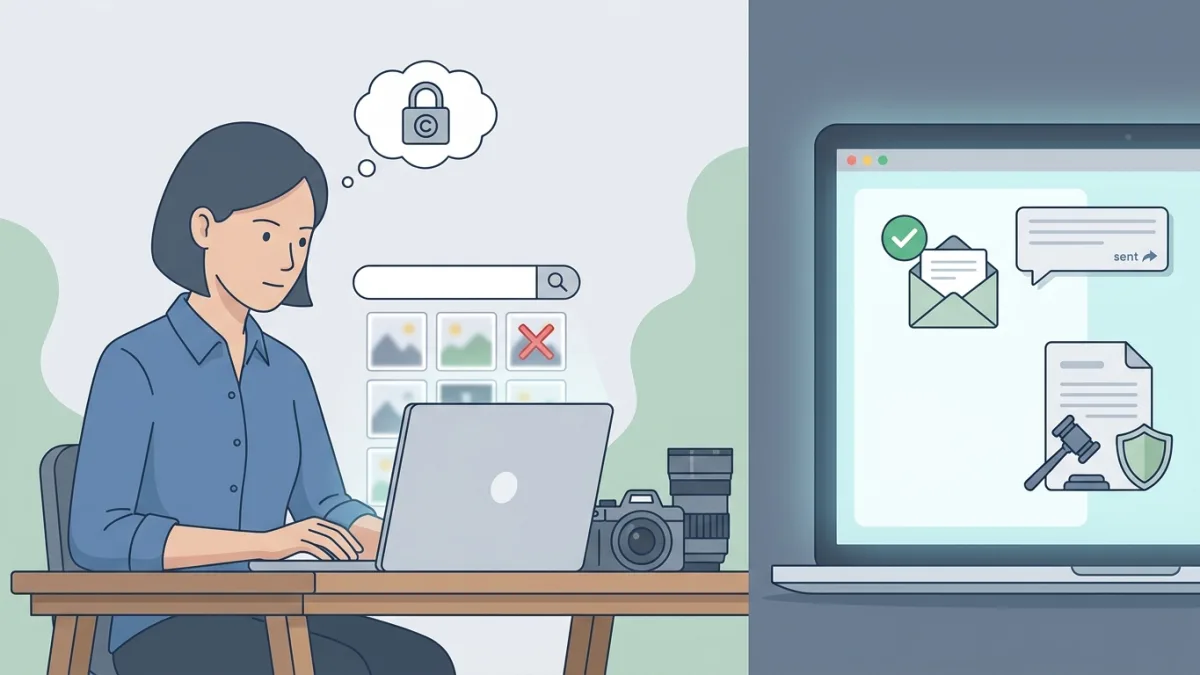
During a routine reverse image search—a practice she conducts monthly to monitor her portfolio—Sarah discovered one of her most popular photographs featured prominently on the homepage of a competing commercial real estate agency. The agency had cropped out her subtle watermark and was using the image to promote their own property management services.
They had not contacted her, nor had they purchased a commercial license. This unauthorized use directly impacted her ability to license the image exclusively to other clients in the same market. Sarah needed to act quickly to learn How to Shut Down a Website Copying Yours.

Gathering Evidence of Prior Existence
Before initiating the takedown, Sarah knew she needed strong evidence to prove she was the original creator. Simply claiming ownership is rarely enough; web hosts require substantiation to avoid removing legitimate content.
Fortunately, Sarah is proactive about her intellectual property. Before publishing any high-resolution images to her online portfolio, she secures them. By understanding Why register your copyright?, she had already created a deposit for the specific architectural photograph.
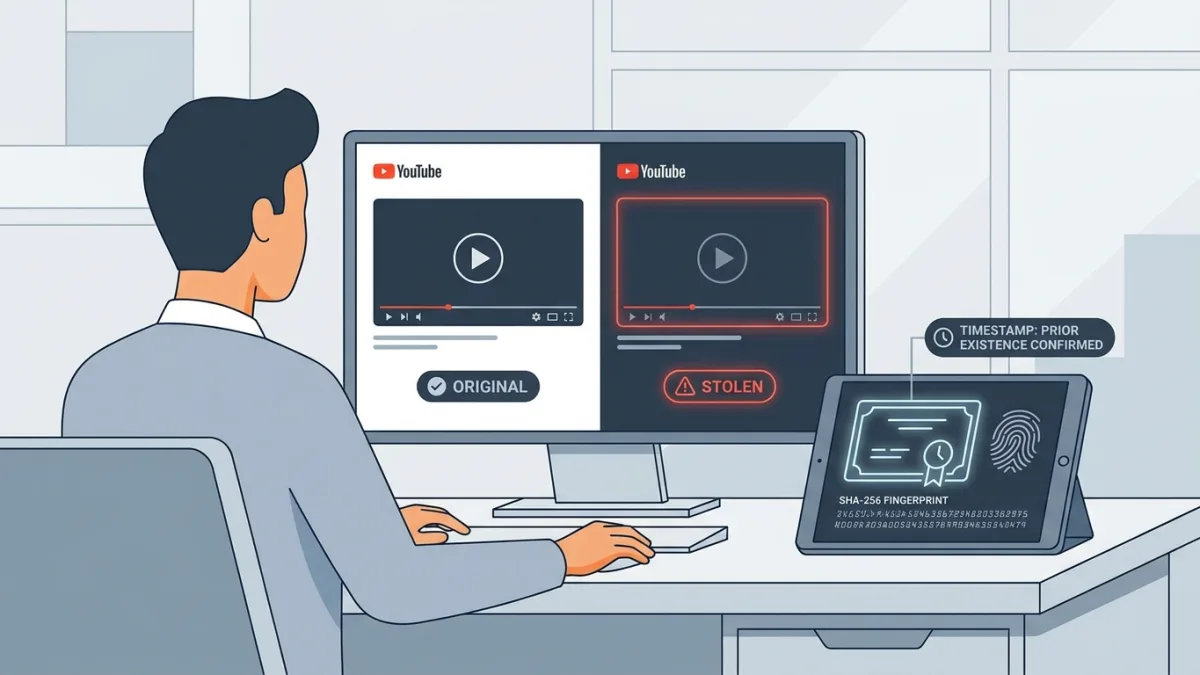
She logged into her account and retrieved her PDF certificate. This document included a SHA-256 fingerprint and a digital timestamping record, clearly establishing her proof of prior existence weeks before the infringing real estate agency launched their website. This crucial step is exactly why experts recommend that you Protect Your Freelance Work Before Delivery.
Step-by-Step Guide to Filing the Notice
Armed with her evidence, Sarah began the formal process of having the stolen image removed.
Identifying the Web Host and Copyright Agent
The first technical step was identifying who hosted the infringing website. Sarah used a free online WHOIS lookup tool and a hosting checker. She inputted the real estate agency's domain name and discovered that the site was hosted by a major US-based cloud hosting provider.
Next, she needed to find the host's designated DMCA agent. Most legitimate hosting companies have a dedicated "Copyright" or "DMCA" page linked in their footer. Alternatively, the US Copyright Office maintains a public directory of designated agents. Sarah quickly found the specific email address required to submit her claim.
⚠️ Warning: Never send a DMCA notice to a general customer support or sales email address. It will likely be ignored or delayed. Always use the specific contact designated for copyright claims.
Drafting the DMCA Takedown Request
A DMCA notice must contain specific legal elements to be considered valid. If any of these elements are missing, the web host can reject the request. Sarah carefully drafted her email to include all necessary components.
| Required DMCA Element | How Sarah Applied It in Her Case Study |
|---|---|
| Physical or Electronic Signature | She typed her full legal name at the bottom of the email, stating it acted as her electronic signature. |
| Identification of the Original Work | She provided a link to her original portfolio piece and attached her PDF certificate with the SHA-256 fingerprint as proof of prior existence. |
| Identification of the Infringing Material | She provided the exact URL of the real estate agency's homepage and a screenshot circling where her stolen image was located. |
| Contact Information | She included her full name, professional mailing address, phone number, and email address. |
| Good Faith Statement | She included the required phrase: "I have a good faith belief that use of the material in the manner complained of is not authorized by the copyright owner, its agent, or the law." |
| Perjury Statement | She included the required phrase: "The information in the notification is accurate, and under penalty of perjury, that the complaining party is authorized to act on behalf of the owner of an exclusive right that is allegedly infringed." |
By clearly outlining these points and referencing her understanding of the Authors Rights and Copyright Differences, she presented a highly professional and undeniable claim.
The Outcome and Post-Takedown Actions
Once the notice was sent, the waiting game began. However, because Sarah's documentation was meticulous, the resolution was swift.
Host Response and Content Removal
Within 48 hours, Sarah received a reply from the hosting company's trust and safety team. They confirmed receipt of her valid DMCA notice and informed her that they had contacted their client (the real estate agency) demanding the removal of the image.
The host stated that access to the specific image file on their servers had been disabled. When Sarah refreshed the agency's homepage, the space where her photograph used to be was now displaying a broken image icon. The takedown was a complete success.

Dealing with Potential Counter-Notices
It is important to note that the DMCA process allows the accused party to file a "counter-notice" if they believe the content was removed by mistake or misidentification. If the real estate agency had filed a counter-notice, the hosting provider would have been obligated to restore the image within 10 to 14 business days, unless Sarah filed a formal lawsuit seeking a court order to restrain them.
However, because Sarah had provided her PDF certificate with digital timestamping, the agency knew they had no legitimate claim to the work. They did not file a counter-notice. If they had questioned the validity of her claim, she could simply direct them to Verify a certificate using her unique deposit number.
📋 Key takeaway: Providing overwhelming evidence of ownership in your initial notice drastically reduces the likelihood of the infringer attempting a counter-notice.
Preventing Future Image Theft
While knowing how to execute a DMCA takedown is critical, prevention and preparation are equally important. You cannot stop people from right-clicking and saving your images, but you can position yourself to win any dispute effortlessly.
Establishing Proof of Prior Existence
The cornerstone of Sarah's success was her ability to prove she possessed the image before the infringer did. This is where a dedicated registration service becomes invaluable.
With Copyright01, creators can secure their work instantly. You can Create a free account and receive 3 free deposits to test the system. After that, credit packs are available from just EUR 4.90, or you can opt for a comprehensive subscription at EUR 9.90/month or EUR 79/year.
When you upload a text, image, audio, video, source code, or even social media content (including YouTube, Instagram, Facebook, X, and TikTok), the platform applies server-side AES-256 encryption. The system generates a PDF certificate featuring a unique SHA-256 fingerprint and precise digital timestamping. This creates a recognized proof of prior existence valid across the 181 countries of the Berne Convention.
Furthermore, your deposits are preserved for a minimum of 10 years, ensuring long-term protection for your creative assets. You can even choose to make certain works visible on the Public deposit registry to deter potential thieves upfront.
Monitoring Your Visual Assets Online
Finally, make monitoring a routine part of your business workflow. Use reverse image search tools like Google Images or TinEye to scan the web for unauthorized uses of your portfolio. If you mint digital art, ensure you understand the nuances of Protecting Your NFT Intellectual Property.
By combining proactive monitoring with the solid foundation of a Copyright01 deposit, you can confidently share your creativity with the world, knowing you have the tools and evidence required to shut down infringement whenever it occurs.
Copyright01
Free copyright protection service. PDF certificate with SHA-256 fingerprint, recognised in 181 countries.