Discover a practical guide to shut down a website copying yours. Learn how to gather evidence, send takedown notices, and protect your digital content.
Discovering that someone has stolen your hard work and created a clone of your site is a nightmare for any creator, developer, or business owner. Whether they have scraped your articles, stolen your design, or copied your source code, you need to know how to shut down a website copying yours efficiently. Ignoring the problem can lead to lost revenue, diminished search engine rankings, and severe damage to your brand reputation.
Understanding the Authors Rights and Copyright Differences is a great starting point, but theory alone won't remove a pirated website. You need actionable steps. In this practical guide, we will walk you through the exact process of identifying the culprit, gathering robust evidence, and forcing the removal of the stolen content.
Step 1: Gather Rock-Solid Evidence of the Theft
Before you send a single email or make any threats, you must compile comprehensive proof of the infringement. If you alert the copycat prematurely, they might temporarily hide the content, making it harder for you to prove the theft to web hosts or search engines.
Document the Infringement Immediately
The internet moves fast, and evidence can disappear in a matter of hours. As soon as you discover the clone site, start documenting everything.
Take full-page screenshots of the offending website, ensuring that the URL and the date are clearly visible. Save the HTML source code of their pages, especially if they have copied your structural design or specific scripts. If the thief has stolen your branding elements, you will also need to review how to Protect Your Logo: Trademark vs Copyright to assert your rights effectively.
⚠️ Warning: Do not contact the infringing website owner until you have securely documented all evidence. A premature warning gives them the opportunity to delete the evidence before you can build your case.
Establish Your Prior Rights
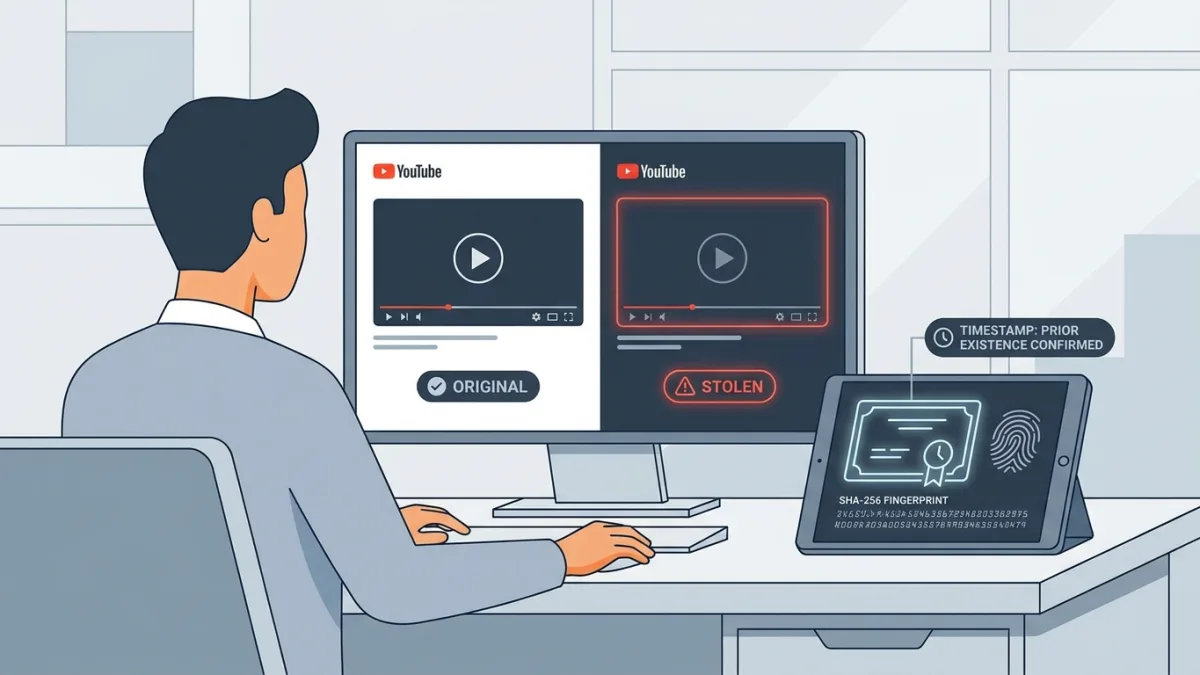
To successfully force a takedown, you must prove that you are the original creator and that your work existed before the copycat's version. This concept is known as proof of prior existence.
If you have proactively registered your website content, this step is straightforward. Services like Copyright01 provide a PDF certificate with a SHA-256 fingerprint and digital timestamping. This establishes a clear, undeniable date of creation. If you are wondering how this compares to older methods, read our comparison on the Soleau Envelope vs Modern Free Copyright.
Thanks to the Berne Convention, this proof of prior existence is recognised in 181 countries, giving you international leverage against foreign copycats.
Step 2: Identify the Culprit and Their Infrastructure
Once your evidence is secure, you need to figure out who is behind the website and, more importantly, who is providing the technical infrastructure that keeps it online.
Find the Domain Owner via WHOIS
Every domain name must be registered through a registrar (like GoDaddy, Namecheap, or Hostinger). By performing a WHOIS lookup using free online tools, you can often find the name, email address, and location of the person who registered the domain.
However, many registrants use privacy protection services to hide their personal details. If the WHOIS data is redacted, you will need to focus your efforts on the web host instead.

Locate the Web Hosting Provider
The web host is the company whose servers physically store the stolen website files. Unlike domain owners, web hosts cannot easily hide. You can use tools like "Hosting Checker" or perform a DNS lookup to identify the hosting company's IP address and name.
If the website uses a proxy service like Cloudflare to obscure its origin IP, you can submit an abuse report directly to Cloudflare. They will typically forward your complaint to the underlying hosting provider and provide you with the host's details.
Step 3: Send a Cease and Desist Letter
Sometimes, the simplest approach is the most effective. Before escalating to legal or technical authorities, reaching out directly can sometimes resolve the issue swiftly.
Reaching Out Directly to the Infringer
Not all copycats are malicious hackers; some are ignorant developers, automated scrapers, or misguided competitors who don't understand copyright law. A firm but professional email might be enough to scare them into compliance.
Drafting the Notice
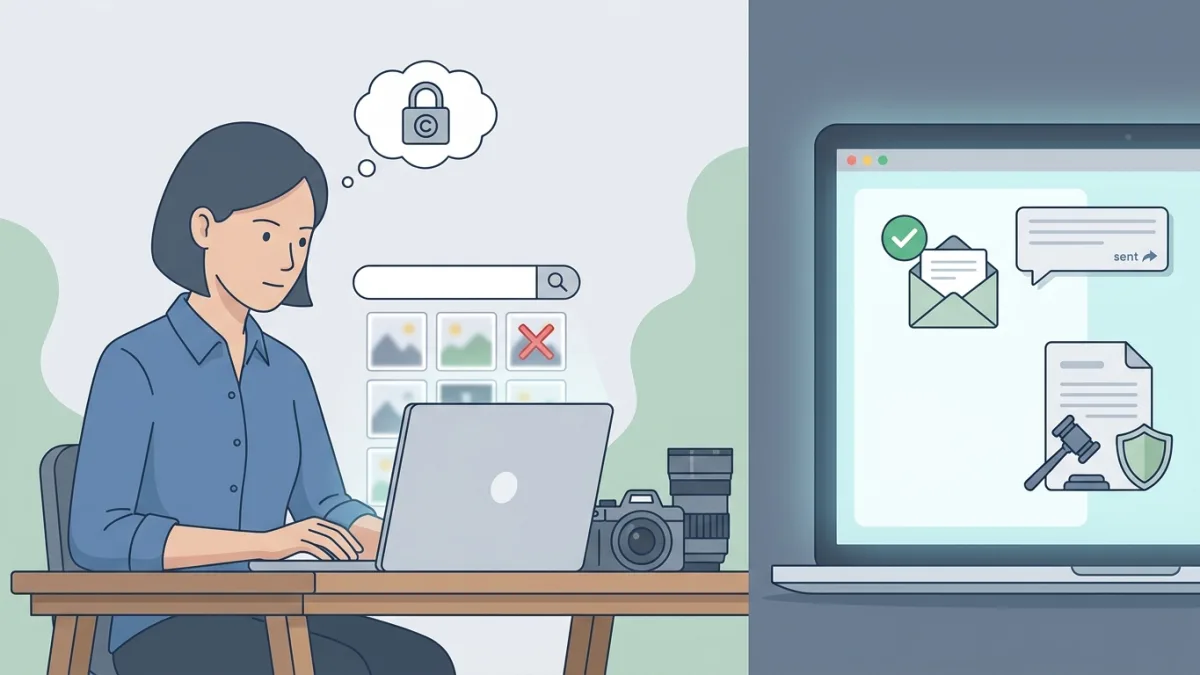
When drafting your Cease and Desist (C&D) letter, clarity is key. You must detail exactly what was stolen and what you expect them to do. For a deeper dive into this process, check out our guide on Winning Your Copyright Dispute Online.
Your letter should include:
- The URLs of your original content.
- The URLs of the infringing content on their site.
- A clear statement asserting your rights as the original author.
- A firm deadline (e.g., 48 or 72 hours) for the complete removal of the content.
- A link to Verify a certificate if you have registered your work with Copyright01, showcasing your proof of prior existence.
💡 Tip: Keep your communication strictly professional. Avoid emotional language, insults, or exaggerated threats. Stick to the facts and your rights under intellectual property law.
Step 4: Issue a Takedown Notice to the Web Host
If the website owner ignores your Cease and Desist letter, or if you cannot find their contact information, your next target is their web hosting provider.
What is a Takedown Notice?
Web hosts are generally protected from liability for what their users upload, provided they act swiftly to remove copyrighted material once notified. In the United States, this is governed by the DMCA (Digital Millennium Copyright Act). In Europe, similar mechanisms exist. You can learn more about the European framework in our article on the EU Copyright Directive 2019/790 Explained.
How to Submit the Request
Most reputable hosting companies have a dedicated "Abuse" department or a specific web form for copyright infringement claims. You will need to provide your gathered evidence, your contact information, and a statement made under penalty of perjury that you are the rightful owner of the content.
Here is a quick comparison of the two initial contact methods:
| Action | Target | Pros | Cons |
|---|---|---|---|
| Cease & Desist | Website Owner | Can resolve the issue quickly if the owner is cooperative. | Often ignored by malicious actors; owner might hide evidence. |
| Takedown Notice | Web Host | Highly effective; hosts strictly enforce terms of service. | Can take several days to process; requires strict formatting. |
Step 5: Escalate to Search Engines and Financial Channels
If the web host is unresponsive—which sometimes happens with offshore "bulletproof" hosting providers—you must attack the copycat's visibility and revenue streams.
De-indexing from Google
A website is practically invisible if it doesn't appear on Google. You can submit a copyright removal request directly through Google's Search Console legal removal tools. By providing your proof of prior existence and links to the stolen content, Google can de-index the infringing pages, ensuring they do not steal your organic traffic.
Contacting Registrars and E-commerce Platforms
If the copycat is selling products using your stolen designs or copy, you can hit them where it hurts: their wallet. Payment processors (like Stripe or PayPal) and e-commerce platforms have strict anti-piracy rules. If you are dealing with stolen merchandise designs, our guide on How to Stop Etsy and Amazon Design Theft provides specific tactics for those platforms.
Proactive Measures: Protect Your Website Content
The best defense against website cloning is a proactive offense. Waiting until your content is stolen to think about copyright is a risky strategy.
Regular Copyright Deposits
You should regularly register your website's assets. With Copyright01, you can Create a free account and get started with 3 free deposits. After that, you can secure your ongoing work with credit packs starting from just EUR 4.90, or opt for a comprehensive subscription at EUR 9.90/month or EUR 79/year.
Copyright01 allows you to deposit a wide variety of formats: text, image, audio, video, source code, and full website archives. You can even protect your social media presence, including YouTube, Instagram, Facebook, X, and TikTok. All deposits are preserved for a minimum of 10 years, ensuring long-term security for your digital portfolio.
If you are a freelancer building sites for clients, it is crucial to Protect Your Freelance Work Before Delivery to ensure you retain leverage until the final invoice is paid.
Monitoring Your Digital Assets
Set up Google Alerts for unique phrases used on your website. Use reverse image search tools to see if your custom graphics or photos are being used elsewhere. If you are a developer, ensure your repositories are secure and read the Open Source Copyright Guide for Developers and learn How to Protect Your Mobile App Copyright.
📋 Key takeaway: Establishing proof of prior existence before a dispute occurs is the single most effective way to ensure a swift victory. Why register your copyright? Because it transforms a complex, drawn-out argument into a simple presentation of facts.
By taking these proactive steps and utilizing the Public deposit registry, you signal to potential thieves that your intellectual property is monitored and protected, significantly reducing the chances of your website being copied in the first place.
Copyright01
Free copyright protection service. PDF certificate with SHA-256 fingerprint, recognised in 181 countries.