Protect your creative work from theft. Learn how freelance graphic designers can register copyrights for free, secure client work, and enforce global rights.
Navigating the world of intellectual property can be daunting, but understanding copyright for freelance graphic designers is absolutely essential for your career. Whether you are creating logos, brand identities, custom illustrations, or web interfaces, your digital assets are your livelihood. Unfortunately, the internet makes it incredibly easy for unscrupulous individuals or even former clients to steal, copy, or misuse your creative work without permission or compensation.
In this comprehensive guide, we will explore exactly how you can protect your designs, establish undeniable proof of ownership, and ensure you get paid for your creativity. We will also show you how to leverage modern, completely free tools to secure your portfolio on a global scale.
Understanding Copyright in Graphic Design
As a freelance creative, your ideas and executions are your most valuable assets. However, there is often a significant misunderstanding about when and how those assets become legally protected.
What Qualifies for Protection?
In the realm of graphic design, almost any original work fixed in a tangible medium is eligible for copyright. This includes:
- Logos and Brand Identities: While simple geometric shapes cannot be copyrighted, complex, original logo marks and full branding packages certainly can.
- Illustrations and Digital Art: Any drawing, painting, or digital rendering you create.
- UI/UX Designs: The specific visual layout and aesthetic choices of an app or website.
- Typography: Custom-designed fonts and unique typographic arrangements.
- Motion Graphics: Animated sequences and video elements.
💡 Tip: Ideas themselves cannot be copyrighted—only the specific, tangible expression of those ideas. This means you cannot copyright the idea of a minimalist coffee cup logo, but you can copyright your specific drawing of it.
The Moment of Creation vs. Official Registration
Technically, copyright exists the moment your pen hits the paper or your stylus touches the tablet. However, proving that you were the original creator at a specific point in time is where the challenge lies. If someone steals your work, simply saying "I made this first" will not hold up in court or in a DMCA takedown notice.
This is why register your copyright? is such a critical question. By officially registering your work, you generate an indisputable, timestamped legal record that proves your ownership prior to any infringement.
Why Freelancers Must Register Their Designs
Freelancers face unique risks compared to agency employees. You are solely responsible for your legal protection, client negotiations, and portfolio security.
Securing Your Online Portfolio
To get clients, you must show your work. This usually means uploading high-resolution designs to your personal website and social media channels. Unfortunately, this exposure makes you a prime target for image scraping and theft.
If you showcase your portfolio on a personal site, you must Secure Your Website Content with Copyright. Furthermore, social media platforms are notorious hotspots for content theft. Whenever you post a new design, ensure you are protected:
- Instagram: A highly visual platform where art theft is rampant. Learn to Protect Your Instagram Content from Theft.
- Facebook: Often used by businesses who might "borrow" your graphics. Read up on Protecting Your Facebook Content Copyright.
- X (Twitter): Viral posts can easily be stripped of credit. See how to Protect Your X Twitter Content Copyright.
- YouTube: If you create motion design or tutorials, you need to How to Copyright Your YouTube Video Content.
Preventing Client Disputes and Unpaid Pitches
One of the most frustrating scenarios for a freelance designer is the "rejected pitch." You submit three logo concepts to a potential client. They reject all of them, refuse to pay, and a month later, you see them using a slightly modified version of your design.
If you registered those concepts before sending the pitch, you have absolute leverage. You can prove the designs were yours before the client ever saw them.
⚠️ Warning: Never send high-resolution files or source files to a client before a contract is signed and an initial deposit is paid. Always register your work before hitting "send."
How to Register Your Graphic Design Copyright
Historically, registering a copyright meant paying hefty fees to a government office and waiting months for paperwork. Today, blockchain and cryptographic technologies have revolutionized this process.
The 100% Free Solution with Copyright01
Copyright01 offers a revolutionary, completely free service for creators. You can secure your designs instantly without spending a dime. When you Create a free account, you gain access to an enterprise-grade protection system.
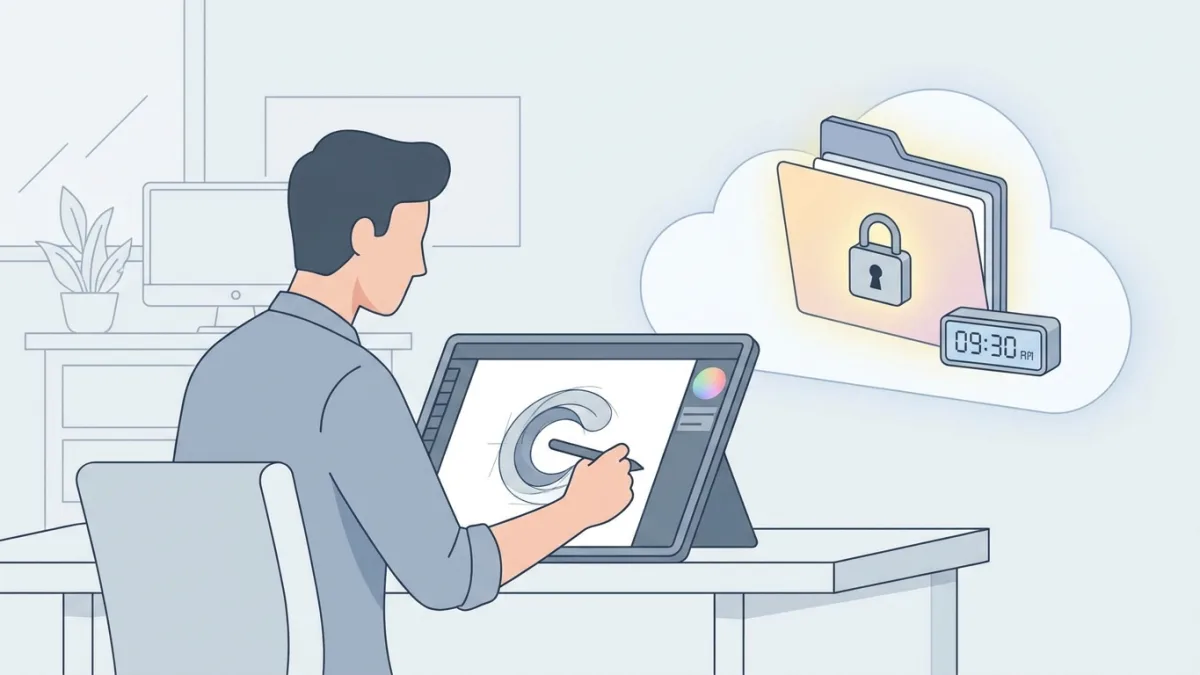
The platform uses SHA-256 cryptographic hashing. When you upload a file (an image, a PDF of your branding guidelines, or even a video), the system generates a unique, irreversible digital fingerprint of that file. This fingerprint is securely timestamped.
Step-by-Step Deposit Process
Protecting your work takes less than two minutes:
- Export your work: Save your final designs, sketches, or presentation decks.
- Upload to Copyright01: Log into your free account and select the appropriate deposit type (Image, Video, Document, etc.).
- Generate Certificate: The system instantly processes your file and provides a downloadable PDF certificate containing the SHA-256 fingerprint and an exact timestamp.
- Verify: Anyone, including clients or lawyers, can Verify a certificate to confirm its authenticity.
If you are a web designer who also writes custom CSS or HTML, you can even Protect GitHub Source Code and Repositories using the same platform.
Global Protection and the Berne Convention
Freelance designers often work with international clients. You might be based in London, designing a logo for a startup in New York, while your work is being stolen by a copycat in Sydney. How does copyright work across borders?
International Legal Recognition
Thanks to an international treaty known as the Berne Convention, your copyright is automatically recognized in 181 countries. You do not need to register your work separately in every single country where your client operates.
When you use Copyright01, your timestamped certificate serves as internationally recognized proof of prior creation. For a deeper dive into how this international framework operates, read our guide on Berne Convention Global Copyright Protection.
The Power of the Public Registry
Transparency is a powerful deterrent against theft. By opting to list your protected works in a Public deposit registry, you signal to the world—and to potential infringers—that your intellectual property is officially monitored and legally defended.
📋 Key takeaway: Global protection is automatic under the Berne Convention, but proving your global rights requires a verifiable, internationally recognized timestamp like the one provided by Copyright01.
Enforcing Your Rights and Fighting Plagiarism
Having a copyright certificate is only the first half of the battle; knowing how to use it when someone steals your work is the second half.
Handling Copyright Infringement
If you discover your graphic design being used without permission, do not panic. Follow these steps:
- Gather Evidence: Take screenshots of the stolen work, including URLs and dates.
- Prepare Your Proof: Retrieve your Copyright01 PDF certificate showing your SHA-256 timestamp.
- Send a Cease and Desist: Contact the infringer directly, attaching your certificate as proof of ownership.
- Issue a DMCA Takedown: If they refuse to remove it, contact their web host or the social media platform directly to force a takedown.
For a comprehensive strategy on dealing with thieves, consult our article on How to Fight Plagiarism and Infringement.
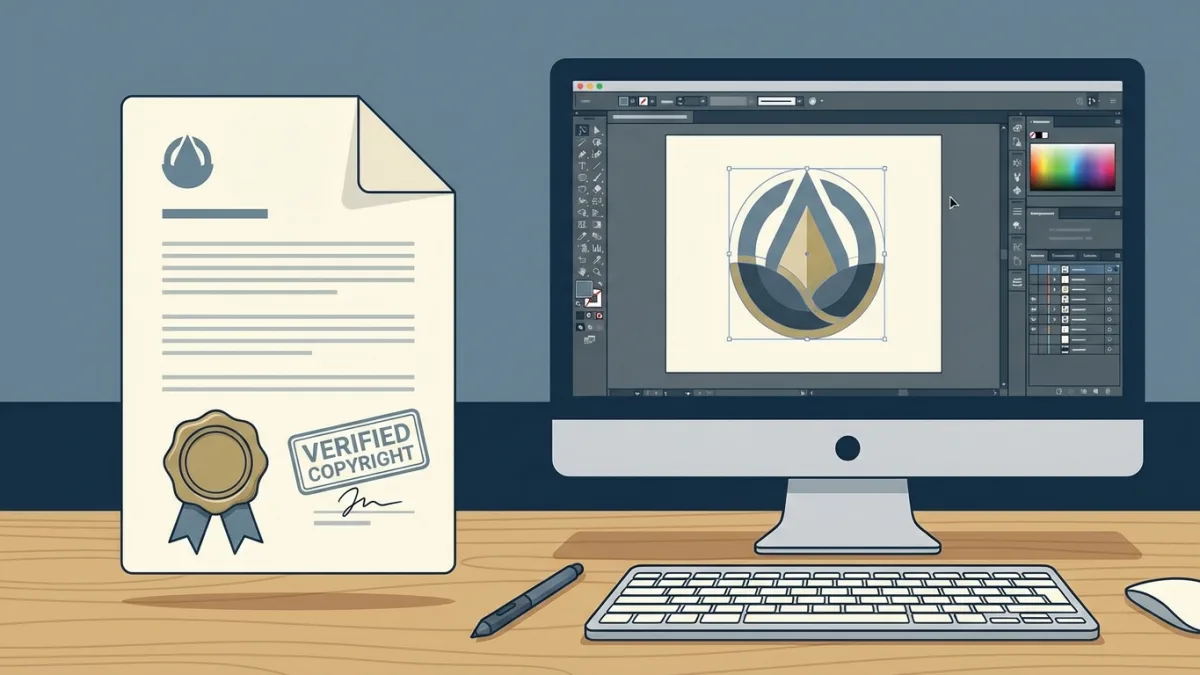
Using Free Legal Templates
Drafting legal notices or licensing agreements doesn't have to require expensive attorneys. You can utilize LegalGen: Free Legal Templates for Your Work to generate professional Cease and Desist letters, DMCA notices, and freelance contracts tailored to your specific needs.
Additionally, you should always Register Your Documents for Copyright, including your custom contracts and terms of service, to ensure your business operations are fully protected.
Best Practices for Freelance Contracts
One of the biggest pitfalls for freelance graphic designers is a poorly worded contract. Who owns the final logo? Who owns the discarded sketches? Can the client alter your artwork later?
Transfer of Rights vs. Licensing
By default, you (the creator) own the copyright to everything you make, even if a client pays you for it. The client only owns the copyright if you explicitly sign a "Transfer of Copyright" or "Work for Hire" agreement.
Instead of giving away your rights entirely, many designers prefer to license their work. Licensing allows the client to use the design for specific purposes, while you retain ultimate ownership.
| Feature | Exclusive License | Non-Exclusive License | Full Copyright Buyout (Transfer) |
|---|---|---|---|
| Who owns the work? | The Designer | The Designer | The Client |
| Can the designer resell it? | No | Yes | No |
| Can the client modify it? | Depends on contract | Depends on contract | Yes, unlimited |
| Cost to Client | High | Low to Medium | Very High (Premium) |
| Best used for... | Custom campaign graphics | Stock illustrations, templates | Logos, core brand identities |
Always ensure your invoices and contracts clearly state what rights are being transferred. If you are designing a logo, a full buyout is standard (and should be priced accordingly). If you are creating an editorial illustration for a magazine, a limited license is usually best.
Conclusion
As a freelance graphic designer, your creativity is your currency. Failing to protect it leaves you vulnerable to exploitation, unpaid work, and portfolio theft. By integrating copyright registration into your standard workflow, you build a robust legal foundation for your business.
Take advantage of modern tools. Register your designs, secure your social media presence, and use legally binding certificates to negotiate better contracts and fight off copycats. Your art is worth protecting.
Copyright01
Free copyright protection service. PDF certificate with SHA-256 fingerprint, recognised in 181 countries.