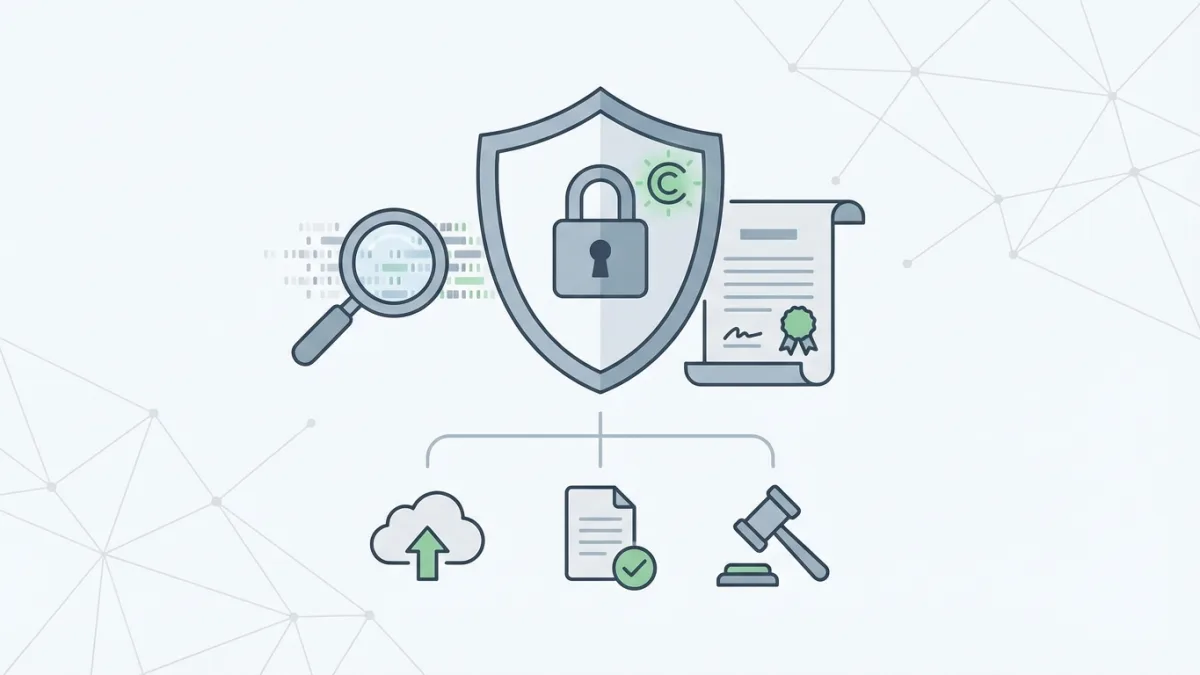
Discover the proven steps to combat plagiarism. Protect your intellectual property, gather evidence, and enforce your copyright rights globally today.
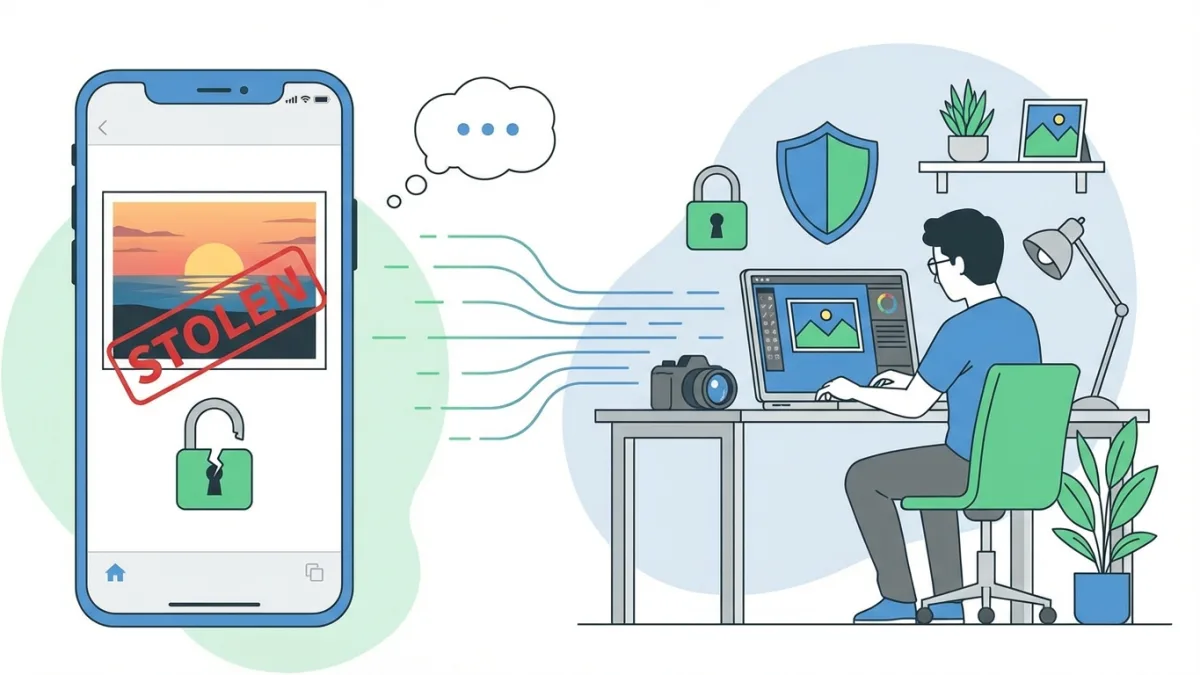
Discovering that someone has stolen your creative work is a frustrating and often demoralizing experience. Whether it is a blog post, a unique photograph, or complex source code, copyright infringement can damage your brand, dilute your SEO efforts, and rob you of deserved revenue. Fortunately, the law is on your side. By understanding the specific steps to take against plagiarism, you can regain control of your intellectual property and ensure your rights are respected worldwide.
In this comprehensive guide, we will walk you through the essential actions to take when you are a victim of theft, from gathering digital proof to leveraging international treaties like the Berne Convention.
Step 1: Identifying and Confirming the Infringement
The first step in any copyright dispute is to clearly identify the theft. Not every similarity constitutes plagiarism, so you must distinguish between inspiration and actual infringement.
Distinguishing Inspiration from Theft
Copyright law protects the expression of an idea, not the idea itself. If someone writes an article about the same topic as you but uses their own structure and wording, it may not be infringement. However, if they copy-paste your paragraphs, use your unique images without permission, or replicate your proprietary code, you have a clear case of plagiarism.
Tools for Detecting Infringement
To monitor your work effectively, you should use digital detection tools:
- For Text: Use Copyscape or Siteliner to find duplicate content across the web.
- For Images: Use Google Lens or TinEye's reverse image search to see where your visuals are being used.
- For Code: Monitor platforms like GitHub for unauthorized repositories containing your source code.
📋 Key takeaway: Always keep a master record of your original creation date. This is the foundation of any legal claim you might make later.

Step 2: Gathering Indisputable Evidence
Once you find a violation, do not contact the infringer immediately. They might delete the evidence or hide the page. You must first secure proof that the infringement occurred and that you are the rightful owner.
The Importance of a Timestamped Certificate
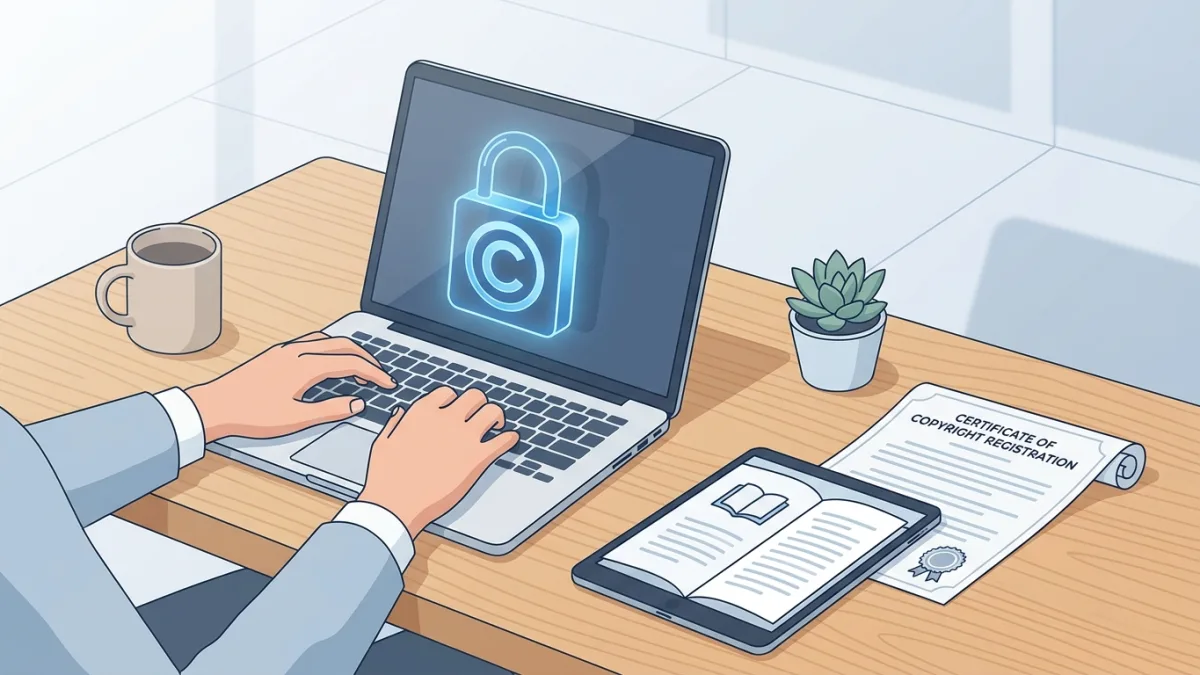
The most powerful evidence you can possess is a timestamped certificate of deposit. Copyright01 provides an instant PDF certificate with an SHA-256 timestamped fingerprint. This cryptographic hash serves as a digital seal, proving that your work existed in a specific state at a specific time. This is why you should always register your documents for copyright before publishing them.
Documenting the Infringement
Take high-quality screenshots of the infringing content. Ensure the URL and the date are visible in the screenshot. If the content is on a website, you can use tools like the Wayback Machine to archive the page. However, a private certificate is your strongest shield. If you have already deposited your work, you can easily verify a certificate to present to authorities.
⚠️ Warning: Do not alert the infringer until you have your evidence safely archived. If they delete the content before you document it, you may lose your ability to claim damages.
Step 3: Taking Action Through Amicable Contact
Many cases of plagiarism are accidental or committed by individuals who do not understand copyright law. An amicable approach is often the fastest and cheapest way to resolve the issue.
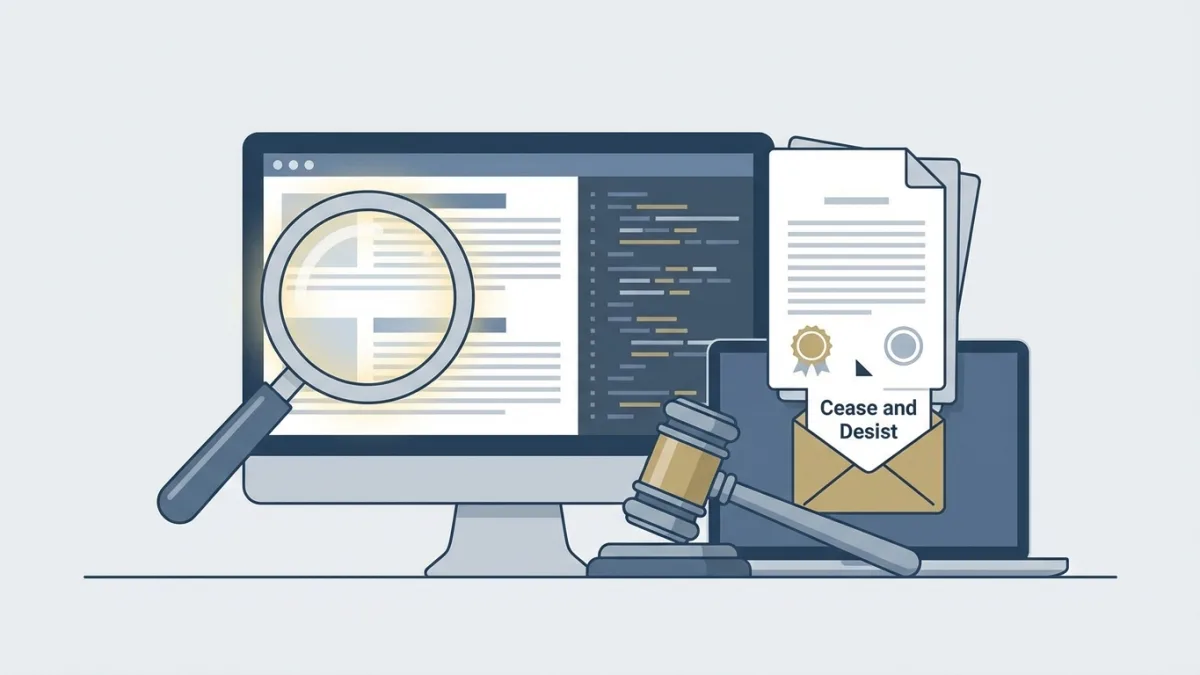
Sending a Cease and Desist Letter
A formal "Cease and Desist" letter should be sent to the infringing party. It should include:
- Your identity and contact information.
- A link to your original work.
- Proof of your ownership (mentioning your Copyright01 certificate).
- A link to the infringing content.
- A clear demand (e.g., remove the content within 48 hours or add a backlink with attribution).
When to Negotiate
In some cases, you might prefer a backlink or a licensing fee instead of a full removal. If you are an author, you might want to protect your writing with copyright deposit and then offer the infringer a chance to pay for the usage rights.
| Action Type | Best For | Pros | Cons |
|---|---|---|---|
| Amicable Letter | Accidental theft | Fast, maintains relationships | Might be ignored |
| DMCA Takedown | Website/Social Media | Highly effective, no lawyer needed | Only works for hosted content |
| Legal Litigation | Commercial theft | High damages, finality | Expensive and slow |
Step 4: Leveraging Digital Takedown Notices (DMCA)
If the infringer ignores your direct contact, the next step is to go to the source: the platform hosting the content. Under the Digital Millennium Copyright Act (DMCA) and similar international laws, hosting providers are required to remove infringing content once notified.
Social Media Infringement
Social media platforms have dedicated forms for reporting copyright violations. Whether your work was stolen on a video platform or a microblogging site, you can use your registration as proof.
- To protect your visual assets, follow the Protect Your Visual Works: Image Copyright Guide.
- If your videos are being re-uploaded, learn how to copyright your YouTube video content.
- For short-form content, you should protect your Instagram content from theft or protecting your Facebook content copyright.
Search Engine De-indexing
You can also request that Google and Bing remove the infringing pages from their search results. This effectively "kills" the traffic to the stolen content, even if the website owner refuses to take it down.
💡 Tip: When filing a DMCA notice, always include the URL of your entry in the Public deposit registry to show the platform that your claim is backed by a professional third-party registry.

Step 5: Enforcing Your Rights Internationally
One of the biggest misconceptions is that copyright only applies in your home country. Thanks to the Berne Convention, your work is protected in 181 countries. This means that if you are in the US and someone in France steals your work, you have legal standing to act.
Protecting Technical and Creative Works
Infringement isn't limited to just text or art. Developers must often protect GitHub source code and repositories from being cloned and sold. Similarly, musicians and filmmakers should protect music and video copyright online to prevent unauthorized distribution.
Why You Need a Certificate for Legal Action
If a case goes to court, the judge will ask for proof of authorship. A Copyright01 certificate provides a "certain date" (date certaine) which is a legal standard in many jurisdictions. It shifts the burden of proof to the infringer; they must now prove they created the work before your timestamp, which is impossible if you registered it immediately.
Step 6: Prevention is the Best Defense
The best way to handle plagiarism is to prevent it from happening—or to make it so easy to fight that it becomes a non-issue.
Secure Your Digital Presence
Every page of your site should be protected. You can secure your website content with copyright to cover your design, layout, and copy. If you use social media for marketing, ensure you protect your X Twitter content copyright as well.
Start Today for Free
You don't need a lawyer to start protecting your work. You can create a free account on Copyright01 and begin depositing your files immediately. Understanding why register your copyright is the first step toward a secure creative career.
📋 Key takeaway: A proactive strategy involving immediate registration and regular monitoring is the only way to truly safeguard your intellectual property in the digital age.
Conclusion
Plagiarism is a serious threat, but it is not one you have to face unprepared. By following these steps—confirming the theft, gathering SHA-256 timestamped evidence, attempting amicable resolution, and utilizing DMCA takedowns—you can effectively defend your creative output. Copyright01 is here to provide the tools you need to prove your ownership in 181 countries, ensuring that your hard work remains yours and yours alone.
Copyright01
Free copyright protection service. PDF certificate with SHA-256 fingerprint, recognised in 181 countries.