Discover the top 5 copyright mistakes creators make and learn how to protect your intellectual property with digital timestamping and robust evidence.
As a creator, your intellectual property is your most valuable asset. Whether you write articles, compose music, code software, or produce videos, your original work deserves robust protection against theft and unauthorized use. However, many creators unknowingly expose their content to plagiarism by falling into common traps. Understanding and avoiding these critical copyright mistakes is the first step toward securing your creative legacy.
In this comprehensive guide, we will explore the top five errors creators make when trying to safeguard their work. By learning from these pitfalls, you can establish strong evidence of prior existence and defend your rights effectively. Let's dive into what you need to know and Why register your copyright? before it is too late.
Mistake 1: Assuming Creation Automatically Provides Proof
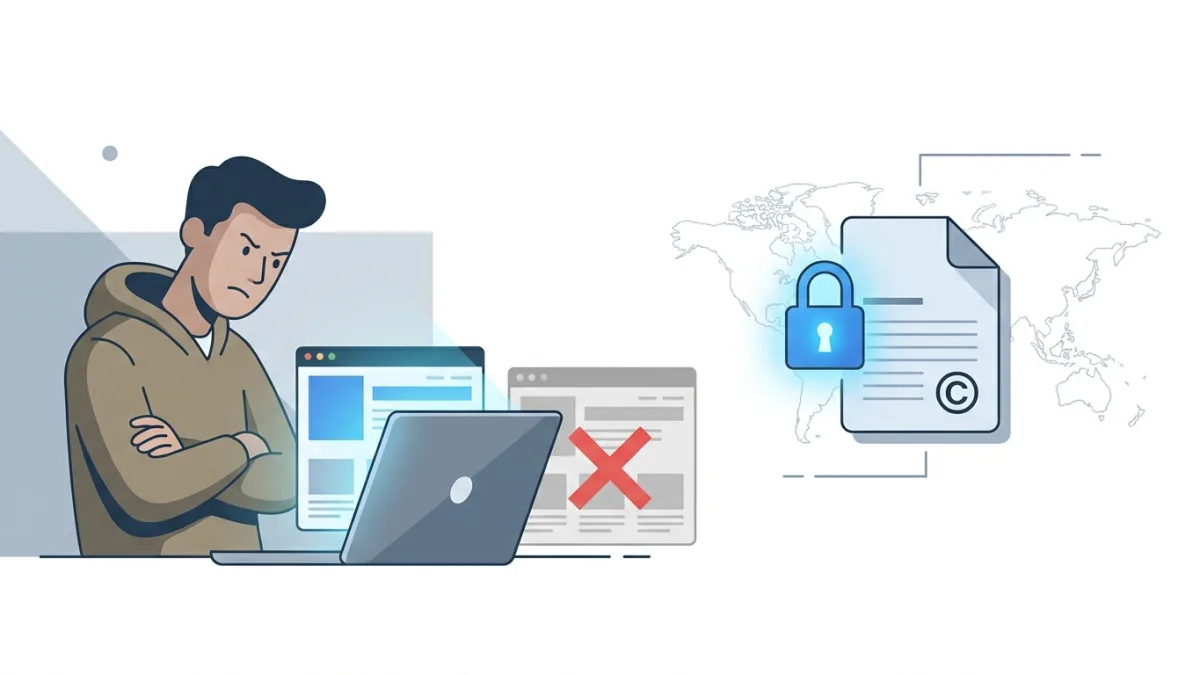
One of the most widespread misconceptions in the creative world is the belief that simply creating a work offers enough protection to defend it against infringement. While it is true that copyright arises automatically upon creation, proving that you are the original author is an entirely different challenge.
The Myth of Automatic Protection
Under international law, you do not technically need to register a work for copyright to exist. The moment your idea is fixed in a tangible medium—such as written on paper, recorded as an audio file, or saved as code—you hold the rights to it. However, if a dispute arises, the burden of proof falls entirely on you. If someone steals your design or text and claims it as their own, the fact that you created it first is useless unless you can provide objective evidence.
⚠️ Warning: Never rely solely on the creation date of a file on your computer. File metadata can be easily altered and is rarely accepted as strong evidence in a dispute.
Why Objective Evidence is Everything
To successfully defend your work, you need a reliable way to establish a clear timeline. This means you must prove that your work existed at a specific point in time before the infringer published their version. Understanding the nuances between simply having rights and being able to prove them is crucial. For a deeper dive into this distinction, you can explore the Authors Rights and Copyright Differences.
Without a formalized deposit that includes digital timestamping, you leave your intellectual property vulnerable to anyone who might register it before you do.
Mistake 2: Relying on Outdated or Weak Proof Methods
Many creators attempt to save money or time by using outdated methods to establish a date of creation. Unfortunately, these archaic techniques often fail when put to the test.
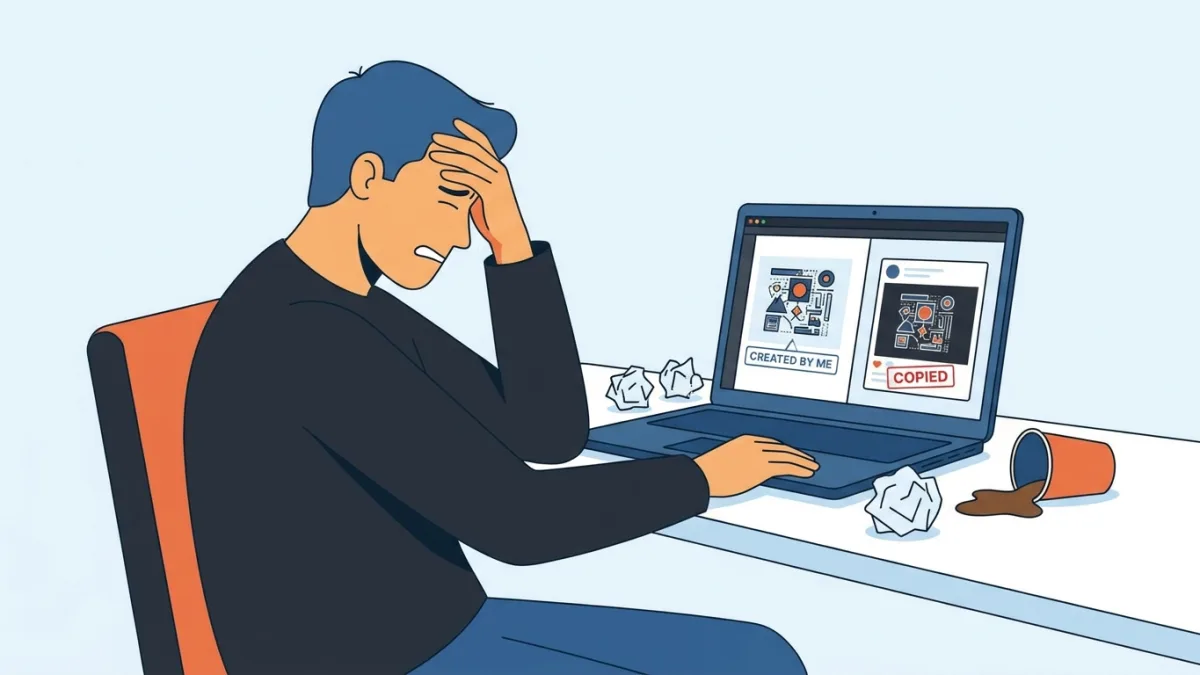
The Failure of the Poor Man's Copyright
The most famous of these outdated methods is the "poor man's copyright," which involves mailing a copy of your work to yourself and leaving the envelope sealed. The idea is that the postal date stamp will serve as proof of creation. However, this method is fundamentally flawed. Envelopes can be unsealed and resealed, and courts frequently dismiss this type of evidence because it is too easy to manipulate.
Similarly, older physical registration methods are becoming obsolete in our fast-paced digital world. To understand why physical methods are no longer sufficient, read our comparison on the Soleau Envelope vs Modern Free Copyright.
The Modern Solution: Digital Timestamping
Today, protecting your work requires modern technological solutions. Instead of relying on postal services, creators should use digital timestamping combined with cryptographic hashing. When you register a file—whether it is text, an image, audio, or a YouTube video—a unique SHA-256 fingerprint is generated. This fingerprint acts as a digital DNA for your file.
Combined with a secure timestamp, this method creates a highly reliable record of your work's existence at a precise second. To learn more about how this technological approach works, read our guide on how to Prove Prior Existence Using Timestamping.
Failing to upgrade your protection strategy is one of the 5 Fatal Online Copyright Deposit Mistakes that can cost you your intellectual property.
Comparing Proof Methods
| Method | Reliability | Ease of Use | Format Support |
|---|---|---|---|
| Poor Man's Copyright | Very Low | Moderate | Physical only |
| Physical Envelopes | Moderate | Low (requires mailing) | Physical only |
| Digital Timestamping (SHA-256) | Very High | High (Instant online) | Text, Audio, Video, Code, URLs |
Mistake 3: Delaying Registration Until It Is Too Late
Procrastination is a creator's worst enemy. Many authors, developers, and musicians wait until their work is fully complete, published, and generating revenue before they think about securing their rights. By then, the work has often already been exposed to potential thieves.
The Race for Prior Existence
In the realm of intellectual property, timing is everything. Establishing prior existence means you can prove you possessed the work before anyone else. If you publish an unprotected track online and someone downloads it, modifies it slightly, and registers it under their name, you will face an uphill battle to reclaim your rights.
💡 Tip: Always register your work before you share it with beta testers, publishers, or the general public. Securing your rights early provides peace of mind as you distribute your creations.
Securing Various Formats Promptly
Delaying protection is especially risky for digital formats that are easily downloadable and shareable. Whether you are launching a new audio series or pushing code to a public repository, immediate registration is key. For example, podcasters should secure their episodes before RSS distribution. Learn how to Protect Your Podcast With Audio Copyright to prevent unauthorized syndication.
By registering early, you leverage technology to lock in your creation date. Discover How Digital Timestamping Protects Creators by establishing an objective timeline that predates any potential infringement.
Mistake 4: Overlooking International Copyright Laws
The internet has erased geographical borders for content distribution. A photograph uploaded in Paris can be downloaded and used commercially in Tokyo within seconds. Despite this global reality, many creators only think about protection within their own country.

Global Reach Matters
If you only secure your work locally, you may find yourself defenseless when an overseas entity plagiarizes your content. Navigating foreign intellectual property laws can be complex and expensive if you do not have a universally recognized form of proof.
Leveraging the Right Treaties
Fortunately, international treaties exist to simplify global protection. The most significant of these is the Berne Convention, an international agreement that requires its member countries to recognize the copyright of works from other member states. Currently recognized in 181 countries, the Berne Convention ensures that a strong proof of prior existence established in one member country is respected across almost the entire globe.
📋 Key takeaway: Ensure your copyright registration service provides proof that aligns with the standards of the Berne Convention, allowing you to assert your rights internationally without needing to register in every single country.
Mistake 5: Not Enforcing Your Rights When Copied
Securing proof of your work is only half the battle; the other half is actively defending it. A common mistake creators make is freezing up or doing nothing when they discover their work has been stolen. Inaction signals to infringers that they can continue exploiting your content without consequences.
Spotting Infringement Online
You must proactively monitor the web for unauthorized use of your content. This includes checking social media platforms, video sharing sites, and search engines. If you find your intellectual property being used without permission, you must act swiftly.
Taking Action Effectively
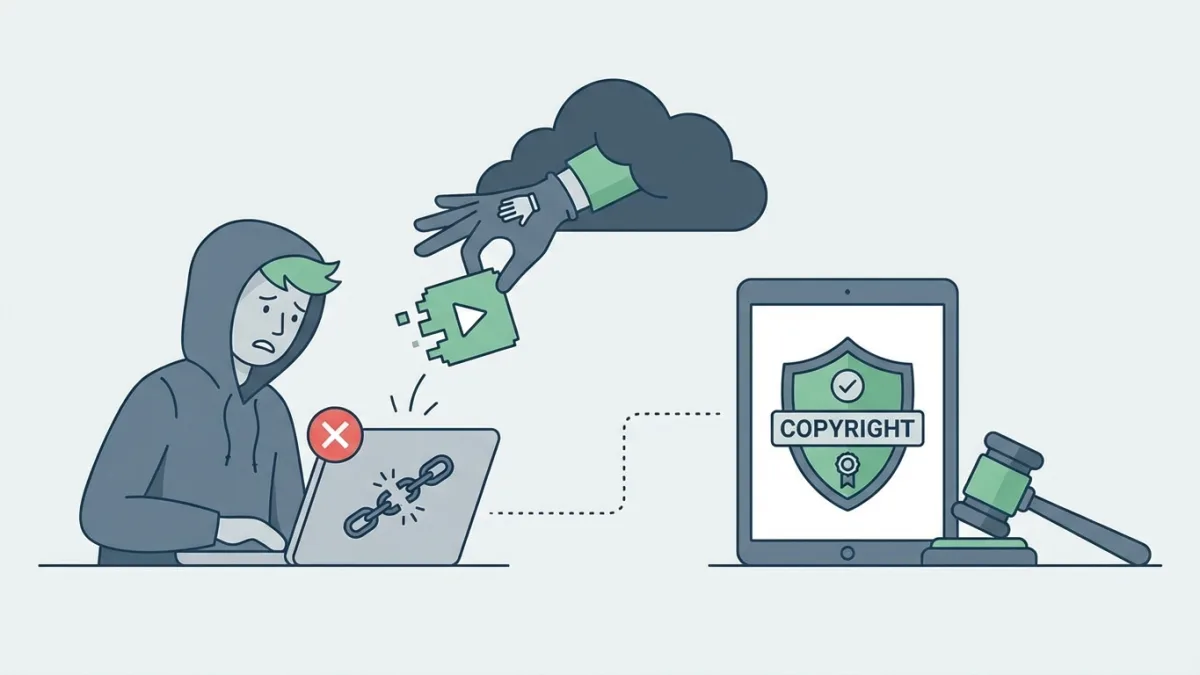
When you have a registered deposit, you possess the necessary leverage to demand the removal of stolen content. Most online platforms comply with takedown requests when presented with clear evidence of prior existence.
- For Video Content: If someone re-uploads your clips, you can issue a formal takedown notice. Read our guide on How to Remove a Stolen YouTube Video Fast.
- For Visuals and Photos: Photographers and graphic designers frequently face unauthorized use. Learn how to Remove Stolen Images With a DMCA Takedown.
- For Text and Code: If an entire domain is scraping your articles or duplicating your web design, you can contact their hosting provider. Find out How to Shut Down a Website Copying Yours.
Having a solid registration certificate makes these processes significantly smoother, dramatically increasing your chances of Winning Your Copyright Dispute Online.
How to Secure Your Work Today
Avoiding these five mistakes is essential for any serious creator. By understanding the need for objective proof, utilizing modern digital timestamping, registering early, recognizing international treaties, and actively enforcing your rights, you build a fortress around your intellectual property.
The Copyright01 Advantage
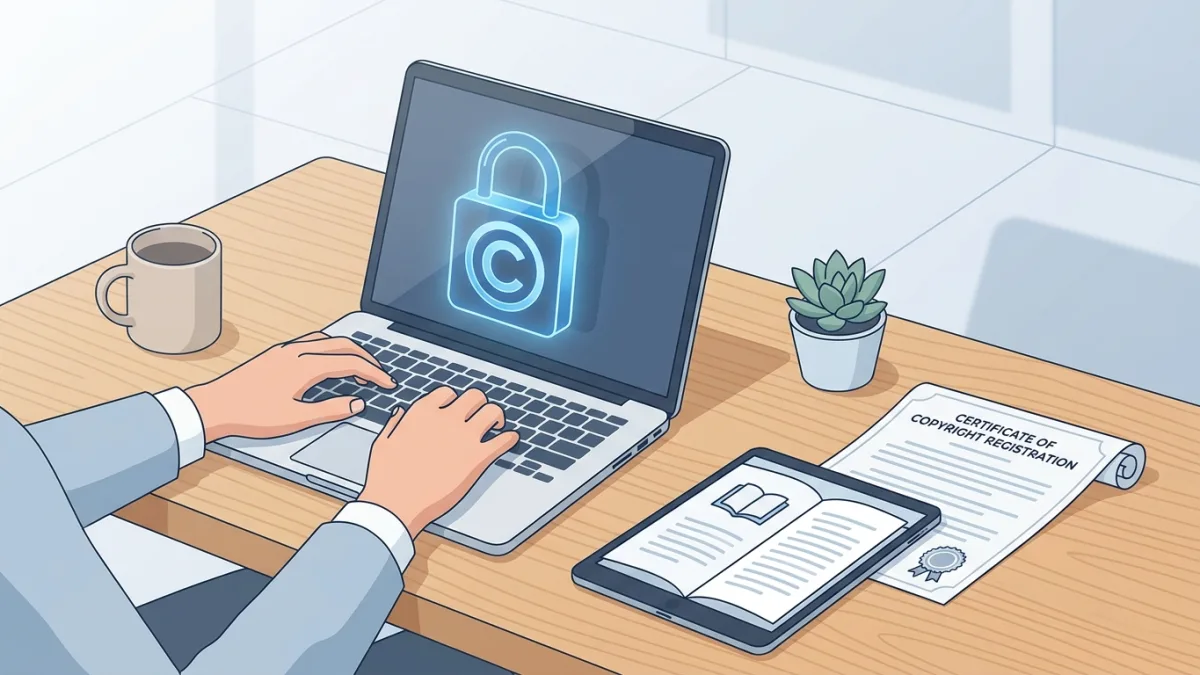
At Copyright01, we provide a streamlined, highly secure platform to help you avoid these common pitfalls. Our service utilizes a SHA-256 fingerprint and digital timestamping to create a robust PDF certificate for your work. Your files are protected using server-side AES-256 encryption and are preserved for a minimum of 10 years.
Whether you are depositing text, images, audio, video, source code, or social media content (including Instagram, TikTok, and X), we have you covered. Our certificates establish proof of prior existence recognized in 181 countries under the Berne Convention.
To see how our system ensures transparency, you can Verify a certificate or browse our Public deposit registry.
Ready to stop making copyright mistakes and start protecting your creative assets? Create a free account today and enjoy your first 3 deposits completely free. After that, you can choose flexible credit packs starting at EUR 4.90 or opt for a comprehensive subscription at EUR 9.90/month or EUR 79/year.
Copyright01
Free copyright protection service. PDF certificate with SHA-256 fingerprint, recognised in 181 countries.