Discover 10 common copyright mistakes that can cost you your intellectual property rights. Learn how to protect your creative work and secure solid proof.
As a creator, your intellectual property is one of your most valuable assets. Whether you write code, compose music, design graphics, or produce videos, your creative output deserves robust protection. However, navigating the complex landscape of intellectual property law can be challenging. Many creators unknowingly commit critical copyright mistakes that jeopardize their ownership rights, leaving them vulnerable to theft and unauthorized use.
While the law grants you protection the moment you create an original work, enforcing those rights requires strategy, vigilance, and solid evidence. In this comprehensive guide, we will explore 10 critical errors that can compromise your intellectual property and show you how to secure your creative assets effectively.
Documentation and Proof Errors
The most fundamental aspect of protecting your work is being able to prove that you created it first. Failing to establish this timeline is a primary reason creators lose disputes.
1. Assuming Creation Equals Automatic Proof
One of the most widespread misconceptions in the creative world is the belief that simply creating a work is enough to protect it. According to the Berne Convention, copyright protection is indeed automatic upon creation. You do not have to jump through complex administrative hoops to own your work.
However, there is a massive difference between owning a right and being able to prove it in a dispute. If someone steals your design and claims they created it before you did, how do you prove otherwise? Without a recognized proof of prior existence, it becomes a scenario of your word against theirs. This is exactly why register your copyright? is a question every creator must ask themselves. By registering your work, you generate a clear, timestamped record that establishes you as the author at a specific point in time.
⚠️ Warning: Relying solely on automatic protection without securing a timestamped proof is the fastest way to lose a plagiarism dispute.
To understand how international treaties support your rights once you have proof, you can read more about Berne Convention Global Copyright Protection.
2. Using Outdated Protection Methods
Many creators still rely on outdated or poorly adapted methods to protect their work. The "poor man's copyright"—mailing a sealed envelope containing your work to yourself—is a classic example. While it was popular decades ago, modern courts often view this method as weak evidence because envelopes can be manipulated.
Similarly, some creators use older physical registration systems that are slow, cumbersome, and difficult to manage. If you are still using these methods, you are putting your intellectual property at risk. We recommend Comparing 5 Proof of Prior Existence Methods to see why digital solutions are far superior today. For a deeper dive into how traditional methods stack up against modern technology, check out our guide on the Soleau Envelope vs Modern Digital Registration.
Modern digital registration offers a PDF certificate with an SHA-256 fingerprint and digital timestamping, providing robust evidence recognized in 181 countries.
Collaboration and Contract Flaws
Creating in a vacuum is rare. Most projects involve clients, freelancers, or co-authors. Mismanaging these relationships can lead to disastrous copyright loss.
3. Working Without Clear Freelance Contracts
If you are a freelancer, or if you hire one, the absence of a clear contract can create massive ownership disputes. Under the "work for hire" doctrine in many jurisdictions, the creator retains the copyright unless a written agreement explicitly transfers those rights to the client.
Many graphic designers, writers, and developers hand over their final files without a contract, leading clients to assume they own the underlying intellectual property. Conversely, clients who pay for a project may be shocked to learn they only purchased a license to use the work, not the copyright itself. To navigate these tricky waters, review the specifics of Copyright for Freelance Graphic Designers.
💡 Tip: Always use clear, written agreements before starting a project. If you need help drafting these agreements, you can use tools like LegalGen: Free Legal Templates for Your Work.
4. Failing to Define Co-Authorship
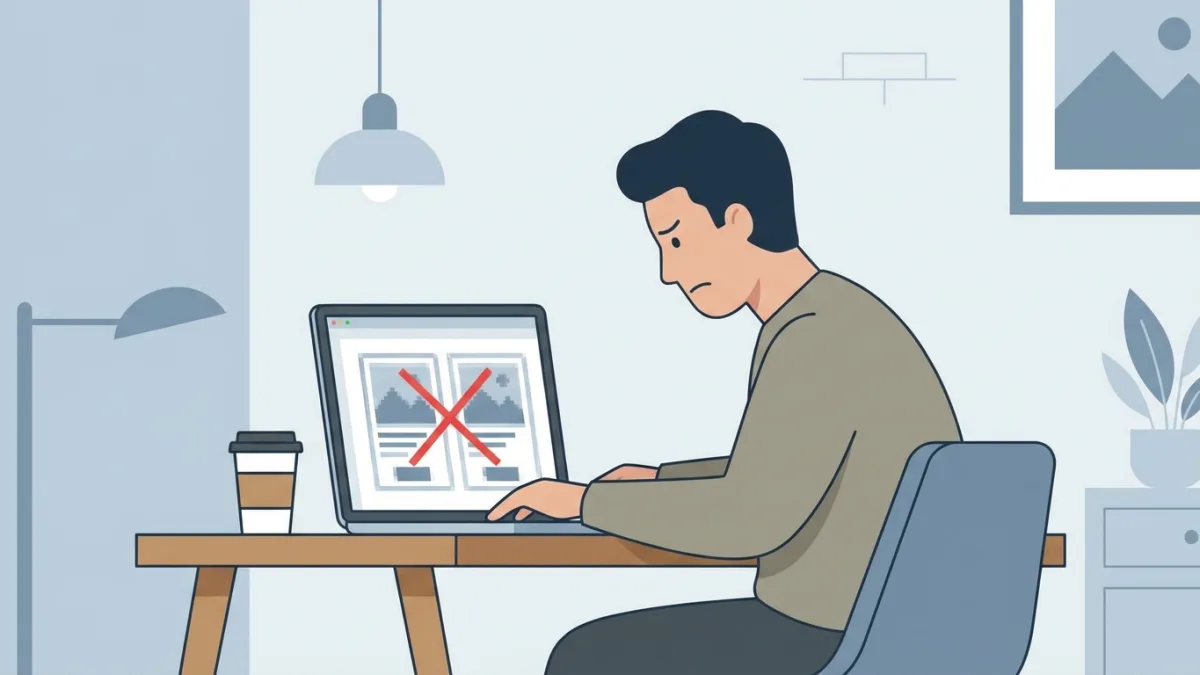
When two or more people collaborate on a creative project—such as writing a song, developing software, or co-authoring a book—they typically become joint owners of the copyright. However, if the contributions and ownership percentages are not defined early on, disputes are almost inevitable.
If a band breaks up or a startup dissolves, who owns the rights to the music or the code? Without a prior agreement, each co-author might have the right to license the work independently, potentially undercutting the others. This is a critical issue for musicians, which is why understanding How to Protect Your Music in 2026 is vital for any collaborative audio project.
Digital Content and Open Source Missteps
The internet has made publishing easier than ever, but it has also made theft incredibly simple. Failing to understand the digital landscape is a major vulnerability.
5. Leaving Social Media Assets Unprotected
Every day, creators upload millions of images, videos, and texts to platforms like YouTube, Instagram, Facebook, X, and TikTok. While these platforms have their own terms of service, posting your content does not automatically secure your rights against third-party theft.
Many content creators find their videos re-uploaded by other accounts or their images used in commercial ads without permission. Because social media platforms compress and strip metadata from files, proving you are the original creator after the fact can be surprisingly difficult. You should always register your digital files—whether they are text, image, audio, or video—before hitting the publish button.
6. Misusing Open Source and Public Licenses
For software developers and digital creators, open-source licenses (like MIT, GPL, or Creative Commons) are fantastic tools for sharing work. However, misunderstanding these licenses can lead to an unintentional loss of exclusive rights.
If you apply a permissive license to your proprietary source code without fully understanding the implications, you might legally allow competitors to use, modify, and sell your work. Furthermore, incorporating someone else's openly licensed code into your proprietary project can sometimes force you to release your entire project under that same open license. To avoid these costly errors, it is crucial to Protect GitHub Source Code and Repositories properly and register your original code.
7. Claiming Full Ownership over AI Content
The rise of generative AI has blurred the lines of authorship. A common mistake today is generating an image or an article using AI and assuming you hold the full copyright to that output.
In most jurisdictions, copyright law requires human authorship. If a work is entirely generated by a machine, it may not be eligible for copyright protection at all. If you heavily edit or combine AI-generated elements with your own original work, you might only own the rights to the human-created portions. Misrepresenting AI content as entirely your own can invalidate your copyright claims. Learn more about navigating this complex topic in our guide on AI Content and Copyright Rules Explained.
📋 Key takeaway: Always document the human creative process involved in your projects, especially when utilizing AI tools as part of your workflow.
Enforcement and Monitoring Failures
Protecting your work is an ongoing process. Even with the best registration, failing to enforce your rights renders them useless.
8. Ignoring Online Plagiarism
Many creators adopt a passive approach, hoping their work won't be stolen. When they do stumble upon a copycat, they often ignore it, thinking the legal hassle isn't worth their time.
However, ignoring plagiarism can weaken your legal standing over time. If you allow widespread unauthorized use of your work, it may become harder to enforce your rights later, as infringers could argue that you abandoned your copyright. Regularly searching for your text, images, or code online is essential. If you find unauthorized copies, you must know how to Detect Website Plagiarism and Take Action to protect your brand and income.
9. Issuing Takedown Notices Without Evidence
When you find a stolen piece of work, your first instinct might be to send an immediate DMCA takedown notice or a cease-and-desist letter. However, issuing these notices without having your proof of prior existence ready is a strategic mistake.
If the infringer pushes back and files a counter-notice, the platform will likely restore the content unless you can provide robust evidence of your ownership. Before initiating any conflict, ensure your documentation is in order. Learn the proper steps on How to Fight Plagiarism and Infringement. If you have registered your work, you can easily Verify a certificate to show the platform or the infringer that your claim is backed by digital timestamping.
10. Losing Your Original Source Files
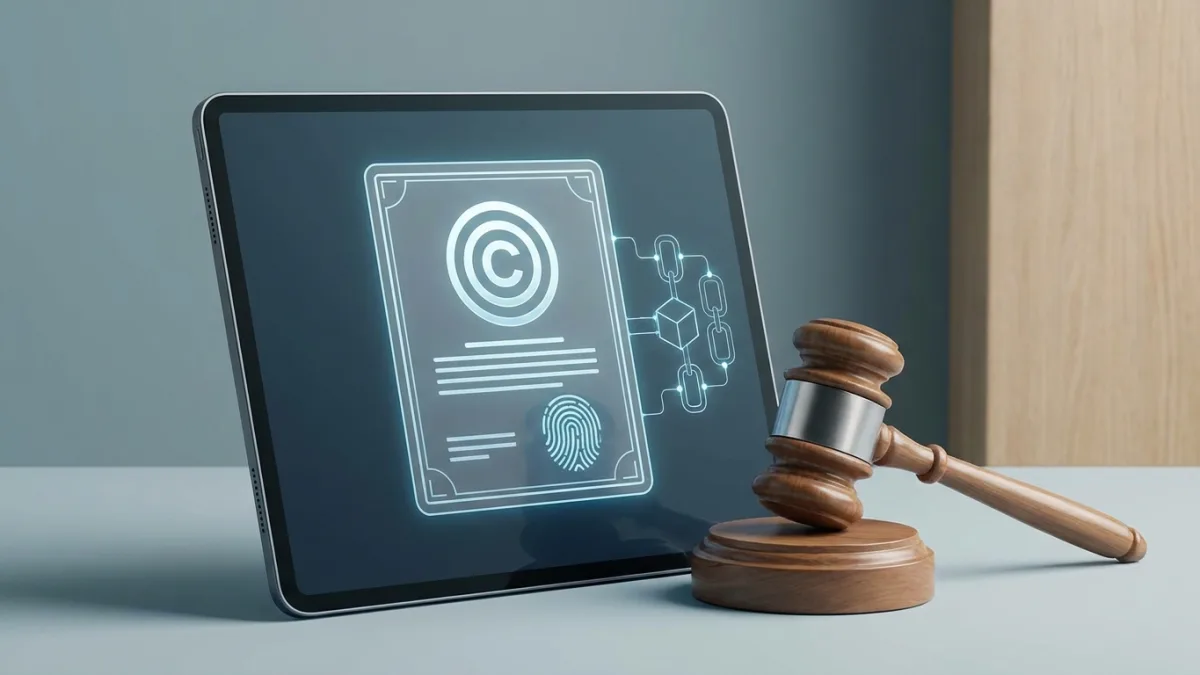
Your original source files (like PSDs for images, RAW video footage, or uncompiled source code) are excellent supplementary evidence of your authorship. A critical mistake creators make is deleting these files to save hard drive space or losing them due to hardware failure.
Without source files, and without a registered deposit, proving the evolution of your creative process is incredibly difficult. This is why a secure archiving strategy is essential. Copyright01 preserves your deposits for a minimum of 10 years, utilizing server-side AES-256 encryption to ensure your files remain intact and accessible when you need them.
Expectations vs. Reality in Copyright Law
To summarize the common pitfalls, here is a breakdown of what creators often believe versus the actual legal landscape:
| Creator's Assumption | The Legal Reality |
|---|---|
| "I created it, so I automatically have proof." | Protection is automatic, but proof requires a timestamped record. |
| "Mailing a letter to myself is enough." | The 'poor man's copyright' is outdated and often dismissed as weak evidence. |
| "I paid the freelancer, so I own the work." | Unless explicitly stated in a contract, the freelancer retains the copyright. |
| "I can copyright AI-generated art." | Copyright generally requires human authorship; pure AI output is often unprotected. |
| "Social media platforms protect my uploads." | Platforms secure their own licensing rights; they do not enforce your copyright for you. |
Secure Your Creative Future Today
Avoiding these 10 mistakes is the first step toward building a resilient creative career. Intellectual property is the foundation of your professional value, and leaving it unprotected is a risk you cannot afford to take.
By utilizing a modern online copyright registration service, you can secure your work with a PDF certificate featuring an SHA-256 fingerprint and digital timestamping. This provides you with recognized proof of prior existence in 181 countries, preserved securely for a minimum of 10 years.
Whether you need to protect text, images, audio, video, source code, or content from your website, GitHub, YouTube, Instagram, Facebook, X, or TikTok, the process is straightforward and accessible. You can even choose to display your protected status in a Public deposit registry to deter potential plagiarists.
Don't wait until your work is stolen to think about protection. Take proactive steps today. You can start protecting your assets immediately and Create a free account to get your first 3 deposits for free. After that, affordable options like credit packs from EUR 4.90 or a subscription at EUR 9.90/month (or EUR 79/year) ensure your entire portfolio remains secure.
Frequently Asked Questions
What happens if I don't register my copyright? While you still own the copyright upon creation, you will lack a recognized, timestamped proof of prior existence. This makes it incredibly difficult to prove you are the original author if someone steals your work and claims it as their own.
Does a digital timestamp work internationally? Yes. Thanks to the Berne Convention, which spans 181 countries, a robust digital timestamp and SHA-256 fingerprint serve as strong, admissible evidence of prior existence across most global jurisdictions.
Can I protect content already published on social media? It is highly recommended to register your files before publishing. However, if you have already posted content on YouTube, Instagram, or TikTok, you should still register the original files immediately to establish a clear timestamp from this point forward.
How long does my copyright registration last? With a service like Copyright01, your digital deposits and certificates are securely preserved for a minimum of 10 years, ensuring long-term access to your proof of prior existence whenever you might need it.
Copyright01
Free copyright protection service. PDF certificate with SHA-256 fingerprint, recognised in 181 countries.