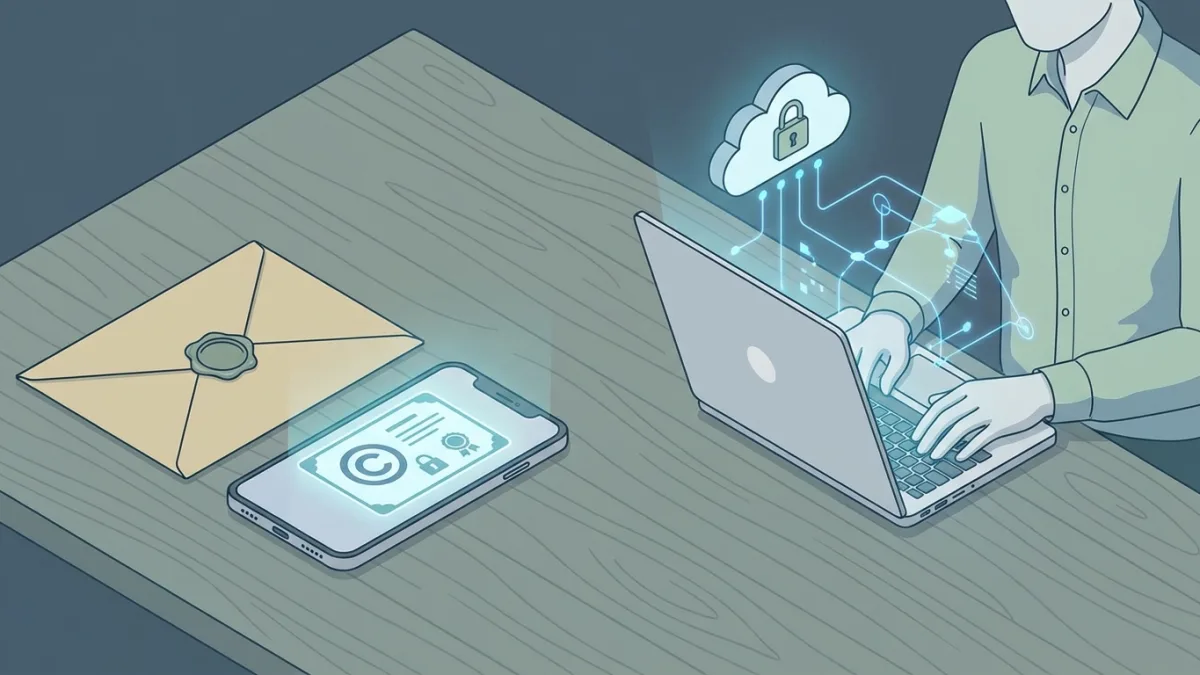
Is the traditional Soleau envelope still relevant today? Compare physical copyright methods with modern digital registration to protect your creative work.
For decades, creators have sought reliable methods to establish a clear date of creation for their original works. Among the most famous historical methods in European intellectual property law is the Soleau envelope. But as creative mediums have evolved from paper manuscripts to complex digital ecosystems, a pressing question arises: is the traditional Soleau envelope still useful compared to modern digital solutions?
If you are evaluating Comparing 5 Proof of Prior Existence Methods, understanding the difference between physical sealing and digital timestamping is crucial. This comprehensive guide explores the history of physical copyright methods, their modern limitations, and why digital registration has become the standard for today's creators.
What is the Soleau Envelope?
To understand the shift toward digital protection, we must first examine the origins of physical copyright proof. The Soleau envelope, named after its French inventor Eugène Soleau, is a physical, two-compartment envelope traditionally used to deposit a reproduction of an invention, design, or written work.
The Mechanics of Physical Copyright Proof
Historically, a creator would place identical copies of their work into both compartments of the envelope. Upon submission to a patent or intellectual property office, the envelope would be perforated with a date stamp. One compartment was returned to the creator, while the other was securely archived by the office. If a dispute arose, the archived compartment could be opened by a judge to establish a clear date of creation.
This method shares similarities with the concept of the "poor man's copyright," where a creator mails a sealed copy of their work to themselves through the postal service, relying on the postmark date.
💡 Tip: Before deciding on a protection strategy, it is highly recommended to understand exactly Why register your copyright? to ensure you choose the method that best fits your specific creative medium.
The Limitations of Traditional Methods
While the Soleau envelope and similar physical methods were revolutionary in the 20th century, they present significant drawbacks in the digital age:
- Size and Format Restrictions: Physical envelopes can only hold a limited number of paper pages. They cannot accommodate complex digital files, 3D models, high-resolution videos, or extensive databases.
- Physical Degradation: Paper, CDs, and USB drives stored in physical archives can degrade over time, potentially destroying the very proof you rely on.
- Slow Processing Times: Mailing a physical document and waiting for its return can take days or weeks, leaving your work vulnerable during the transit period.
- Inflexible Archiving: Physical deposits typically require manual renewal and are eventually destroyed if not maintained, whereas digital systems offer more streamlined long-term storage.
The Shift to Digital Copyright Solutions
As the world transitioned to digital creation, intellectual property protection had to adapt. Today, digital copyright registration provides a much more robust, versatile, and immediate way to secure your work.
How Digital Timestamping Works
Modern platforms utilize advanced cryptographic techniques to secure files. When you upload a document, image, or piece of code, the system generates a unique SHA-256 fingerprint—a digital signature specific to that exact file.
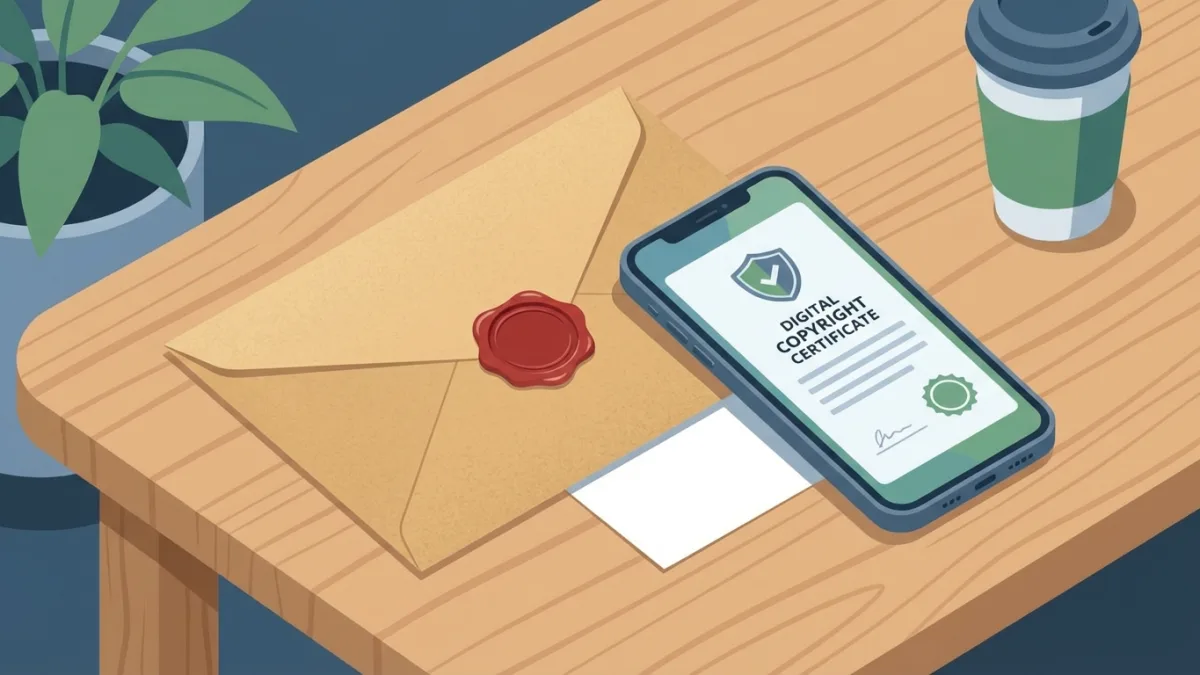
This fingerprint is then combined with a digital timestamping process. Unlike a physical postmark, digital timestamping provides an exact, mathematically verifiable record of the second your file was registered. This creates a solid proof of prior existence that is essential in copyright disputes.
Global Protection Under the Berne Convention
One of the greatest advantages of establishing proof of prior existence digitally is international recognition. Copyright protection is automatic upon creation, provided the work is original. However, proving when you created it is the difficult part.
Thanks to international treaties, a solid proof of creation is recognized across borders. By utilizing digital registration, your proof is recognized in 181 countries under the Berne Convention. This means a digital certificate generated today can help you enforce your rights globally, a topic thoroughly covered in our guide on Berne Convention Global Copyright Protection.
Comparing Physical vs Digital Registration
To clearly illustrate why digital solutions have largely superseded the Soleau envelope and other physical methods, let us compare their core features.
| Feature | Traditional Soleau Envelope | Digital Registration (Copyright01) |
|---|---|---|
| Processing Speed | Days to weeks (via postal mail) | Instantaneous |
| Supported Formats | Paper, small physical media (CDs) | Text, image, audio, video, source code, social media |
| International Scope | Primarily recognized locally | Proof recognized in 181 countries |
| Security Method | Physical perforation / sealing | SHA-256 fingerprint & digital timestamping |
| Storage Method | Physical archives | Server-side AES-256 encryption |
| Accessibility | Requires physical retrieval | Instant download via Public deposit registry |
📋 Key takeaway: While physical envelopes served their purpose in the past, digital registration offers instant, globally recognized protection for a much wider variety of creative formats.
Why Digital Solutions Win in the Modern Era
Creators today do not just write on paper; they code, they record, and they publish instantly to global audiences. The flexibility of digital copyright registration is its strongest asset.
Protecting Code and Social Media Content
Consider a software developer. Printing out thousands of lines of code to stuff into a physical envelope is highly impractical. Digital platforms allow developers to directly upload their files or link their repositories. If you are a developer, learning how to Protect GitHub Source Code and Repositories is essential for safeguarding your algorithms and software architecture.
Similarly, digital creators on social platforms need rapid protection. Whether you are looking to Protect Your X Twitter Content Copyright or secure your latest YouTube video, digital registration allows you to deposit the exact digital file or URL instantly before making it public.
Securing Visual Arts and Music
For graphic designers and musicians, the quality of the deposited file matters. A physical envelope cannot hold an uncompressed WAV audio file or a multi-layered PSD design file. Digital registration accommodates these heavy formats effortlessly.
Freelancers dealing with client work should always secure their designs before sending final drafts. You can read more about this in our guide on Copyright for Freelance Graphic Designers. Likewise, musicians can secure their audio tracks and sheet music instantly, ensuring they are prepared for the future of the industry, as detailed in How to Protect Your Music in 2026.
Navigating the AI Landscape
We are currently facing a new frontier with generative artificial intelligence. Proving human authorship and the exact date of creation is more critical than ever to distinguish original human work from AI-generated outputs. Physical envelopes simply cannot keep pace with the rapid iteration of digital content creation today. For a deeper understanding of this shift, explore AI Content and Copyright Rules Explained.

How to Secure Your Work Digitally Today
Transitioning from outdated physical methods to modern digital protection is straightforward and highly accessible. Copyright01 provides a seamless platform to establish your proof of prior existence.
Creating Your Proof of Prior Existence
The process begins the moment you finish your creative work. Instead of heading to the post office, you can securely upload your files from your computer.
- Prepare your files: Ensure your text, image, audio, video, or source code files are finalized.
- Upload securely: When you upload your work, it is protected by server-side AES-256 encryption, ensuring your intellectual property remains private.
- Generate the certificate: The system applies a SHA-256 fingerprint and digital timestamping to your file. You immediately receive a PDF certificate detailing the exact time and date of registration.
To get started, you can Create a free account. Copyright01 offers 3 free deposits to test the system. After that, you can choose credit packs starting from EUR 4.90, or opt for a subscription at EUR 9.90/month or EUR 79/year for continuous protection. All deposits are securely preserved for a minimum of 10 years, providing long-term peace of mind.
⚠️ Warning: Never publish your original work online without first securing a proof of prior existence. Once a file is public, it can be easily copied, making it much harder to prove you were the original creator without a prior registration.
Verifying and Enforcing Your Rights
Having a digital certificate makes enforcement significantly easier. If you discover that someone has stolen your work, you do not need to petition a court to open a physical envelope. You can simply present your PDF certificate. Anyone, including lawyers or judges, can instantly Verify a certificate online to confirm its authenticity.
If you encounter unauthorized use of your work, your digital proof is your first line of defense. You can use it to issue takedown notices or pursue legal action. For actionable steps on handling theft, review our guide on How to Fight Plagiarism and Infringement or learn how to Detect Website Plagiarism and Take Action.
Additionally, managing your intellectual property often requires proper documentation. To assist with this, you can utilize LegalGen: Free Legal Templates for Your Work to draft licensing agreements, cease and desist letters, and other necessary legal correspondence.
Conclusion
While the Soleau envelope holds an important place in the history of intellectual property, it is no longer the most effective tool for modern creators. The physical limitations, slow processing times, and format restrictions make it inadequate for today's fast-paced, digital-first world.
Digital copyright registration provides the speed, versatility, and global recognition required to protect everything from traditional literature to complex source code and social media content. By leveraging digital timestamping and secure cryptographic fingerprints, creators can establish a clear, internationally recognized proof of prior existence instantly. Embrace the modern standard of protection and secure your creative legacy today.
Copyright01
Free copyright protection service. PDF certificate with SHA-256 fingerprint, recognised in 181 countries.