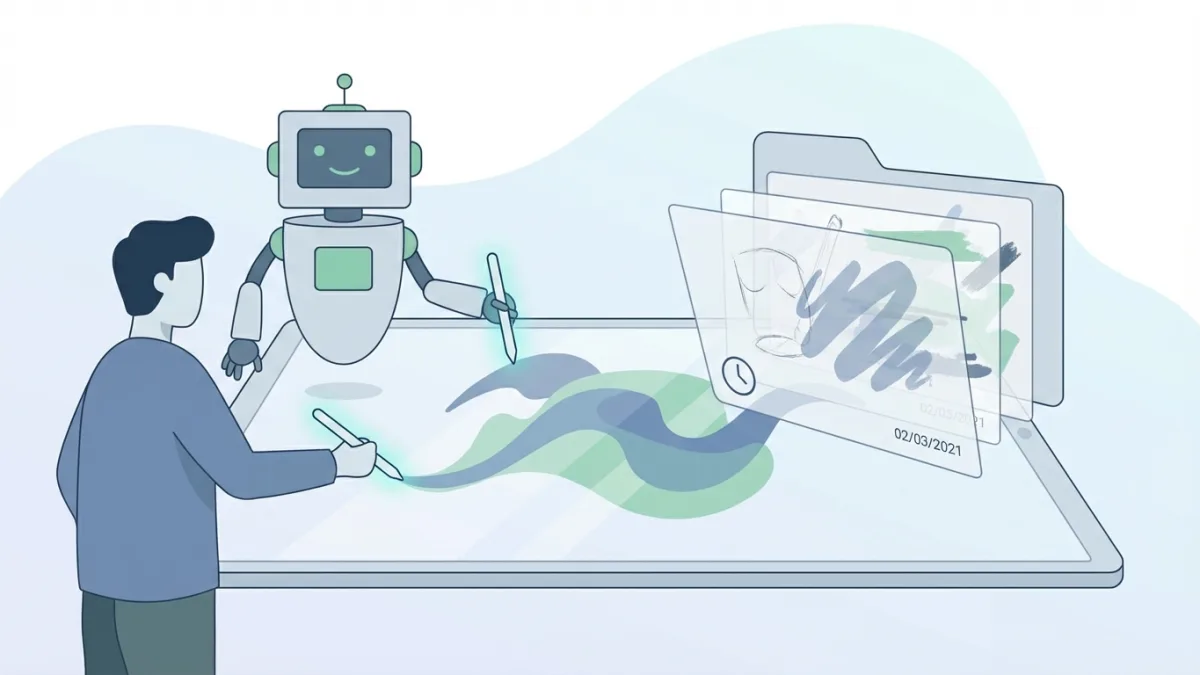
Explore the complex intersection of generative AI and copyright. Discover who owns ChatGPT and Midjourney creations and how to protect your digital work.
The rapid evolution of artificial intelligence has fundamentally transformed the creative landscape. As artists, writers, and developers increasingly integrate these powerful tools into their daily workflows, a critical question consistently emerges regarding generative AI and copyright: who actually owns the outputs produced by platforms like ChatGPT and Midjourney?
Navigating the legal intricacies of machine-generated content can be daunting. Traditional intellectual property frameworks were designed for human creators, leaving a gray area when algorithms do the heavy lifting. Understanding these boundaries is essential before you decide to commercialize an AI-generated image or publish an AI-assisted novel. If you are wondering why register your copyright? in the age of AI, the answer lies in securing proof of your human contribution.
In this comprehensive guide, we will explore the current legal consensus on AI creations, examine the terms of service of popular generative platforms, and provide actionable strategies to protect your original, human-authored contributions.
The Basics of Generative AI and Copyright
To understand who owns an AI creation, we must first understand how copyright law defines authorship and originality.
How AI Models Generate Content
Generative AI models, such as OpenAI's GPT-4 or Midjourney's diffusion models, are trained on vast datasets containing millions of texts, images, and code snippets. When a user inputs a prompt, the AI does not copy and paste existing works; rather, it predicts patterns and generates entirely new sequences of data based on its training.
Because the machine is generating the output based on mathematical probabilities rather than conscious creative choices, legal systems worldwide have had to evaluate whether these outputs qualify for intellectual property protection.
The Human Authorship Requirement
At the core of global intellectual property law is the concept of human authorship. In the United States, the Copyright Office has explicitly stated that works created entirely by a machine without human intervention cannot be registered. Similar principles apply across the jurisdictions governed by the Berne Convention, which establishes baseline protections for literary and artistic works internationally.
📋 Key takeaway: Copyright law protects the fruits of intellectual labor. Because an AI lacks legal personhood and consciousness, it cannot be considered an author. Therefore, purely AI-generated outputs typically fall into the public domain.
For a deeper dive into international standards, you can read more about Berne Convention Global Copyright Protection.
Who Owns ChatGPT and Midjourney Outputs?
The question of ownership is twofold: what does the platform's Terms of Service say, and what does the law recognize?
Text Generation: ChatGPT and Claude
When you use text-based generative AI like ChatGPT, OpenAI's Terms of Use state that they assign all their "right, title, and interest" in the output to the user. This means OpenAI will not claim ownership over the text you generate, and you are free to use it commercially.
However, a platform assigning its rights to you does not mean the output is protected by copyright. Because the text was generated by a machine, you cannot claim exclusive copyright over the raw output. Anyone else could theoretically copy that exact AI-generated text without infringing on your rights.
If you are using AI to draft professional documents, such as freelance agreements or NDAs, you might find it useful to explore LegalGen: Free Legal Templates for Your Work to ensure your foundational documents are sound.
Image Generation: Midjourney and DALL-E
Midjourney operates under similar terms. If you are a paid subscriber, you own the assets you create, subject to certain conditions. But again, owning the asset in terms of usage rights is different from holding a copyright.
In a landmark case involving the comic book Zarya of the Dawn, the US Copyright Office ruled that while the human author could copyright the text and the specific arrangement of the pages, the individual images generated by Midjourney could not be copyrighted because they were not the product of human authorship.
⚠️ Warning: Relying solely on raw AI-generated images for commercial branding or core product assets carries risks, as you cannot prevent competitors from using identical or substantially similar AI-generated visuals.
Can You Protect AI-Assisted Creations?
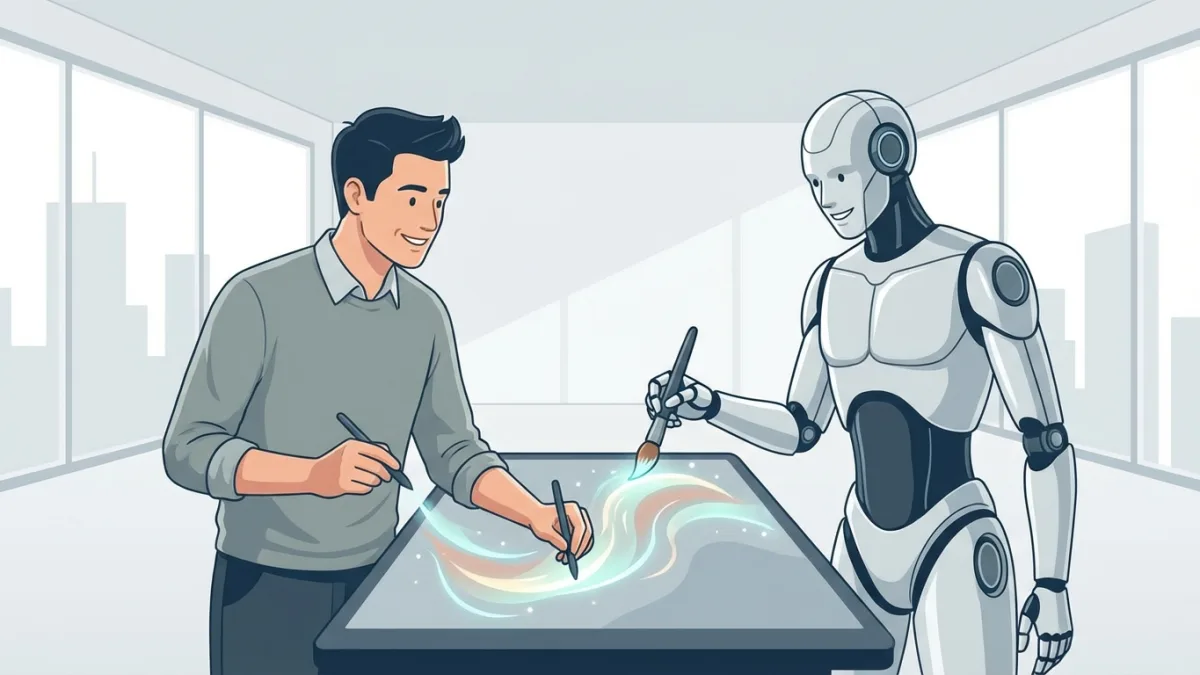
While pure AI outputs are generally unprotectable, the narrative shifts when human creativity is combined with AI assistance.
The Degree of Human Intervention
The critical factor in securing copyright for an AI-assisted work is the degree of human intervention. Writing a simple prompt like "a cyberpunk city at night" is considered akin to giving instructions to a commissioned artist; the prompter is not the author of the resulting image.
However, if a human creator uses an AI-generated image as a starting point and extensively modifies it—through digital painting, complex photobashing, or significant structural alterations—the resulting work may qualify for protection as a derivative work. The copyright would only cover the human-authored modifications, not the underlying AI-generated base.
This principle is especially relevant for visual artists. If you are integrating AI into your design workflow, understanding these nuances is crucial. Learn more in our guide on Copyright for Freelance Graphic Designers.
Establishing Proof of Prior Existence
When your work blends AI generation and human creativity, proving your specific human contributions becomes vital. If a dispute arises, you must be able to demonstrate exactly what you altered, added, or arranged.
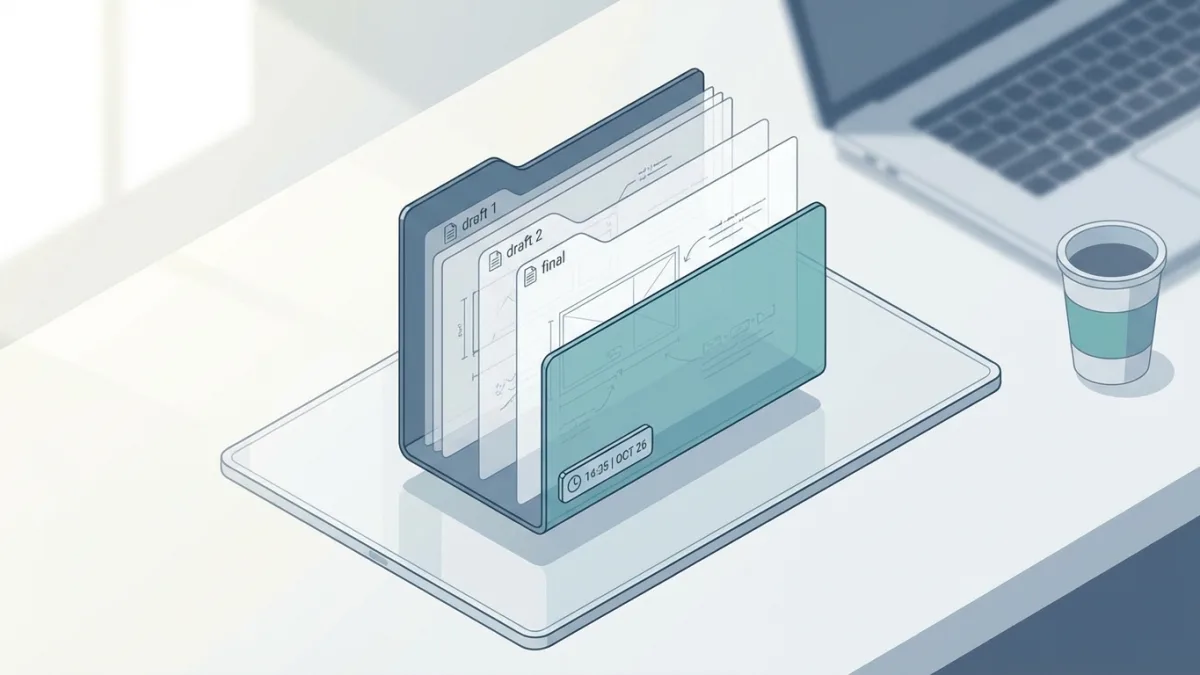
This is where securing a proof of prior existence is highly beneficial. By timestamping your iterative drafts, you create a verifiable timeline of your creative process. To understand the different ways to secure your timeline, check out our article Comparing 5 Proof of Prior Existence Methods.
AI-Generated vs. AI-Assisted Content
| Feature | Pure AI-Generated Content | AI-Assisted Content (Human Modified) |
|---|---|---|
| Creation Method | Single or multiple text prompts | AI base heavily modified by human effort |
| Copyright Status | Generally Public Domain | Human contributions are protectable |
| Commercial Use | Allowed, but not exclusive | Exclusive rights to human modifications |
| Registration | Likely to be rejected | Accepted with disclosure of AI use |
Protecting Specific Types of AI-Assisted Work
Generative AI is not limited to text and images; it permeates coding, social media, and music production. Each medium requires a specific approach to IP protection.
Source Code and Development
Developers frequently use tools like GitHub Copilot or ChatGPT to write boilerplate code, debug, or optimize algorithms. While the AI-generated code snippets themselves cannot be copyrighted, the overall software architecture, custom logic, and unique integration created by the human developer are protectable.
To secure your proprietary software projects, especially when utilizing AI assistants, it is highly recommended to Protect GitHub Source Code and Repositories by establishing a clear timeline of your commits and overall codebase.
Social Media Content
Content creators use AI to brainstorm ideas, draft captions, and generate visual assets for social media. The unique curation, editing, and strategic arrangement of these posts represent human authorship.
If you heavily rely on AI to streamline your content creation, you must still protect the final, curated output from unauthorized scraping or copying. Explore our specialized guides to secure your digital presence:
- Protect Your X Twitter Content Copyright
- Protecting Your Facebook Content Copyright
- Protect Your Instagram Content from Theft
Music and Audio Production
AI music generators are becoming increasingly sophisticated. If you use AI to generate a backing track but write original lyrics and perform the vocal melody yourself, your lyrics and vocal performance are fully protected. The music industry is rapidly adapting to these changes, as detailed in our analysis on How to Protect Your Music in 2026.
Best Practices for Creators Using AI
To navigate the complex intersection of AI and intellectual property safely, creators should adopt proactive habits.
Documenting Your Creative Process
When applying for copyright registration or defending your work, transparency is key. You must disclose the use of AI and clearly separate it from your human authorship.
💡 Tip: Save your work in stages. Keep the raw AI output, save your initial modifications, and retain the final polished file. Having access to layered files (like PSDs or project files) provides strong evidence of your human intervention.
Fighting Unauthorized Use
Even if part of your work is AI-generated, your human modifications grant you rights that you can enforce. If someone copies your heavily modified AI-assisted artwork, you have grounds to issue takedown notices. Learn the best strategies in our comprehensive guide on How to Fight Plagiarism and Infringement.
How Copyright01 Helps Secure Your Human Contributions
When your creative process involves generative AI, proving the timeline and authenticity of your human modifications is more important than ever. Copyright01 provides a robust, accessible platform to establish a proof of prior existence for your digital files.
Reliable Digital Timestamping
Copyright01 utilizes advanced server-side AES-256 encryption and digital timestamping to secure your files. When you deposit a file—whether it is a text document, image, audio, video, or source code—the system generates a unique SHA-256 fingerprint.
This process results in a comprehensive PDF certificate that anchors your work to a specific date and time. If your authorship is ever questioned, you can easily verify a certificate to demonstrate exactly when your specific version of the work existed.
Global Reach and Accessibility
Because Copyright01 operates in alignment with the principles of the Berne Convention, your proof of prior existence is recognized in 181 countries. We ensure that your deposits are preserved for a minimum of 10 years, providing long-term peace of mind for your creative portfolio.
We believe that protecting your work should be accessible. You can create a free account today and receive 3 free deposits. For active creators, we offer flexible credit packs starting from EUR 4.90, or cost-effective subscriptions at EUR 9.90/month or EUR 79/year.
Additionally, creators have the option to showcase their protected works through our public deposit registry, adding an extra layer of visibility and deterrence against potential infringement.
Conclusion
The relationship between generative AI and copyright is still evolving, but the core principle remains steadfast: human authorship is the foundation of intellectual property. While you cannot claim exclusive ownership over raw outputs from ChatGPT or Midjourney, you can absolutely protect the unique, creative modifications and curations you build upon them. By documenting your process and securing your work with reliable digital timestamping, you can confidently integrate AI into your workflow without sacrificing your rights as a creator.
Copyright01
Free copyright protection service. PDF certificate with SHA-256 fingerprint, recognised in 181 countries.