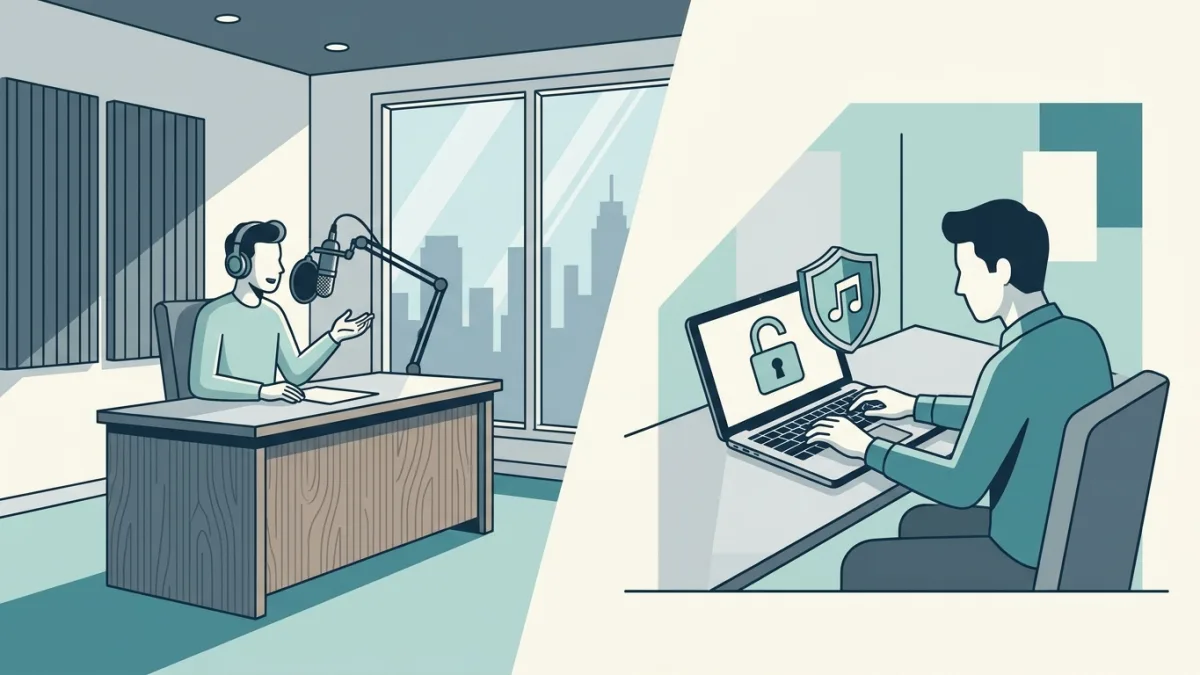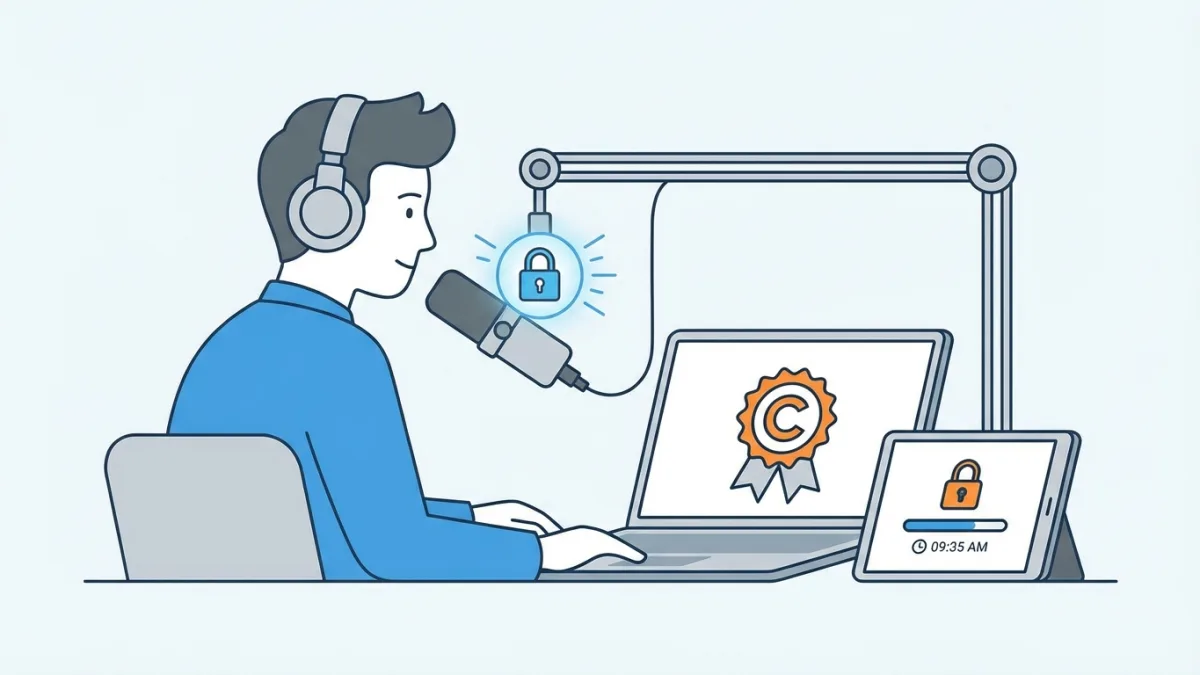
Learn how to protect your podcast audio from plagiarism and theft. Discover the benefits of copyright deposits and digital timestamping for your content.
Podcasting has exploded in popularity, offering creators a powerful medium to share stories, conduct interviews, and build dedicated communities. However, as your audience grows, so does the risk of content theft. If you want to protect your podcast audio from plagiarism, you need a proactive and robust strategy. Copycats can steal your show format, re-upload your episodes to competing platforms, transcribe your hard work without permission, or even clone your voice using advanced generative AI tools.
Relying solely on the publication date of your RSS feed is a risky game. To truly safeguard your intellectual property, you must secure a reliable proof of prior existence. By doing so, you can confidently defend your creative work, issue takedown notices when necessary, and maintain total control over your digital assets. In this comprehensive guide, we will explore the mechanisms of podcast plagiarism, the technology behind secure audio deposits, and the actionable steps you can take to protect your creative voice.
Understanding Podcast Plagiarism and Copyright
What Constitutes Podcast Theft?
Podcast theft is far more nuanced than someone simply downloading your MP3 file and uploading it to their own hosting provider. While direct re-uploads do happen, plagiarism in the audio space takes many insidious forms. Unscrupulous individuals might scrape your audio files, transcribe your carefully researched scripts, and publish them as their own blog articles or books. Others might lift segments of your exclusive interviews to use in commercial projects without offering credit or compensation.
Furthermore, the rise of artificial intelligence has introduced a terrifying new threat: voice cloning. Bad actors can feed a few minutes of your podcast into an AI model and generate entirely new audio tracks that sound exactly like you, potentially ruining your reputation or scamming your listeners. To effectively protect podcast audio with copyright, you must be prepared to defend against all these forms of infringement.
Why Automatic Copyright Is Not Enough
Under international law, copyright protection technically applies the moment your audio is recorded and fixed in a tangible medium. However, possessing an automatic right is entirely different from being able to enforce it. If a dispute arises over who originally created a specific audio segment or script, the burden of proof falls entirely on you.
Before diving into the technical solutions, it is essential to understand why register your copyright?. Without an independent, third-party record of your creation date, resolving disputes becomes a chaotic battle of word against word. Proving that your local computer file predates a plagiarist's published work is incredibly difficult, which is why an active registration strategy is vital for serious podcasters.
⚠️ Warning: Relying solely on your podcast host's publication date is dangerous. RSS feeds can be manipulated, and publication dates can be spoofed, making them weak evidence in a serious copyright dispute.
The Power of an Audio Deposit
Establishing Proof of Prior Existence
The cornerstone of intellectual property protection is the concept of prior existence. If someone infringes on your podcast on a Friday, you need strong evidence demonstrating that your work existed on Thursday or earlier. An audio deposit serves exactly this purpose. When you upload your podcast episode to a secure registry, the system captures the exact moment of submission.
This process allows you to Timestamp Your Work for Prior Existence, anchoring your audio file to a specific, verifiable date and time. This digital footprint acts as a powerful deterrent against content thieves and provides the necessary documentation to support your claims during a dispute.
Global Protection Under the Berne Convention
Podcasts are inherently borderless. A show recorded in a small studio in London can be downloaded by listeners in Tokyo, New York, and Sydney within seconds. Because your content is distributed globally, your protection strategy must also have an international scope.
Fortunately, you do not need to register your podcast in every single country. Thanks to the Berne Convention, an international treaty governing intellectual property, a proof of prior existence established in one member state is recognized across 181 countries. This means that a single, properly executed audio deposit provides a vast umbrella of international protection for your podcast episodes.
How Copyright01 Secures Your Podcast Content
Digital Timestamping and SHA-256 Fingerprints
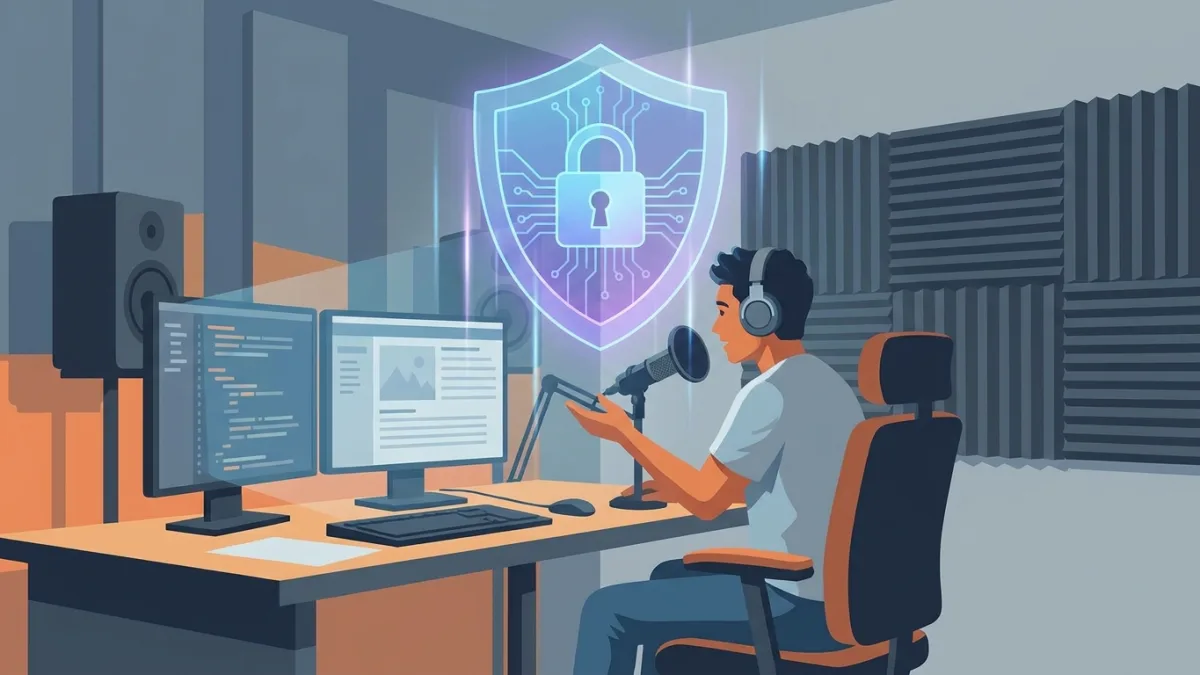
When you register your podcast with Copyright01, the platform utilizes advanced cryptographic hashing to secure your work. Upon uploading your audio file, the system generates a unique SHA-256 fingerprint. Think of this fingerprint as a digital DNA sequence for your specific audio file; if even a single second of the audio is altered, the resulting hash changes completely.
This unique fingerprint is then combined with precise digital timestamping. To understand the underlying mechanics, you can read more about How Digital Timestamping Protects Creators. Additionally, your original files are securely stored using server-side AES-256 encryption, ensuring that your unreleased episodes remain private and protected from unauthorized access. Your deposits are preserved for a minimum of 10 years, offering you long-term peace of mind.
Flexible Pricing for Independent Creators
The podcasting industry is incredibly diverse, ranging from passionate hobbyists recording in their closets to massive media networks producing daily shows. Copyright01 is designed to accommodate creators at every level with flexible, transparent pricing.
New users can test the platform with 3 free deposits. For seasonal podcasters or those who publish infrequently, credit packs are available starting from EUR 4.90. For highly active creators releasing weekly or daily content, a subscription model offers excellent value at EUR 9.90/month or EUR 79/year. Creators also have the option to showcase their protected status via the Public deposit registry, which acts as an additional public deterrent against theft.
Step-by-Step Guide to Registering Your Podcast
Preparing Your Audio Files
Before initiating a deposit, ensure your files are properly formatted. It is highly recommended to upload the final, high-quality master file (such as a WAV or high-bitrate MP3) rather than a compressed, lossy version. You should also consider depositing your written show notes, original cover art, and interview transcripts alongside your audio.
💡 Tip: To maximize your protection, always upload and register the final edited master file of your podcast episode before you publish it to your RSS feed or share it with early-access subscribers.
The Registration Process
Securing your podcast is a straightforward process that takes only a few minutes:
- Sign Up: First, Create a free account on the Copyright01 platform.
- Upload: Navigate to the deposit section and select the 'Audio' category. Upload your final podcast episode.
- Secure: The system will automatically generate the SHA-256 fingerprint, apply the digital timestamping, and encrypt the file.
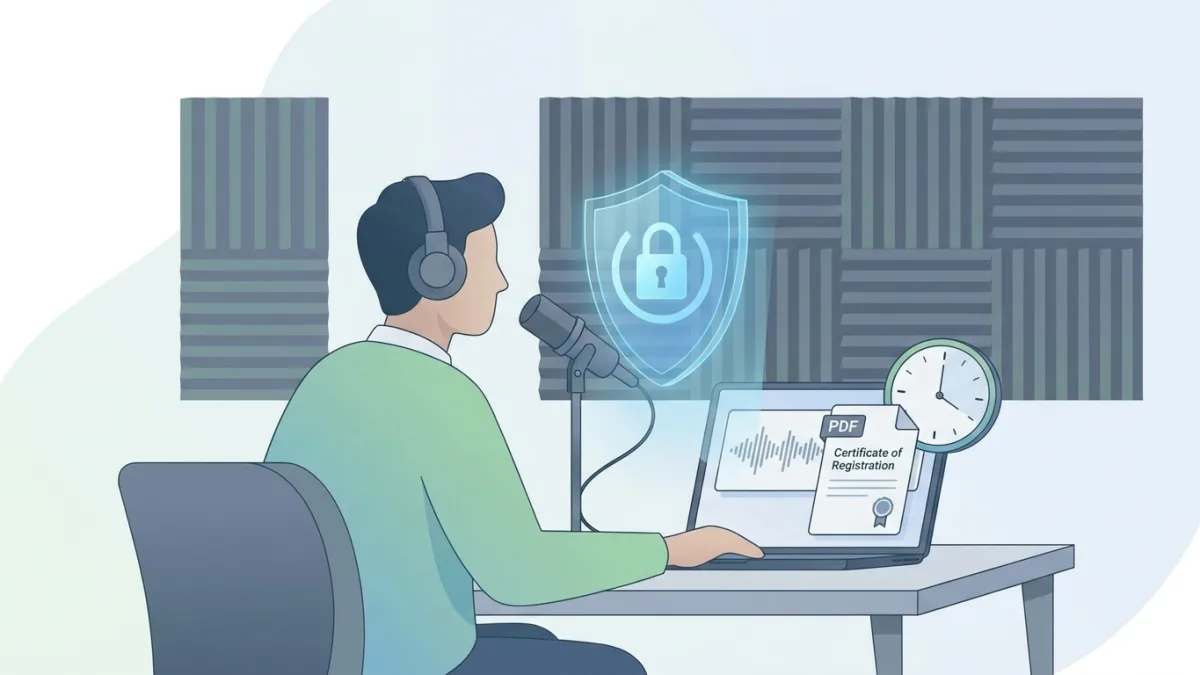
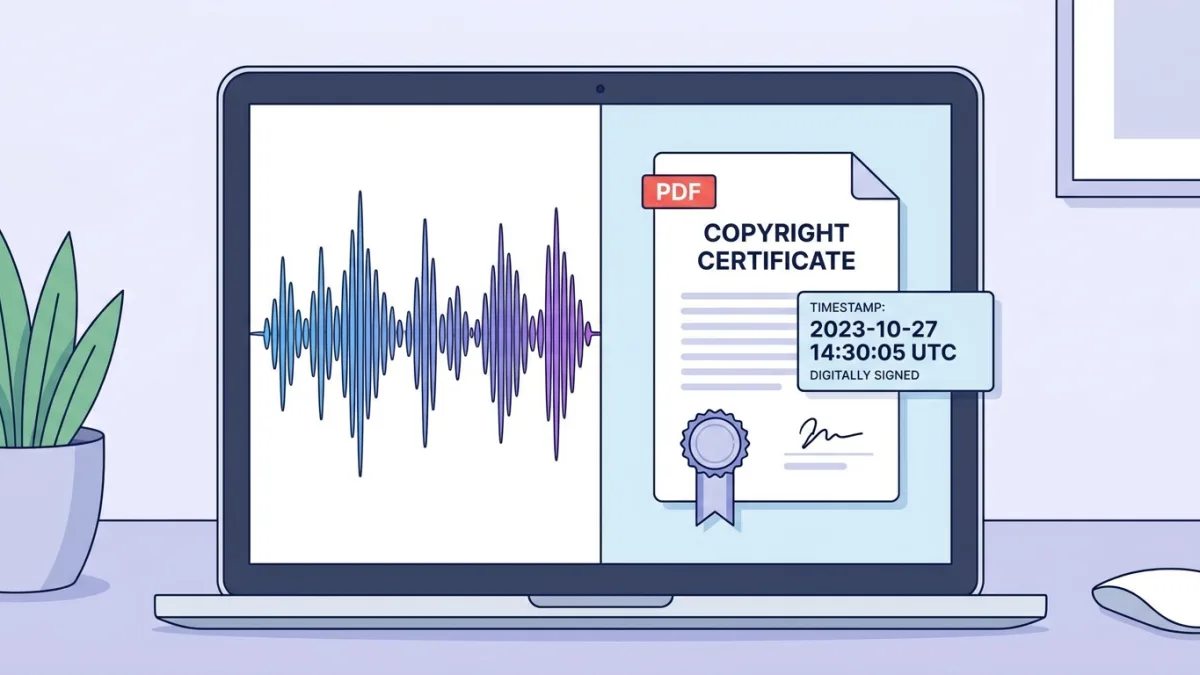
- Download Certificate: You will instantly receive a detailed PDF certificate containing all the technical data linking you to the file.
If you ever need to prove your ownership to a hosting platform or legal representative, anyone can easily Verify a certificate using the unique reference number provided on your document.
Copyright01 Pricing and Features for Podcasters
| Plan Type | Pricing | Best Suited For |
|---|---|---|
| Free Tier | 3 free deposits | New podcasters wanting to test the registration process. |
| Credit Packs | From EUR 4.90 | Independent creators with short, seasonal podcast series. |
| Monthly Subscription | EUR 9.90 / month | Active podcasters releasing consistent weekly episodes. |
| Annual Subscription | EUR 79 / year | Professional networks, daily shows, and high-volume creators. |
Defending Your Content Against Infringement
Handling Copycats and Unauthorized Use
Discovering that your podcast has been stolen is incredibly frustrating. Often, thieves will rip your audio and upload it to video platforms to monetize your hard work. If you find your audio repurposed without permission, you must act swiftly by issuing a formal takedown notice to the hosting platform.
Having your PDF certificate ready makes this process significantly smoother. Whether you need to learn How to Remove a Stolen YouTube Video Fast or you need to Remove Stolen Images With a DMCA Takedown because someone cloned your cover art, presenting recognized proof of prior existence forces platforms to take your claims seriously and act quickly.
Fighting AI Voice Cloning
As mentioned earlier, generative AI presents a unique and growing challenge for audio creators. If a bad actor uses your voice to create synthetic audio, proving that the original voice and the underlying persona belong to you is critical.
By ensuring all your historical episodes are properly registered, you build a verifiable timeline of your vocal identity and creative output. This makes it much easier to Prove Prior Existence Against Generative AI and take action against platforms hosting the cloned content.
Common Copyright Mistakes Podcasters Make
Waiting Too Long to Register
One of the most frequent errors creators make is assuming they only need to worry about copyright once their show becomes famous. Unfortunately, content scrapers often target smaller, newer podcasts precisely because they assume the creators lack the resources to fight back.
To safeguard your growth, you must integrate registration into your standard publishing workflow from day one. Avoid the 5 Copyright Mistakes You Must Avoid by taking proactive steps to Protect Your Podcast With Audio Copyright before your audience scales.
Relying Solely on RSS Feeds
Many podcasters mistakenly believe that the timestamp on their RSS feed is sufficient proof of ownership. However, RSS feeds are simply XML files that can be easily edited, backdated, or manipulated by anyone with server access. Because of this vulnerability, RSS dates are often dismissed during serious intellectual property disputes.
Do not fall victim to the 5 Fatal Online Copyright Deposit Mistakes. Instead, ensure you Prove Prior Existence Using Timestamping through an independent, secure third-party registry.
📋 Key takeaway: A proper audio deposit establishes a verifiable, unalterable date of creation. This independent proof is an absolute necessity when enforcing your intellectual property rights under the Berne Convention.
By understanding the risks, leveraging digital timestamping, and maintaining a consistent registration habit, you can focus on what you do best: creating incredible audio content for your listeners, safe in the knowledge that your intellectual property is thoroughly protected.
Copyright01
Free copyright protection service. PDF certificate with SHA-256 fingerprint, recognised in 181 countries.