Learn how to protect your songs and musical compositions in 2026 using digital timestamping and the Berne Convention to prevent music copyright theft.
In the rapidly evolving landscape of the music industry, understanding how to protect a song or musical composition in 2026 is more critical than ever. With the rise of AI-generated content and the instantaneous nature of global digital distribution, musicians, composers, and songwriters face unprecedented challenges in asserting their authorship. Whether you are an independent artist or a seasoned professional, establishing a clear line of ownership is the foundation of your creative career.
Protecting your music is not just about legal compliance; it is about securing your financial future and creative legacy. In this guide, we will explore the modern methods of establishing proof of prior existence, the role of international treaties, and how digital tools have revolutionized the way we safeguard intellectual property.
The Evolution of Music Copyright in 2026
Copyright laws have traditionally protected original works of authorship, including music and lyrics, from the moment they are fixed in a tangible medium. However, the definition of a "tangible medium" has shifted significantly. In 2026, a digital file stored on a server is just as valid as a handwritten score, provided you can prove when it was created.
Automatic Protection vs. Registered Proof
While copyright technically exists the moment you record a melody or write down lyrics, "automatic" protection is often insufficient in a legal dispute. If someone else claims they wrote your song first, your word against theirs is rarely enough. This is why register your copyright? becomes the most important question for any creator. You need a reliable, third-party record that establishes you held the work at a specific point in time.
The Impact of AI on Music Ownership
As we move through 2026, the music industry is grappling with AI. Protecting your original compositions helps distinguish your human-made work from machine-generated content. By creating a digital footprint of your stems, lyrics, and early drafts, you build a defensive wall around your creative process.
📋 Key takeaway: Copyright exists upon creation, but legal protection requires a verifiable date and time associated with the work to prove you are the original author.
Why You Need Proof of Prior Existence
In the past, many artists relied on the "poor man's copyright"—mailing a copy of their music to themselves. In 2026, this method is obsolete and easily challenged in court. Modern legal standards demand more robust evidence.
The Digital Timestamping Advantage
Digital timestamping has replaced traditional methods as the gold standard for creators. When you upload a file to a service like Copyright01, the system generates a unique SHA-256 fingerprint. This fingerprint acts as a digital DNA for your file. Combined with digital timestamping, it provides a record of the exact second your work was registered.
Global Recognition via the Berne Convention
One of the most powerful tools in a musician's arsenal is the Berne Convention. This international agreement ensures that your copyright is recognized in 181 signatory countries. This means that if you protect your song in one country, you are afforded the same protections in almost every other nation worldwide. For more details, see the guide on Berne Convention Global Copyright Protection.
| Feature | Traditional Mail | Digital Timestamping |
|---|---|---|
| Speed | Several days | Instantaneous |
| International Validity | Limited | Recognized in 181 countries |
| Security | Physical seal (can be forged) | SHA-256 Fingerprint |
| Cost | Postage + storage fees | From EUR 4.90 per pack |
| Verification | Manual | Online Certificate |
How to Register Your Musical Works Online
Protecting your music should not be a bureaucratic nightmare. Platforms like Copyright01 have streamlined the process, allowing you to secure your work in minutes.
Step-by-Step Registration Process
- Prepare Your Files: Gather your audio files (MP3, WAV), sheet music (PDF), and lyrics (TXT or PDF). You can even include video files of your performance.
- Upload to the Platform: Create a free account and upload your files. The system uses server-side AES-256 encryption to keep your data secure during the process.
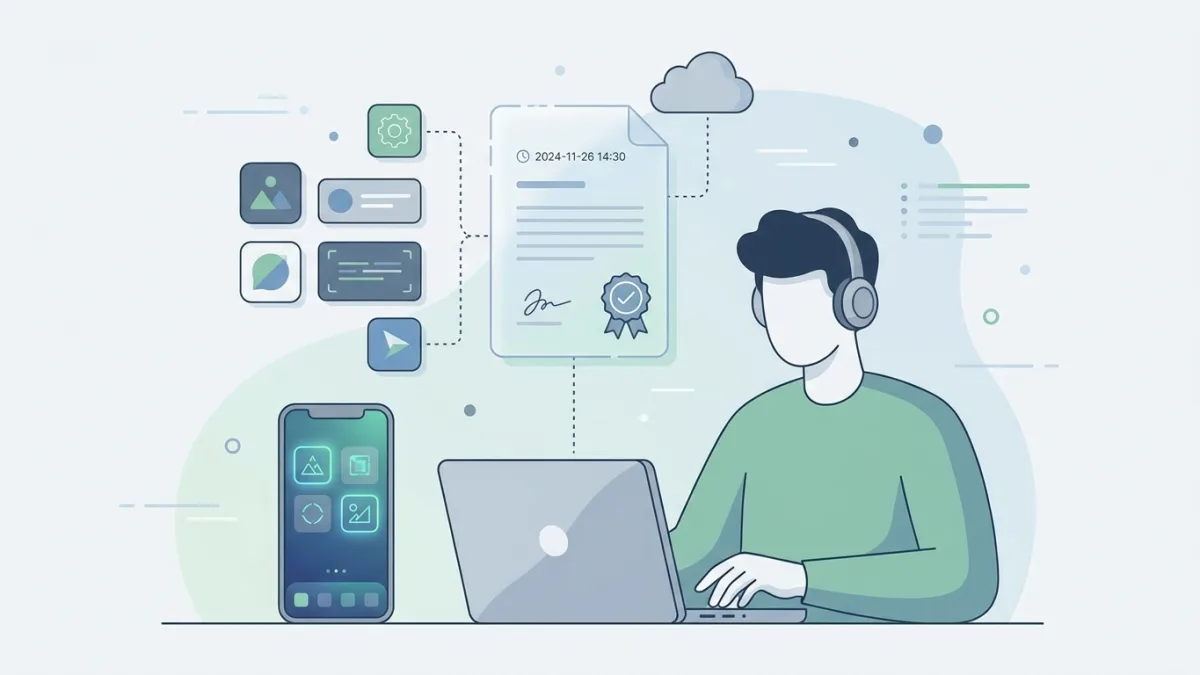
- Generate the Certificate: Once the upload is complete, you receive a PDF certificate. This document contains the SHA-256 fingerprint and the digital timestamping data.
- Long-term Preservation: Your deposits are preserved for a minimum of 10 years, ensuring that your proof remains accessible when you need it most.
What Exactly Should You Protect?
It is a common mistake to only protect the final mastered track. To be fully covered, you should consider depositing:
- Lyrics: The text of the song.
- Melody: The sequence of notes (sheet music or MIDI).
- Arrangement: The specific way instruments are used.
- Demos and Stems: Early versions that prove the evolution of the work.
💡 Tip: Always protect your work before sharing it with producers, labels, or collaborators. Even a rough demo is worth registering to establish your priority.
Protecting Music Across Digital Platforms
In 2026, music is shared across a dozen different social media channels simultaneously. Each platform has its own set of rules, but none of them replace the need for independent copyright registration.
YouTube and Video Content
If you post music videos or lyric videos, you must understand how to copyright your YouTube video content. While YouTube’s Content ID is helpful, it is a private system. Having a digital certificate from a service like Copyright01 provides external proof that can be used to resolve disputes that Content ID might miss.
Social Media Exposure
Platforms like Instagram, TikTok, and X (formerly Twitter) are hotspots for music discovery but also for infringement. Before you post a snippet of your new track, ensure you have registered it. You can find specific strategies for these platforms here:
- Protect Your Instagram Content from Theft
- Protecting Your Facebook Content Copyright
- Protect Your X Twitter Content Copyright
⚠️ Warning: Posting your music on social media without prior registration can make it difficult to prove you are the original creator if the content is "scraped" or re-uploaded by others.
International Recognition and Legal Recourse
If you discover that your music has been used without permission, your registered proof of prior existence is your primary weapon. This is where the Public deposit registry and the ability to Verify a certificate become essential.
Fighting Plagiarism and Infringement
When infringement occurs, the first step is often a cease-and-desist letter. Having a formal certificate of registration shows the infringer that you have the evidence needed for a legal battle. For a deeper dive into this process, read How to Fight Plagiarism and Infringement.
Using Legal Templates
Managing the legal side of music can be expensive. However, you can use tools like LegalGen: Free Legal Templates for Your Work to draft contracts, licensing agreements, and non-disclosure agreements (NDAs) that complement your copyright registration.
Managing Your Music Catalog Long-Term
As your career grows, so will your catalog. Managing dozens or hundreds of songs requires an organized approach.
Subscription vs. Credit Packs
For active composers, a subscription model (such as EUR 9.90/month or EUR 79/year) is often the most cost-effective way to ensure every new idea is protected immediately. For those who release music less frequently, credit packs starting from EUR 4.90 offer flexibility without a long-term commitment. Both options provide the same high level of security and digital timestamping.
Comparing Proof Methods
It is helpful to look at how digital timestamping stacks up against other forms of protection. Whether you are a solo artist or working within a team, choosing the right method is vital. You can review a detailed breakdown in the article Comparing 5 Proof of Prior Existence Methods.
Protection for Freelance Composers
If you write music for hire—such as jingles, scores for games, or background music for YouTubers—you are essentially a freelancer. Protecting your work before handing it over to a client is standard professional practice. Check out the guide on Copyright for Freelance Graphic Designers (many principles apply to music freelancers as well) to understand how to manage rights transfers.
Conclusion
In 2026, the question is not whether you should protect your music, but how efficiently you can do it. By using modern digital timestamping and leveraging the global reach of the Berne Convention, you can focus on what matters most: creating. Do not leave your intellectual property to chance. Secure your melodies, your lyrics, and your hard work today.
Copyright01
Free copyright protection service. PDF certificate with SHA-256 fingerprint, recognised in 181 countries.