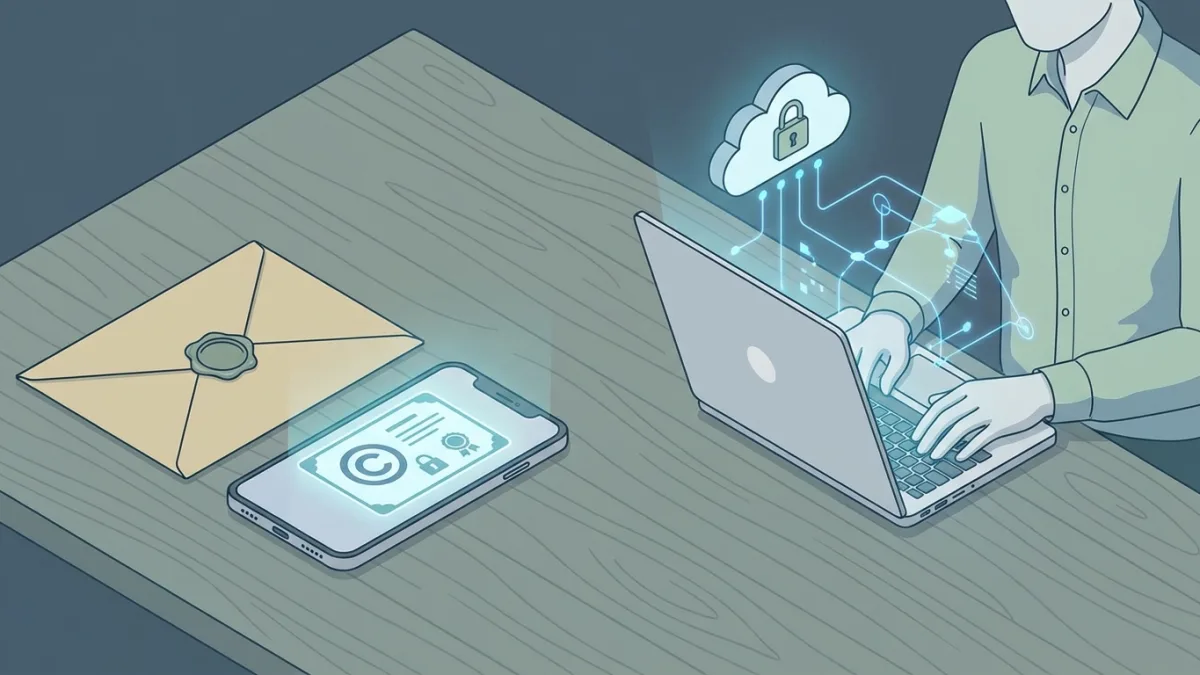
Comparing the traditional Soleau Envelope vs free online copyright registration. Discover which method provides the best evidence for your intellectual property
When it comes to protecting intellectual property, creators often find themselves weighing the pros and cons of traditional methods versus modern digital solutions. The debate of the Soleau Envelope vs free copyright registration is a common one, especially for independent creators, freelancers, and small businesses looking to establish proof of prior existence without incurring massive legal fees.
For decades, physical deposit methods like the Soleau Envelope were the standard for proving when a specific piece of work was created. Today, digital timestamping and online registration have revolutionized how we protect our creations. But which method should you choose for your intellectual property?
In this comprehensive guide, we will explore the history and mechanics of traditional physical deposits, compare them with modern digital copyright solutions, and help you determine the best path forward for your creative assets.
Understanding the Soleau Envelope
Before the internet made instant file transfers and digital hashing possible, creators needed a physical way to prove the date they created a document, design, or manuscript.
The Origins of Physical Deposit
Named after its French inventor Eugène Soleau, the Soleau Envelope is a traditional method used primarily in France to establish a date of creation. It consists of a specially designed, two-part envelope. The creator places identical copies of their work (usually printed documents or 2D designs) into both compartments. The envelope is then sealed and submitted to an intellectual property office.
The office punches a hole through the envelope using a specialized laser or mechanical punch, effectively dating both compartments simultaneously. One half is returned to the creator, while the other is kept in the office's archives. If a dispute arises, the archived half can be opened by a judge to compare the contents and establish proof of prior existence.
💡 Tip: While the Soleau Envelope is a well-known concept in European intellectual property history, similar "poor man's copyright" methods—like mailing a sealed envelope to yourself—have been used globally. However, modern digital alternatives provide much stronger evidence.
Limitations of Traditional Methods
While the Soleau Envelope was innovative for its time, it carries significant limitations in today's fast-paced, digital-first world:
- Physical Constraints: You can only include a limited number of flat, 2D paper sheets (typically a maximum of 7 pages). You cannot include hard objects like CDs, USB drives, or physical prototypes.
- Format Restrictions: It is entirely unsuitable for modern digital formats. You cannot deposit an audio file, a video, a complex software repository, or a dynamic website.
- Geographical Scope: The Soleau Envelope is primarily a domestic tool. It does not automatically provide broad international evidence, making it less effective for creators operating in a global digital economy.
- Inconvenience: The process requires purchasing the physical envelope, printing documents, and relying on postal services, which delays the protection process.
The Rise of Free Digital Copyright Registration
As the world transitioned from paper to pixels, intellectual property protection had to evolve. Today, online copyright registration offers a seamless, efficient, and robust alternative to physical envelopes.
How Digital Timestamping Works
Modern copyright services utilize advanced technology to secure your work. When you upload a file—whether it is text, image, audio, video, source code, or even a social media post—the system generates a unique digital fingerprint known as a SHA-256 hash.
This fingerprint is combined with digital timestamping, which records the exact date and time the file was submitted. The file is then stored securely using server-side AES-256 encryption. This process creates a distinct digital trail that links you, as the creator, to the specific file at a specific moment in time.
If you are wondering Why register your copyright?, the answer lies in this precise timeline. Establishing a clear date of creation is your primary defense if someone attempts to copy, steal, or distribute your work without permission.
Global Reach and the Berne Convention
One of the most significant advantages of digital copyright registration is its international applicability. Thanks to international treaties, copyright protection is not limited by borders.
When you establish proof of prior existence through a digital deposit, that evidence is recognized in 181 countries under the Berne Convention. This means a digital deposit made from your laptop in London can serve as evidence if your work is infringed upon by a company in Tokyo or New York.
📋 Key takeaway: Digital copyright registration provides a modern, scalable way to establish proof of prior existence across 181 countries, far exceeding the geographical limitations of a physical Soleau Envelope.
Soleau Envelope vs Free Copyright: A Detailed Comparison
To make the best decision for your intellectual property, it is helpful to see a direct comparison between these two methods.
| Feature | Soleau Envelope (Physical Deposit) | Modern Digital Copyright Registration |
|---|---|---|
| Format Support | Paper documents, 2D designs (Max ~7 pages) | Text, images, audio, video, source code, social media, websites |
| Processing Speed | Days to weeks (relies on postal service) | Instantaneous upon upload |
| International Scope | Primarily domestic | 181 countries (Berne Convention) |
| Evidence Technology | Physical hole-punching | SHA-256 fingerprint & digital timestamping |
| Storage Method | Physical archives | Server-side AES-256 encryption |
| Accessibility | Requires physical retrieval | Online PDF certificate, easily verifiable |
As the table illustrates, digital registration vastly outperforms traditional physical methods in almost every category, especially concerning format flexibility and processing speed.
Use Cases: Who Benefits from Digital Registration?
The transition to digital copyright protection has opened up new avenues for various types of creators. Here is how different professionals utilize modern registration services.
Freelancers and Independent Creators
Freelancers often share drafts, concepts, and final deliverables with clients. Without proof of creation, a client could potentially reject a pitch and use the ideas without paying. It is highly recommended to Protect Your Freelance Work Before Delivery by registering your files before sending them over email or sharing them via cloud drives.
Software Developers and Tech Startups
Code is one of the most frequently stolen digital assets. A physical envelope cannot hold a complex GitHub repository. Developers rely on digital deposits to protect their algorithms and applications. If you are building software, you should read our Open Source Copyright Guide for Developers and learn How to Protect Your Mobile App Copyright.
Visual Artists, Designers, and E-commerce Sellers
Visual theft is rampant on the internet. Whether it is a logo design or a product graphic, digital timestamping provides the evidence needed to issue takedown notices. Designers looking to secure their brand identity should explore Protect Your Logo: Trademark vs Copyright and discover How to Stop Etsy and Amazon Design Theft.
Digital Content Creators and Podcasters
From YouTube videos to Instagram reels and podcast episodes, content creators produce massive amounts of digital media. Modern copyright services allow you to deposit audio and video formats seamlessly. Check out our Complete Podcast Copyright Protection Guide and learn how to Stop Social Media Photo Theft.
Web3 and NFT Creators
The emerging world of Web3 requires robust intellectual property strategies. Minting an NFT does not automatically grant you copyright protection over the underlying asset. For comprehensive protection, read about Protecting Your NFT Intellectual Property.

Why Choose Copyright01 for Your Digital Protection?
Choosing the right platform for your digital copyright registration is crucial. Copyright01 is designed specifically to meet the needs of modern creators, offering a streamlined, highly secure, and accessible service.
Flexible Pricing and Free Deposits
We believe that every creator deserves access to intellectual property protection. That is why Copyright01 allows you to Create a free account and provides 3 free deposits to get you started.
Once you have utilized your free deposits, we offer highly flexible and affordable pricing structures. You can purchase credit packs starting from just EUR 4.90, or opt for a subscription model at EUR 9.90 per month or EUR 79 per year for continuous protection of your ongoing projects.
Advanced Digital Evidence
Every time you deposit a file on Copyright01, you receive a comprehensive PDF certificate. This document includes the SHA-256 fingerprint of your file and a precise digital timestamping record. This creates a documented trail of evidence that supports your claim to the work.
Third parties, clients, or legal professionals can easily Verify a certificate using our platform, ensuring transparency and trust. Furthermore, your deposits are securely preserved for a minimum of 10 years, giving you long-term peace of mind.
⚠️ Warning: Do not rely solely on social media upload dates or email timestamps as evidence. These can often be manipulated or contested. A dedicated copyright registration service provides much stronger evidence.
Broad Format Support
Unlike traditional methods, Copyright01 supports a vast array of digital formats. You can protect:
- Text documents (PDFs, Word files, manuscripts)
- Images and visual art (JPEGs, PNGs, vectors)
- Audio and video files (MP3s, MP4s, WAVs)
- Source code and GitHub repositories
- Complete website backups
- Social media content across YouTube, Instagram, Facebook, X (formerly Twitter), and TikTok.
Additionally, your public-facing projects can be listed in our Public deposit registry, acting as a deterrent to potential infringers by publicly displaying your claim to the work.
Handling Disputes in the Digital Age
Even with the best protection, disputes can still occur. The internet makes it easy for content to be copied and distributed without authorization. However, having a digital copyright certificate significantly strengthens your position when enforcing your rights.
If you discover that your work has been stolen, your first step is usually to issue a Cease and Desist letter or a DMCA takedown notice to the hosting provider. Attaching your PDF certificate with its digital timestamping adds significant weight to your claim.
For more detailed strategies on managing these situations, read our guide on Winning Your Copyright Dispute Online.
Furthermore, understanding the broader legal landscape can help you navigate complex situations. The recent changes in European law, for instance, place more responsibility on platforms to prevent unauthorized sharing. You can learn more about this in our breakdown of the EU Copyright Directive 2019/790 Explained.
Conclusion: Making the Right Choice for Your Intellectual Property
The debate between the Soleau Envelope and free online copyright registration has a clear winner in the digital age. While physical deposit methods hold historical significance, they simply cannot keep up with the demands of modern content creation.
Digital copyright registration offers unparalleled speed, format flexibility, and international recognition. By utilizing advanced technologies like SHA-256 hashing, server-side AES-256 encryption, and digital timestamping, platforms like Copyright01 provide creators with the robust evidence they need to protect their work in a global marketplace.
Whether you are a freelancer sending a pitch, a developer pushing code, or an artist sharing designs online, establishing proof of prior existence is a critical step in your creative process. Take advantage of modern tools, secure your intellectual property today, and share your work with confidence.
Copyright01
Free copyright protection service. PDF certificate with SHA-256 fingerprint, recognised in 181 countries.