Discover the evidentiary weight of online copyright deposits. Learn how digital timestamping establishes proof of prior existence to protect your work.
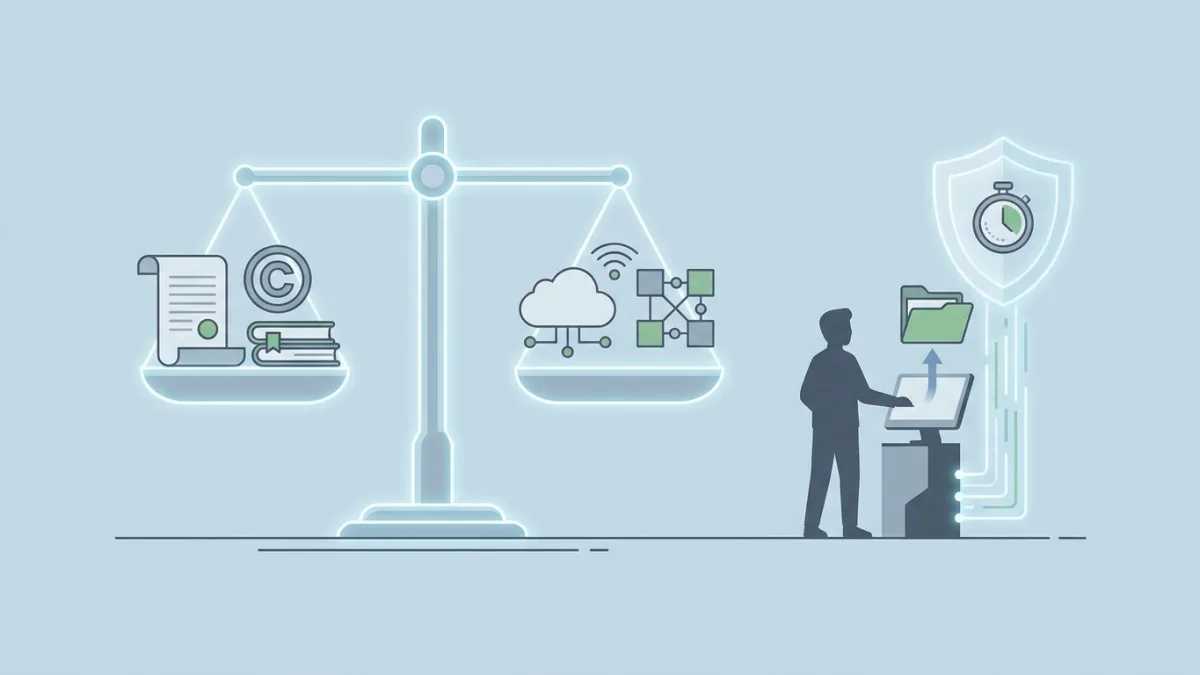
Every creator faces the same fundamental risk: having their original work stolen, copied, or exploited without permission. When an intellectual property dispute arises, the core of the legal battle often comes down to one crucial element: proof of prior existence. Establishing that you possessed a specific creative work at a particular date and time is the absolute foundation of copyright protection. But what exactly is the evidentiary weight of an online deposit?
In the digital age, traditional methods of securing evidence have evolved. Understanding Why register your copyright? is the first step toward safeguarding your creative assets. This comprehensive guide explores the mechanics of online deposits, how they hold up in intellectual property disputes, and the modern technologies used to protect your rights on a global scale.
Understanding Proof of Prior Existence
Proof of prior existence is the factual evidence demonstrating that a creator had possession of a specific piece of work before anyone else. In the realm of intellectual property, being the original author is not enough; you must be able to demonstrate your authorship with objective, third-party documentation.
The Core Principle of Copyright Law
Under international frameworks like the Berne Convention, copyright protection is automatic. The moment you create an original work and fix it in a tangible medium, you own the copyright. You are not required to file paperwork with a government office to acquire these rights.
However, this automatic protection creates a practical vulnerability. If another party claims they created your work first, the burden of proof falls on you. Without a reliable paper trail or digital footprint, it becomes a scenario of your word against theirs. This is why you must actively Timestamp Your Work for Prior Existence to establish a clear chronological timeline.
Moving Beyond Traditional Methods
Historically, creators relied on the "poor man's copyright"—mailing a sealed copy of their work to themselves—or paying high fees for a notary public. Today, these methods are largely outdated and often fail to provide robust evidence in modern legal settings. The transition to digital platforms has introduced highly reliable, efficient, and accessible ways to secure your timeline.
💡 Tip: Always secure your proof of prior existence before sharing your work with beta readers, publishers, clients, or posting it on social media.
The Mechanics of Online Copyright Deposits
Online copyright registration services utilize advanced technology to create an objective record of your work. By generating a precise digital footprint, these platforms provide strong evidence that can be presented during a dispute.
Digital Timestamping and SHA-256 Fingerprints
When you upload a file to a modern copyright service, the system does not merely store the document. It processes the file through a hashing algorithm to generate a SHA-256 fingerprint. This fingerprint is a unique alphanumeric string that acts as the digital DNA of your file. If even a single pixel in an image or a single comma in a text document is altered, the SHA-256 fingerprint changes completely.
This unique identifier is then combined with digital timestamping. The timestamp records the exact second the file was processed, creating a permanent link between the file's content and the time of upload. To learn more about this process, you can read about how to Prove Prior Existence Using Timestamping.

Comprehensive Format Support
One of the greatest advantages of online deposits is their versatility. Creators are no longer limited to paper documents. You can protect a vast array of digital assets, including:
- Text and Documents: Manuscripts, articles, and business plans.
- Visual Assets: Photographs, illustrations, and logos. (See How to Protect Your Logo For Free Online).
- Audio and Video: Music tracks, short films, and podcasts. Podcasters, for instance, can heavily benefit from learning how to Protect Your Podcast With Audio Copyright and Protect Podcast Audio With Copyright.
- Digital Architecture: Source code, entire website archives, and GitHub repositories.
- Social Media Content: Direct deposits of content from YouTube, Instagram, Facebook, X, and TikTok.
Traditional vs. Online Deposit Methods
| Feature | Traditional Notary/Mail | Online Copyright Deposit |
|---|---|---|
| Processing Time | Days or weeks | Instantaneous |
| File Support | Mostly physical/paper | Text, image, audio, video, source code, websites |
| Global Reach | Often localized | Recognized in 181 countries |
| Cost | High per-document fees | Highly accessible (e.g., credit packs from EUR 4.90) |
| Verification | Requires physical presence | Instant digital verification via SHA-256 |
📋 Key takeaway: An online deposit transforms your vulnerable digital files into documented assets with a clear, verified timeline of existence.
Assessing the Evidentiary Weight in Legal Disputes
When entering a legal conflict, the quality of your evidence dictates the strength of your case. While an online copyright certificate is issued by a private entity rather than a government office, it carries significant evidentiary weight in courts around the world.
International Recognition and the Berne Convention
Because copyright is automatic across the 181 member countries of the Berne Convention, the primary requirement in an international dispute is proving when you created the work. An online deposit provides a standardized, internationally understood format for this proof.
If you discover that your work has been plagiarized by an entity in another country, your digital timestamp and SHA-256 fingerprint serve as robust cross-border evidence. For creators looking to expand their audience globally, it is essential to understand how to Protect Copyright Abroad With Berne.
The Reliability of the PDF Certificate
Upon completing an online deposit, you receive a detailed PDF certificate. This document contains the date, time, your identity, and the SHA-256 fingerprint of the deposited file. Because the hashing process is mathematically precise, any third party—including a judge or a legal adversary—can independently Verify a certificate by comparing the original file against the recorded fingerprint.
This independent verification process removes the subjective nature of the dispute. It is no longer about who has the most convincing story, but rather who possesses the mathematically verified prior record.
Secure Storage and Preservation
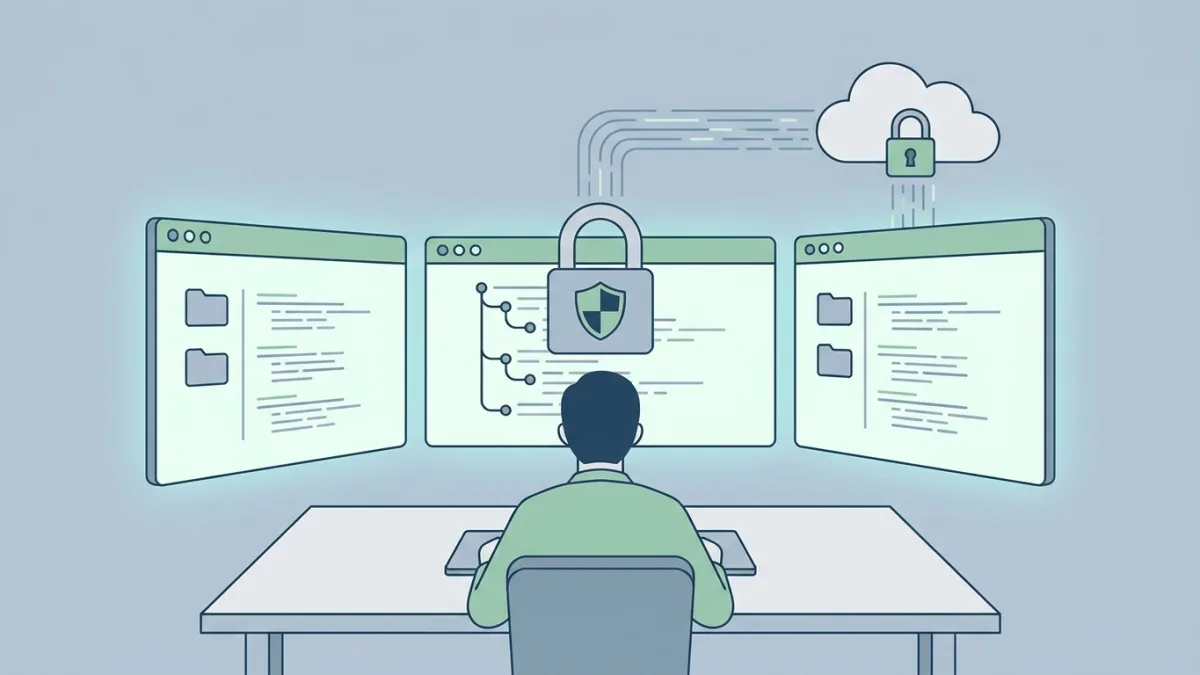
To maintain the integrity of the evidence, the original files must be securely stored. Modern platforms utilize server-side AES-256 encryption to protect your intellectual property from unauthorized access. Furthermore, these deposits are preserved for a minimum of 10 years, ensuring that your evidence remains available even if a dispute arises long after the initial creation date.
Navigating Modern Copyright Challenges
The digital landscape is constantly shifting, introducing new threats to intellectual property. Online copyright deposits are specifically designed to address these modern vulnerabilities.
The Threat of Generative AI
Generative AI models scrape vast amounts of data from the internet to train their algorithms. If your original work is scraped and subsequently regenerated or mimicked by an AI, proving your original authorship becomes incredibly complex.
By securing an online deposit before publishing your work, you establish a definitive timeline. If an AI company claims their output was generated independently, your prior timestamp serves as powerful counter-evidence. Creators should proactively Prove Prior Existence Against Generative AI and stay informed about AI and Copyright for Digital Content Creators.

Social Media Vulnerabilities
Many creators mistakenly believe that posting a photo on Instagram or a video on TikTok automatically provides sufficient proof of prior existence because the platform displays a publication date. This is one of the 5 Copyright Mistakes You Must Avoid.
Social media timestamps can be altered, posts can be deleted, and accounts can be suspended or hacked. Relying on a third-party social platform to act as your legal archive is highly risky. Instead, you should secure an independent online deposit before uploading your content to these platforms.
⚠️ Warning: Never rely solely on social media upload dates as your primary evidence of authorship. Platform data is easily manipulated and frequently deemed insufficient during formal disputes.
Specialized Content: Audio and Podcasts
Theft is not limited to text and images. Audio content, particularly podcasts, is frequently scraped, transcribed, or re-uploaded without attribution. Securing the audio files themselves, along with the show notes and scripts, is vital. For a deep dive into securing audio assets, review How to Protect Your Podcast Audio From Theft.
Best Practices for Maximizing Your Protection
To fully leverage the legal value of online copyright deposits, creators should integrate registration into their standard workflow.
Register Early and Consistently
The golden rule of intellectual property protection is to register your work as early as possible. The closer the timestamp is to the actual moment of creation, the stronger your claim of prior existence will be. Do not wait until a dispute occurs to try and gather your evidence.
Utilize Public Registries
Some platforms offer the option to list your work in a Public deposit registry. While your actual files remain private and secure, the metadata (such as the title, creator name, and date of deposit) is made public. This acts as a powerful deterrent. When potential infringers see that a work is formally registered and documented, they are far less likely to attempt unauthorized use.
Choose the Right Plan for Your Needs
Protecting your work should not be a financial burden. Platforms like Copyright01 are designed to be accessible for creators at all stages. You can Create a free account to start with 3 free deposits. As your portfolio grows, you can seamlessly scale your protection using credit packs starting from EUR 4.90, or opt for comprehensive coverage with a subscription at EUR 9.90/month or EUR 79/year.
Conclusion
The legal value of an online copyright deposit lies in its ability to provide objective, technologically sound proof of prior existence. By leveraging SHA-256 fingerprints, digital timestamping, and server-side AES-256 encryption, creators can establish a robust timeline for their work.
Whether you are a developer writing source code, a musician recording audio, or a writer drafting a novel, taking proactive steps to document your authorship is essential. In a world where digital content is easily replicated, a verified digital certificate is your strongest tool for maintaining control over your intellectual property.
Copyright01
Free copyright protection service. PDF certificate with SHA-256 fingerprint, recognised in 181 countries.