Learn how to protect a mobile app copyright. Secure your source code, UI/UX design, and digital content with digital timestamping and robust IP strategies.
If you want to successfully protect a mobile app in today's highly competitive digital marketplace, you must understand that an application is not a single, unified entity in the eyes of intellectual property law. Instead, a mobile app is a complex combination of multiple creative and technical elements. From the underlying source code that powers its functionality to the visual UI/UX design that engages users, and the written or multimedia content that provides value, every layer requires specific attention.
App cloning and reskinning are rampant issues on both the Apple App Store and Google Play Store. Malicious developers constantly scrape, copy, and republish successful applications under different names to siphon off revenue and users. To defend your hard work, you need a comprehensive strategy to secure your assets before you even launch.
This guide will break down exactly how to secure the different components of your application, establish a clear proof of prior existence, and take decisive action against infringement.
Understanding Mobile App Copyright Protection
When developing a software product, many creators mistakenly believe that a single overarching copyright covers the entire concept of their application. However, copyright law does not protect ideas, concepts, or raw algorithms; it only protects the tangible expression of those ideas.
Before launching your application, you must understand Why register your copyright?. Registering your work provides a clear, documented date of creation, which is essential if a dispute arises. Because an app is multifaceted, you must break it down into its core copyrightable categories: literary works (which includes software source code and written text), visual works (UI/UX design, graphics, and logos), and audiovisual works (sounds, music, and video).
💡 Tip: Do not wait until your app is fully finished to begin protecting your assets. Registering major milestones and beta versions establishes a timeline of your creative process.
The Anatomy of Mobile App Intellectual Property
To effectively safeguard your project, you must catalog the different elements that make up your application. Here is a breakdown of how different app assets are categorized for copyright purposes:
| App Asset | Typical File Formats | Copyright Category |
|---|---|---|
| Source Code (Frontend & Backend) | .zip, .tar, GitHub Repository | Literary Work (Software) |
| UI/UX Design & Layouts | .png, .pdf, Figma exports | Visual / Graphic Work |
| In-App Text & Copywriting | .docx, .pdf, .txt | Literary Work (Text) |
| Audio, Music & Sound Effects | .mp3, .wav | Audiovisual / Sound Recording |
| Video Tutorials & Animations | .mp4, .mov | Audiovisual Work |
By categorizing your assets, you can systematically register each component, ensuring that no part of your digital product is left vulnerable to theft.
Securing Your App Source Code
The source code is the technical backbone of your mobile application. Whether you are building a native app using Swift or Kotlin, or a cross-platform app using React Native or Flutter, your code is considered a "literary work" under international copyright frameworks.
Frontend and Backend Architecture
When you protect a mobile app, you must consider both the client-side (frontend) code that runs on the user's device and the server-side (backend) code that processes data and manages databases. Both are equally important and both are susceptible to theft, particularly if you hire freelance developers or share access with third-party agencies.
⚠️ Warning: Never share your raw backend source code with external partners without first establishing a proof of prior existence and signing a Non-Disclosure Agreement (NDA).
When registering your code, it is best practice to compile your repository into a compressed archive (.zip or .tar) containing your scripts, database schemas, and API configurations. This creates a snapshot of your software architecture at a specific point in time.
Connecting Repositories and Continuous Protection
Modern software development is highly iterative. Code changes daily through continuous integration and deployment pipelines. To keep your protection up to date, you can register your GitHub repositories directly. This ensures that major version releases and significant feature additions are documented.
Just as authors must How to Protect Your Book Before Publishing, developers must secure their code before pushing it to production or sharing it with beta testers.
Shielding Your UI/UX Design and Visuals
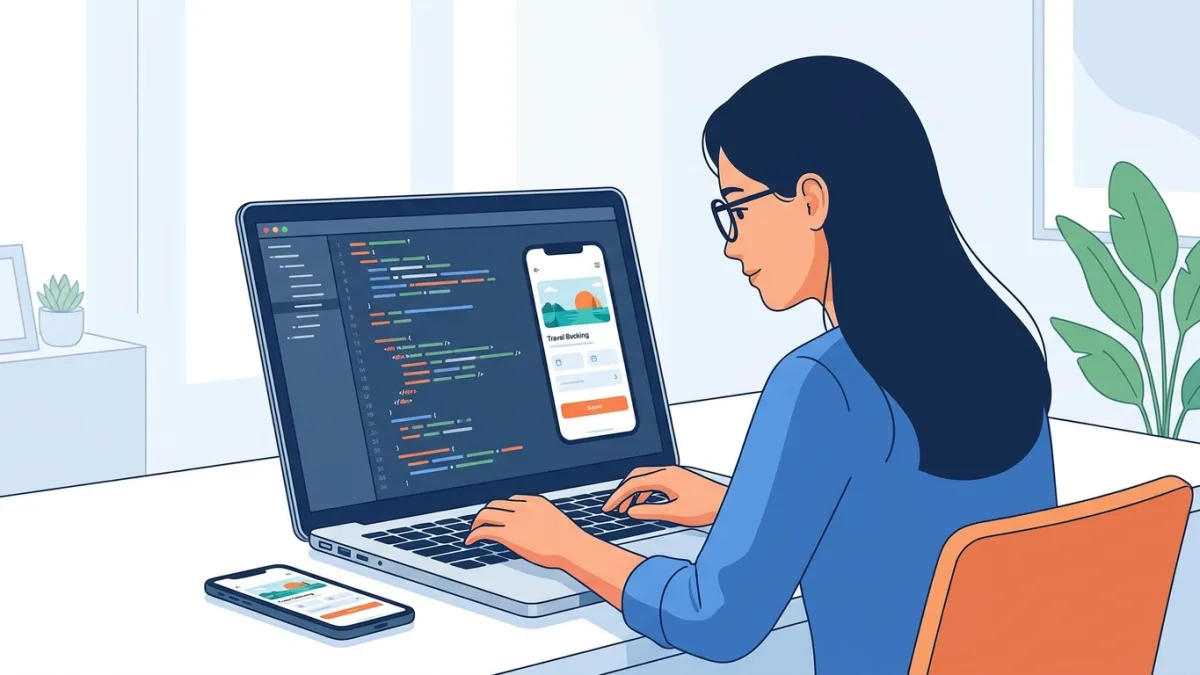
While the source code makes the app function, the UI/UX design is what users actually see and interact with. A unique, intuitive interface is often the main differentiator between a successful app and a failed one. Unfortunately, visual design is the easiest element for competitors to steal through a process known as "reskinning."
Graphic Elements and Layouts
Your app's visual identity includes the arrangement of buttons, the color palette, custom illustrations, typography, and the overall navigation flow. To protect these elements, you should export your design files from tools like Figma, Sketch, or Adobe XD into static formats (like high-resolution PDFs or PNGs) and register them.
If you discover that another app has copied your distinct visual style, having a registered proof of prior existence allows you to take action, similar to the strategies used to How to Stop Etsy and Amazon Design Theft when dealing with stolen graphic merchandise.
Icons, Logos, and Branding Assets
Your app icon is the first thing users see in the App Store. It is a critical piece of your brand identity. Along with your splash screens and custom vector graphics, these assets should be registered as visual works.
📋 Key takeaway: Protect your app's visual identity by registering all finalized design screens and custom icons before submitting your app to public storefronts.
Safeguarding Your Written and Multimedia Content
Beyond code and design, the actual content within your application holds significant value and is fully protected under copyright law.
In-App Copy and Text
Your application likely contains extensive written content, such as onboarding tutorials, terms of service, product descriptions, blog feeds, or in-app purchase prompts. This text is uniquely yours. If a competitor scrapes your app and uses your exact wording, it constitutes copyright infringement.
It is crucial to register your text documents. Furthermore, if you are utilizing modern generative tools to create some of this text, you should review the AI Content and Copyright Rules Explained to understand how human authorship applies to your final product.
Audio, Video, and Interactive Media
Many apps rely heavily on multimedia. Fitness apps feature video workouts, meditation apps use soothing audio tracks, and games rely on custom sound effects and background music.
These audiovisual elements must be protected. If your app includes extensive audio content or recurring spoken-word segments, you might find our Complete Podcast Copyright Protection Guide helpful for understanding how to secure audio files. Similarly, if your app is highly visual and relies on original photography, you should learn how to Stop Social Media Photo Theft to prevent your app's images from being extracted and misused.
Establishing Proof of Prior Existence
To enforce your rights, you need more than just a claim; you need concrete evidence that you created the files at a specific date and time. This is where modern registration services excel over outdated methods.
The Role of Digital Timestamping
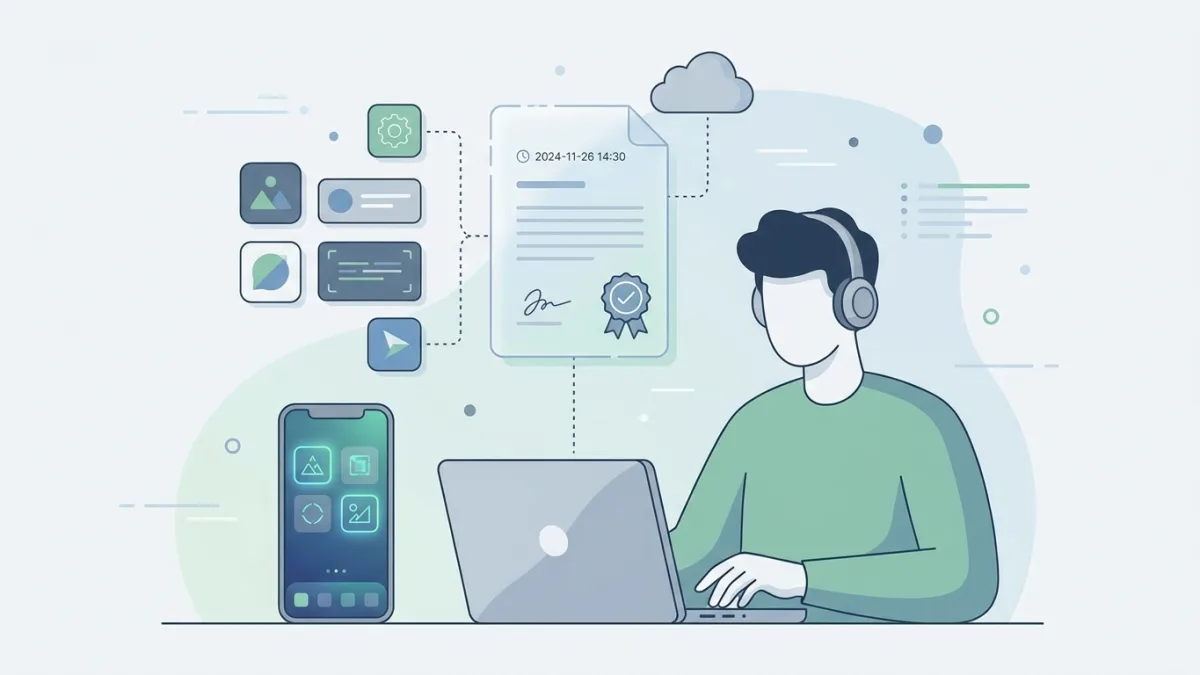
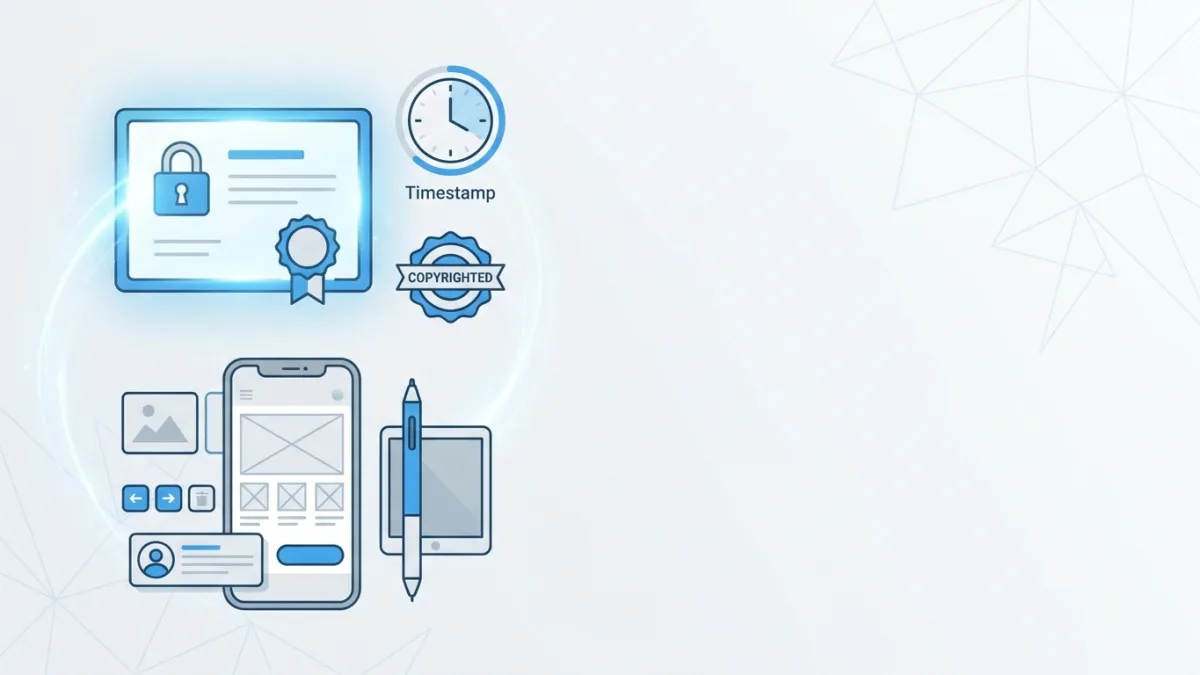
When you upload your app assets (code, design files, or content) to Copyright01, the system generates a unique SHA-256 cryptographic fingerprint of your files. This fingerprint is then sealed with a digital timestamping process.
This method creates an immutable record of your work's existence at that exact second. To fully grasp why this technological approach is superior to old-fashioned physical mail deposits, you should read about the differences between the Soleau Envelope vs Modern Digital Registration.
For a deeper dive into the technical mechanics, explore Digital Timestamping and Copyright Evidence.
Global Recognition and Treaties
Mobile apps are inherently global products. Once published on an app store, they can be downloaded anywhere in the world. Therefore, your protection strategy must also be global.
Fortunately, international copyright is governed by the Berne Convention, an international treaty that provides automatic copyright protection across 181 member countries. The proof of prior existence generated by Copyright01 is recognized in all these jurisdictions, giving you a powerful tool to enforce your rights internationally.
Utilizing Copyright01 for Your App
Copyright01 provides a robust infrastructure to secure your mobile app assets. The platform utilizes server-side AES-256 encryption to ensure your sensitive source code and unreleased designs remain strictly confidential. Your deposits are preserved securely for a minimum of 10 years, providing long-term peace of mind.
You can easily Create a free account to get started. The service offers 3 free deposits, allowing you to secure your initial core assets without upfront costs. As your app grows and requires continuous updates, you can purchase credit packs starting from EUR 4.90, or opt for a subscription at EUR 9.90/month or EUR 79/year for comprehensive, ongoing coverage.
Upon registration, you receive a detailed PDF certificate containing the SHA-256 fingerprint and the digital timestamp. If you ever need to prove the authenticity of your claim to a third party, they can easily Verify a certificate using the platform's verification tool. Additionally, if you wish to publicly showcase your ownership to deter potential infringers, you can opt to have your work listed in the Public deposit registry.
If you want to see how this service compares to other regional options, you can review the Best French Copyright Platforms Compared.
Taking Action Against App Clones and Plagiarism
Securing your evidence is the first step. The second step is active enforcement. The mobile app ecosystem moves quickly, and you must be vigilant to protect your market share.
Monitoring App Stores and the Web
Regularly search the App Store and Google Play Store using keywords related to your app. Look out for applications that use similar names, identical color schemes, or ripped UI layouts.
App cloning doesn't just happen in mobile stores; sometimes competitors will create web-based versions of your app. If you find unauthorized use of your assets online, you need to know how to Detect Website Plagiarism and Take Action.
Executing Takedown Notices
If you discover a clone of your application, you must act swiftly. Both Apple and Google have dedicated intellectual property dispute forms. When submitting a complaint to these platforms, you will be asked to provide proof of your original copyright.
This is where your Copyright01 PDF certificate becomes invaluable. By attaching this document to your takedown request, you provide the app store review teams with clear, digitally timestamped evidence of your prior creation. This significantly speeds up the review process and increases the likelihood that the infringing app will be removed promptly.
💡 Tip: Delaying your registration is one of the most common errors developers make. To ensure your app is fully protected, be sure to avoid the 10 Critical Copyright Mistakes that can jeopardize your intellectual property rights.
Conclusion
To protect a mobile app effectively, you must adopt a multi-layered approach. By securing your source code, shielding your UI/UX design, and safeguarding your written and multimedia content, you create a robust defense against clones and plagiarism. Leveraging digital timestamping provides you with the essential proof of prior existence needed to enforce your rights under the Berne Convention across 181 countries. Start protecting your digital products today to ensure your hard work and innovation remain exclusively yours.
Copyright01
Free copyright protection service. PDF certificate with SHA-256 fingerprint, recognised in 181 countries.