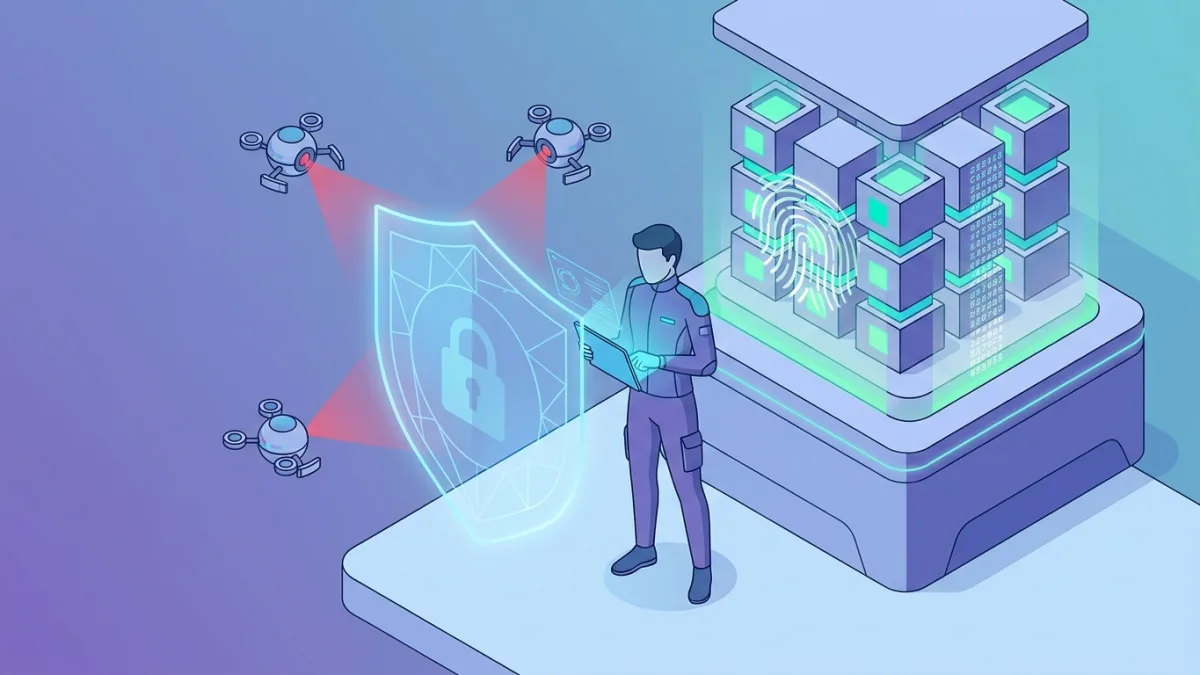
Learn how AI impacts copyright for digital creations. Discover practical ways to protect your original work from generative AI scraping and establish proof.
The rapid evolution of generative Artificial Intelligence has fundamentally transformed the creative landscape. From stunning visual art and complex source code to compelling written articles and original music, AI tools are reshaping how content is produced. However, this technological leap has introduced unprecedented challenges for original creators. The intersection of AI and copyright is currently one of the most debated topics in intellectual property law, leaving many digital artists, writers, and developers wondering how to secure their assets.
Generative AI models rely on massive datasets scraped from the internet, often absorbing copyrighted materials without the original creator's consent or knowledge. As a creator, understanding how to navigate this new environment is essential. You must proactively establish proof of prior existence to defend your intellectual property against unauthorized use.
If you are wondering Why register your copyright?, the answer has never been more critical. In an era where a machine can replicate your unique style in seconds, having robust evidence of your original authorship is your strongest defense.
The Impact of AI on Digital Copyright
To effectively protect your digital creations, it is crucial to understand exactly how artificial intelligence interacts with copyrighted material. The relationship between AI developers and original creators is currently fraught with tension, primarily due to the methods used to train these complex algorithms.
How Generative AI Models Use Your Work
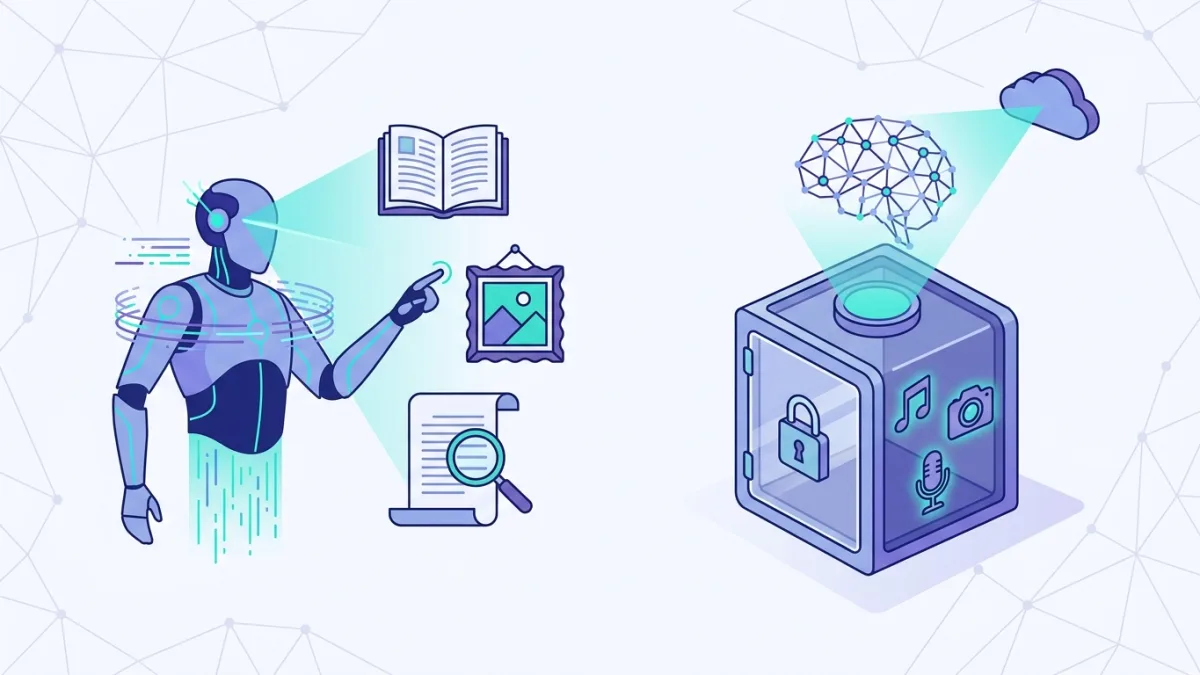
Generative AI systems, such as large language models (LLMs) and text-to-image generators, do not create content out of thin air. They require extensive training data to learn patterns, styles, syntax, and structures. Tech companies deploy web crawlers to scrape billions of images, articles, videos, and lines of code from public websites, portfolios, and social media platforms.
If you regularly post your artwork, writing, or source code online, there is a high probability that it has been ingested into a training dataset. Once your work is absorbed, the AI can generate outputs that mimic your specific creative voice or visual style. This massive data extraction often happens without attribution, permission, or compensation, directly threatening the livelihood of independent creators. For visual artists especially, it is highly recommended to read our Protect Your Visual Works: Image Copyright Guide to understand the vulnerabilities of online portfolios.
The Legal Gray Area of Machine Learning
AI companies frequently argue that training their models on copyrighted works falls under "fair use" (in the US) or similar text-and-data mining exceptions in other jurisdictions. They claim that the AI is simply "learning" from the data, much like a human student would study the works of master painters or classic authors.
However, creators and copyright advocates argue that this constitutes massive copyright infringement. When an AI generates an image that closely resembles a specific artist's protected work, it raises severe legal questions about derivative works and reproduction rights. As the courts continue to battle over these definitions, creators cannot afford to wait for legal precedents to settle. You must take immediate action to Prove Prior Existence Against Generative AI.
Can You Copyright AI-Generated Content?
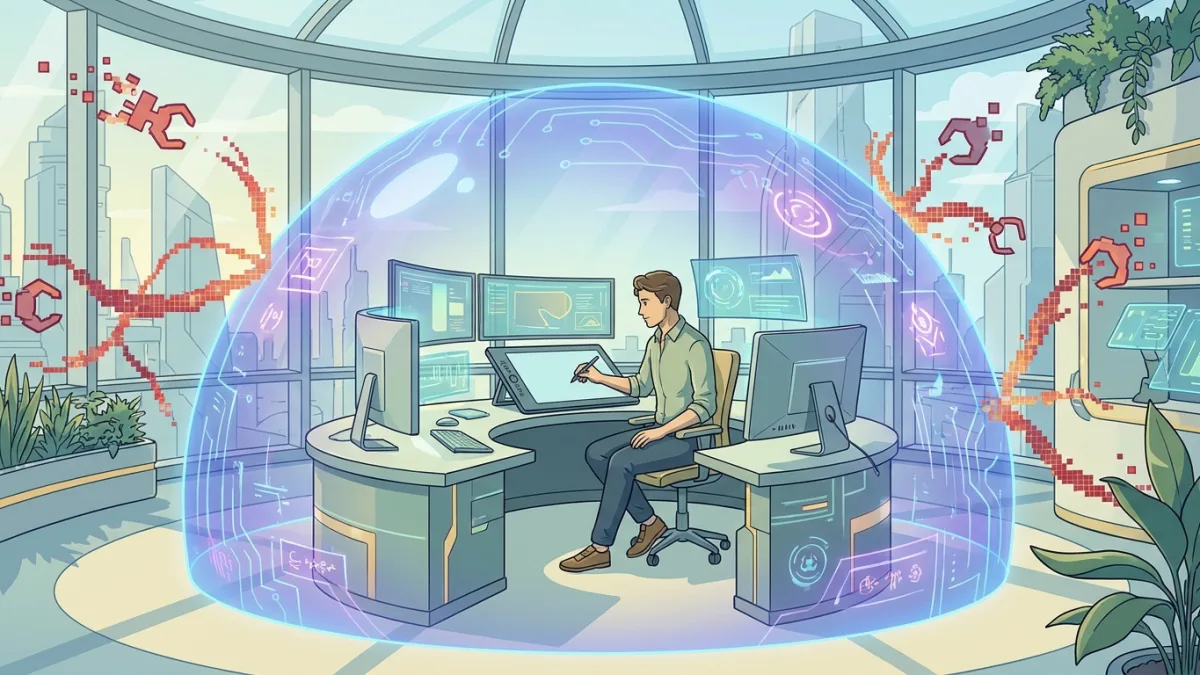
The conversation around AI and copyright works in two directions: protecting your human-made work from AI, and understanding the copyright status of works you create using AI tools.
The Human Authorship Requirement
Globally, copyright law is built on the foundation of human creativity. The Berne Convention, which establishes international standards for copyright protection across 181 countries, inherently assumes a human author.
Recent rulings by intellectual property offices worldwide have consistently stated that works generated entirely by a machine or an algorithm cannot be copyrighted. If you simply type a prompt into an AI image generator and publish the result, that image immediately enters the public domain. Anyone can freely copy, distribute, or sell that specific AI-generated image without your permission.
Combining Human Creativity With AI Tools
The situation becomes more complex when human creators use AI as an assistive tool rather than a standalone generator. If you use AI to brainstorm ideas, but the final execution, structuring, and significant creative choices are yours, the resulting work may be eligible for copyright protection.
| Content Creation Method | Copyright Eligibility | Explanation |
|---|---|---|
| 100% Human-Created | Fully Eligible | The work is an original expression of a human author. |
| AI-Assisted (Human Driven) | Partially Eligible | Copyright protects the human contributions (e.g., heavy editing, specific arrangement), but not the raw AI output. |
| 100% AI-Generated | Not Eligible | Lacks the required human authorship; falls into the public domain. |
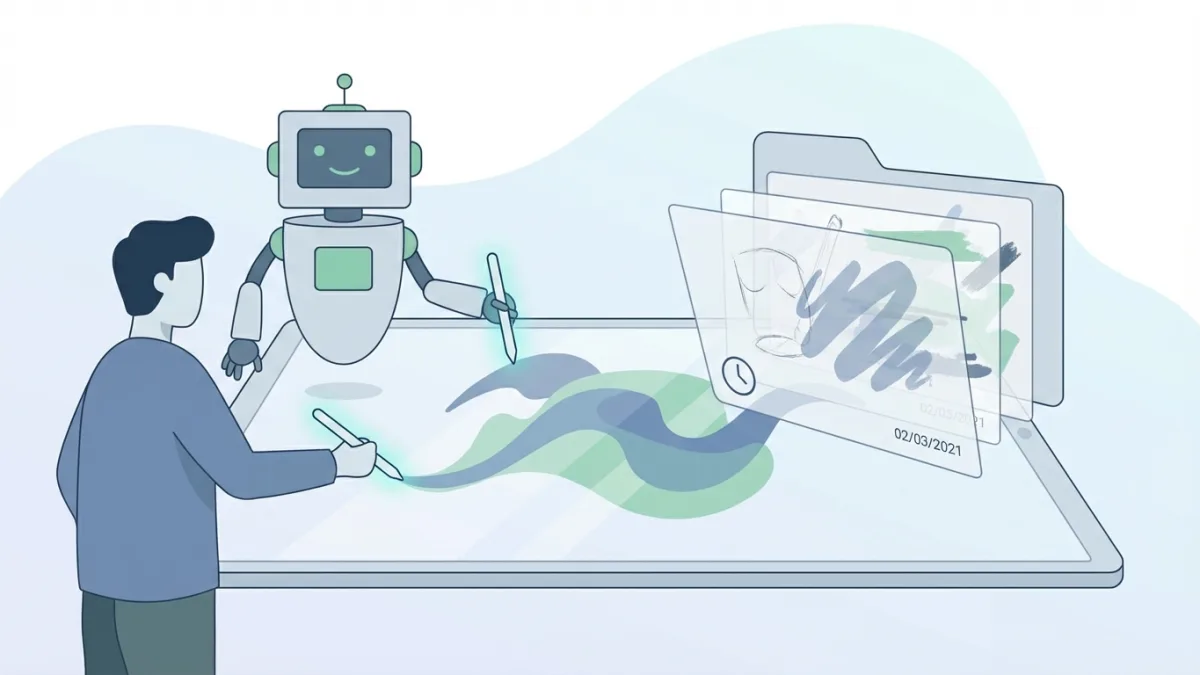
💡 Tip: If you use AI tools in your workflow, meticulously document your creative process. Save your drafts, sketches, and revisions. This documentation helps prove your human contribution if your copyright is ever challenged. Failing to do so is one of the 5 Copyright Mistakes You Must Avoid.
Strategies to Protect Your Digital Creations From AI
As a digital creator, you need a multi-layered approach to safeguard your intellectual property in the age of generative AI. Relying solely on the fact that you published it first on a blog or social media platform is no longer sufficient.
Opting Out and Technical Safeguards
Many platforms now offer "NoAI" metadata tags or allow you to update your website's robots.txt file to block known AI web crawlers from scraping your content. Additionally, some creators use digital watermarking or data-poisoning tools designed to disrupt an AI model's ability to learn from an image.
⚠️ Warning: While technical safeguards are helpful, they are not foolproof. Malicious scrapers routinely ignore
robots.txtfiles and strip metadata. Relying exclusively on technical blocks is one of the 5 Fatal Online Copyright Deposit Mistakes. You must back up technical defenses with strong legal evidence.
Establishing Proof of Prior Existence
The most effective way to protect your work is to establish undeniable proof that your creation existed at a specific point in time, before an AI could have scraped it or another user could have generated a similar output.
If you find a piece of AI-generated content that infringes on your original work, the burden of proof is on you. You must demonstrate that you are the original author and that your work predates the infringing content. This is where you need to Timestamp Your Work for Prior Existence.
Registering Your Work with Copyright01
To secure your digital assets effectively, you need a reliable, independent third-party service to record your authorship. Copyright01 provides a streamlined, highly secure platform designed specifically for the needs of modern digital creators.
How Digital Timestamping Secures Your Rights
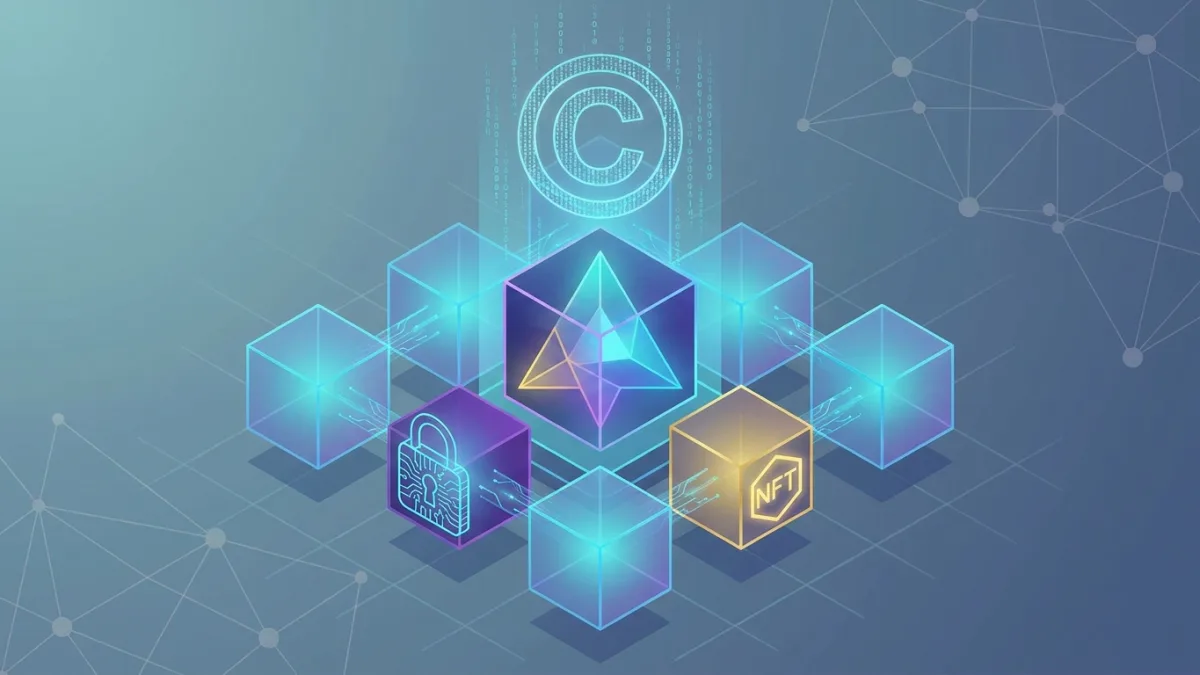
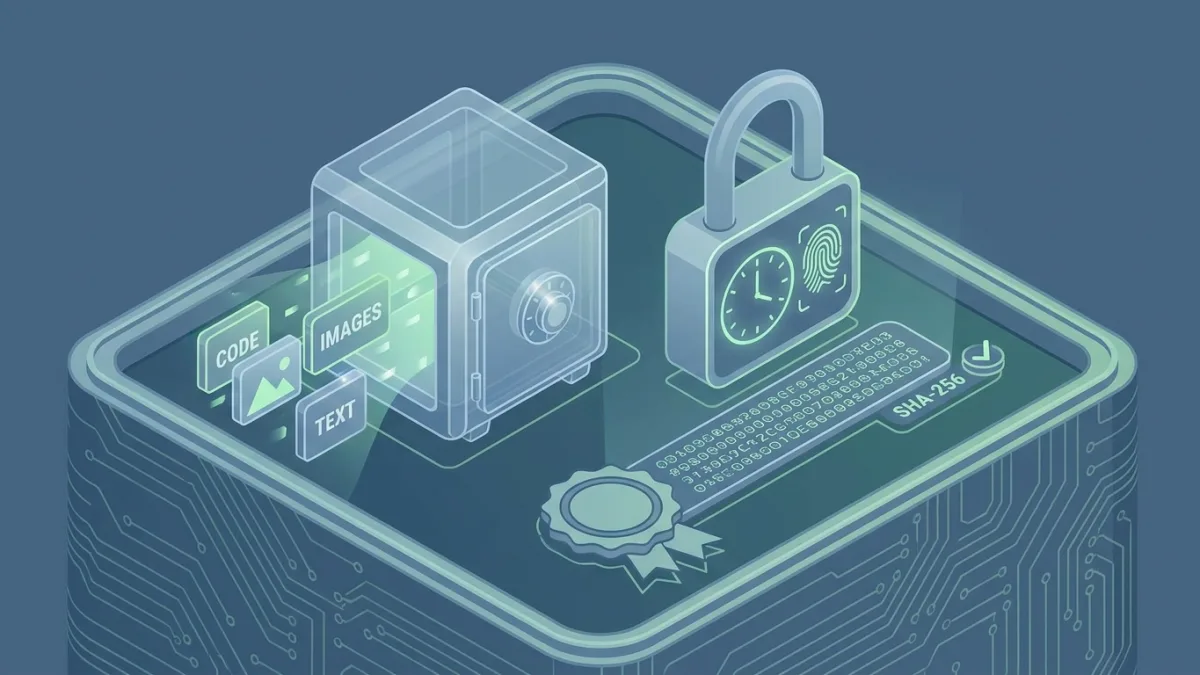
When you deposit your work on Copyright01, the system generates a unique SHA-256 fingerprint of your file. This cryptographic hash acts as a digital DNA for your creation; even the slightest alteration to the file will completely change the fingerprint.
This fingerprint is then combined with a digital timestamping process, locking in the exact date and time of your deposit. You receive a comprehensive PDF certificate containing this data, providing strong evidence of prior existence. Because Copyright01 operates under the principles of the Berne Convention, this proof is recognized in 181 countries worldwide.
To ensure maximum privacy, all files are protected using server-side AES-256 encryption. Furthermore, your deposits are preserved securely for a minimum of 10 years, ensuring long-term protection for your portfolio. You can learn more about the technical mechanics in our guide on How Digital Timestamping Protects Creators.
Supported Formats for Modern Digital Creators
Creators work across various mediums, and your copyright protection service must adapt to your workflow. Copyright01 supports a vast array of deposit types, allowing you to secure your entire digital footprint in one place:
- Text & Documents: Articles, books, scripts, and business plans.
- Visual Arts: Illustrations, photographs, 3D models, and graphic designs.
- Audio & Video: Podcasts, music tracks, and short films. (Learn how to Protect Your Podcast With Audio Copyright).
- Digital Assets: Websites and source code. Developers can easily Protect GitHub Source Code and Repositories.
- Social Media: Direct URL deposits for content on YouTube, Instagram, X, TikTok, and Facebook. If you are an influencer, see our guide on Protecting Your Facebook Content Copyright.
📋 Key takeaway: Securing your work is accessible and affordable. With Copyright01, you receive 3 free deposits to start protecting your portfolio immediately. After that, you can choose flexible credit packs starting from EUR 4.90, or opt for a comprehensive subscription at EUR 9.90/month or EUR 79/year. Take action today and Create a free account.
Enforcing Your Rights in the AI Era
Having proof of prior existence is only the first step; you must also be prepared to enforce your rights if you discover your work has been scraped, replicated, or stolen.
Monitoring and Takedown Notices
Regularly monitor the internet and major platforms for unauthorized use of your creations. If you spot an infringement—whether it was posted by a human plagiarist or generated by an AI user—you can issue a Digital Millennium Copyright Act (DMCA) takedown notice or its local equivalent.
When submitting a takedown request to a hosting provider or social media platform, attaching your Copyright01 PDF certificate dramatically increases the likelihood of a swift resolution. For specific platform strategies, read our tutorial on How to Remove a Stolen YouTube Video Fast.
Utilizing the Public Registry
Transparency can be a powerful deterrent against intellectual property theft. Copyright01 features a Public deposit registry where you can optionally display the metadata of your protected works.
If a dispute arises, you can direct the infringing party or the platform administrators to Verify a certificate directly on the Copyright01 platform. This independent verification process demonstrates that you hold robust proof of authorship, often resolving disputes before they escalate to costly legal battles.
Conclusion
The integration of artificial intelligence into the creative process brings both incredible opportunities and significant risks. As AI models continue to scrape the web for training data, the line between inspiration and infringement becomes increasingly blurred. Digital creators can no longer afford to be passive about their intellectual property.
By understanding the human authorship requirements, implementing technical safeguards, and most importantly, establishing concrete proof of prior existence through digital timestamping, you can confidently share your work online. Protect your digital legacy today and ensure that your creative voice remains exclusively yours.
Frequently Asked Questions (FAQ)
Does the Berne Convention protect my work against AI scraping?
Yes, the Berne Convention grants automatic copyright protection to original works upon creation across 181 member countries. This means unauthorized reproduction—including scraping for commercial AI training datasets—can be considered an infringement of your exclusive rights. However, to enforce these rights effectively, you must be able to prove that you are the original author and that your work existed prior to the scraping.
Can I register a work that I partially created with AI?
You can register a work that includes AI-generated elements, provided that your human contribution is substantial enough to meet the threshold of originality. The copyright will only protect the specific human arrangements, edits, and creative choices you made, not the raw output generated by the AI algorithm. It is highly recommended to keep thorough records of your creative process.
How does a SHA-256 fingerprint help prove my copyright?
A SHA-256 fingerprint is a unique alphanumeric string generated from the exact contents of your digital file. It acts as a digital DNA. Even changing a single pixel in an image or one letter in a text document will produce a completely different fingerprint. When combined with a digital timestamp, it provides highly secure evidence that your specific, unaltered file existed at that exact moment in time.
What happens to my deposits after the initial period?
When you register your work with Copyright01, your digital files and the associated proof of prior existence are preserved securely using server-side AES-256 encryption for a minimum of 10 years. This ensures long-term protection and peace of mind, allowing you to access your PDF certificates and timestamp data whenever you need to defend your intellectual property.
Copyright01
Free copyright protection service. PDF certificate with SHA-256 fingerprint, recognised in 181 countries.