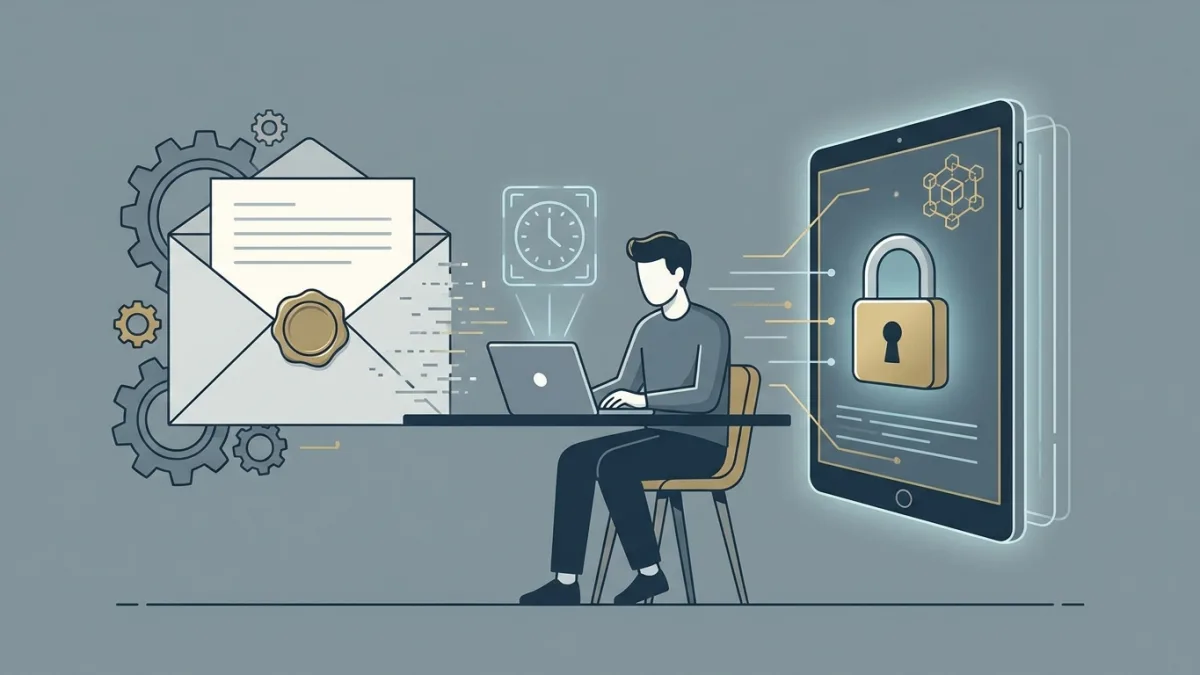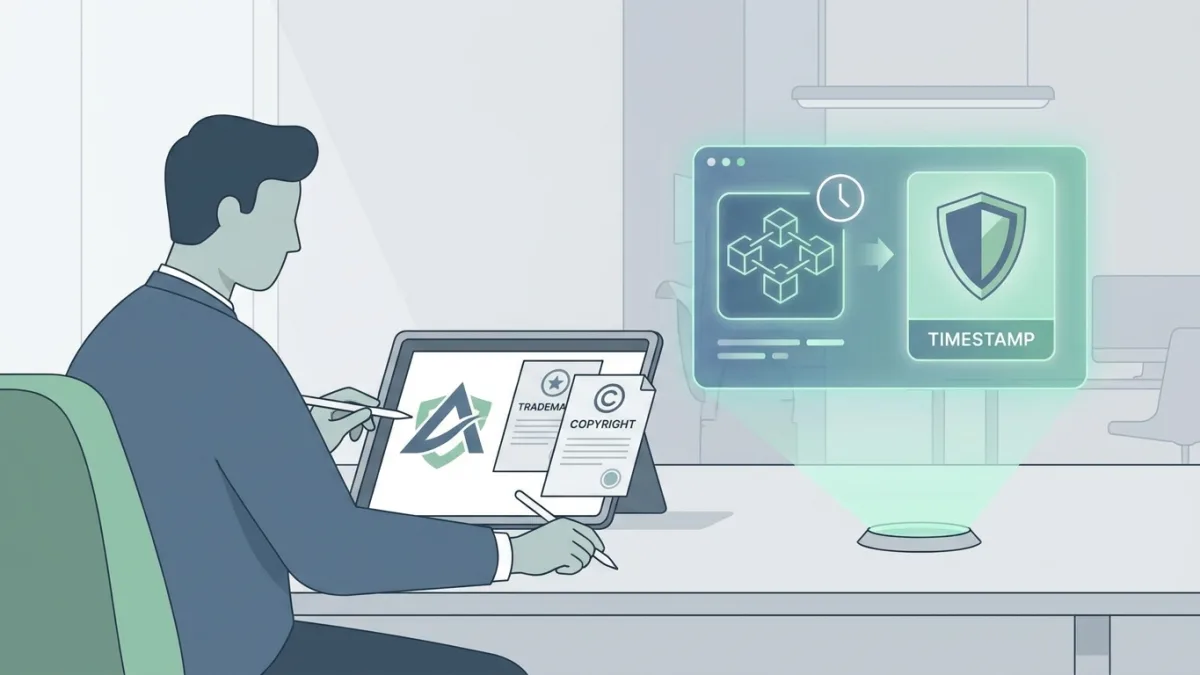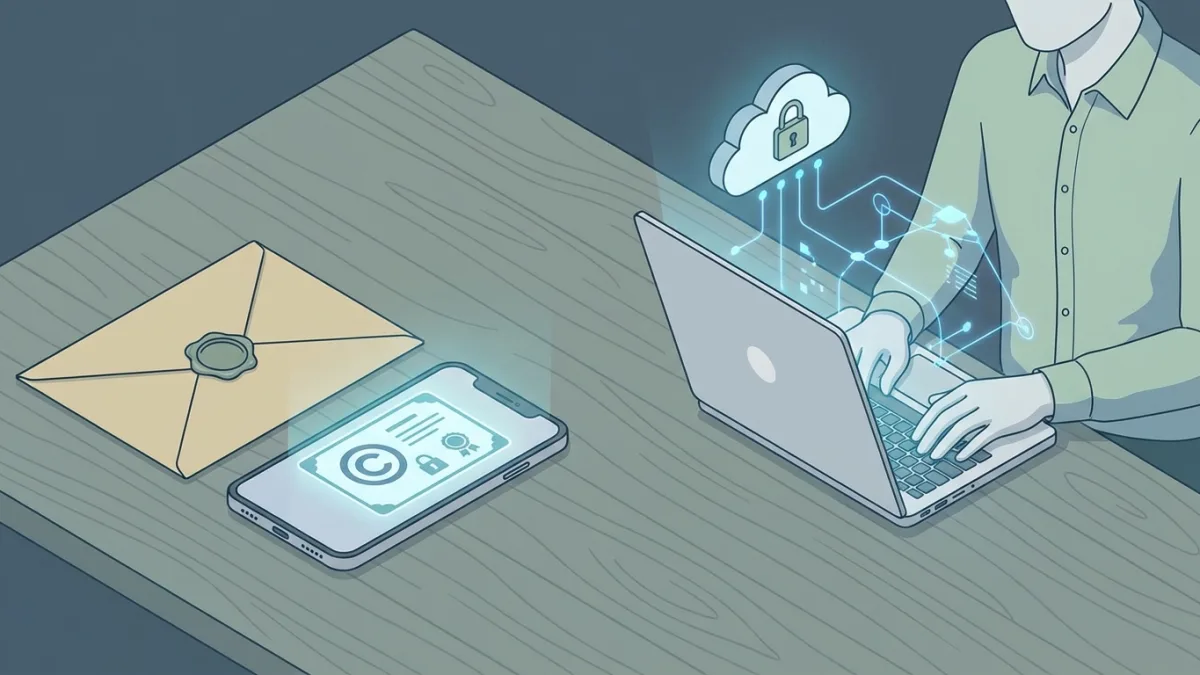
Discover five methods to establish proof of prior existence for your creative work. Compare online deposits, blockchain, and traditional mailing options.
Establishing proof of prior existence is one of the most critical steps you can take to protect your creative works. Whether you are a writer, a software developer, or a visual artist, copyright automatically applies the moment your work is created in a tangible form. However, if a dispute arises, simply saying you created it first is not enough. You need concrete evidence to show exactly when your work existed in your possession.
Why register your copyright? The answer lies in the necessity of evidence. Without a clear, dated record of your creation, enforcing your rights against copycats becomes incredibly difficult. Over the years, creators have relied on various techniques to date their work, ranging from physical mail to advanced digital hashes.
In this comprehensive guide, we will compare five popular methods used to establish proof of prior existence: the poor man's copyright, physical envelopes (like the Soleau envelope), notary services, blockchain technology, and modern online registration platforms.
Understanding Proof of Prior Existence
Before diving into the methods, it is essential to understand what proof of prior existence actually does. It does not grant you the copyright itself—creation does that. Instead, it provides a factual timestamp demonstrating that a specific file, document, or piece of art existed at a specific point in time.
The Role of International Treaties
Thanks to international agreements, copyright protection is largely borderless. The Berne Convention ensures that works created in one member country are recognized across 181 countries.
To dive deeper into how this international framework operates, you can read our guide on Berne Convention Global Copyright Protection. Because this protection is automatic, having a recognized proof of prior existence allows you to assert your rights internationally without having to register your work separately in every single country.
Method 1: The Poor Man's Copyright
One of the oldest and most widely discussed methods is the "poor man's copyright." This involves placing a copy of your work in an envelope and mailing it to yourself via a postal service. The idea is that the post office will stamp the envelope with a date, proving when the work was mailed.
How It Works
You print your manuscript, burn your audio to a CD, or put your files on a USB drive. You seal it, mail it to your own address, and when it arrives, you leave it unopened. If a dispute ever occurs, you present the sealed envelope to a judge.
Pros and Cons
The primary advantage of this method is its low cost. You only pay for postage. However, the drawbacks are significant. Postal stamps can be faked, envelopes can be unsealed and resealed, and the overall strength of this evidence is widely considered very weak in modern legal disputes.
⚠️ Warning: Relying on the poor man's copyright is highly discouraged for valuable intellectual property. It offers minimal evidentiary weight and is easily challenged by opposing parties.
Method 2: Physical National Registries (e.g., Soleau Envelope)
In some countries, national intellectual property offices offer specific physical deposit systems. A famous example is the Soleau envelope (enveloppe Soleau) used in France. Named after its inventor, Eugène Soleau, it is a specially designed two-part envelope used to date ideas, concepts, or designs.
Understanding Physical Deposits
With a Soleau envelope, you place your document inside two identical compartments. You mail it to the national IP office, which punches a hole through both compartments using a laser or mechanical press to record the date. They keep one half in their archives and return the other half to you.
Limitations for Digital Creators
While this method provides stronger evidence than mailing a standard envelope to yourself, it is heavily restricted by physical limitations. You can only fit a few sheets of paper or a flat CD inside.

This makes it highly impractical for modern creators who need to Protect GitHub Source Code and Repositories or register massive video files. Furthermore, physical deposits are strictly localized to the specific country's IP office, making them cumbersome for international digital businesses.
Method 3: Notary Public or Legal Professional Deposits
Another traditional method is taking your work to a notary public, solicitor, or bailiff. These legal professionals act as impartial witnesses to the existence of your document at a given time.
High Trust, High Cost
The professional will typically review the document, verify your identity, and draft an affidavit or a formal act stating that you presented the work to them on a specific date. They then keep a copy in their secure archives.
This method offers a very high standard of evidence. However, it is also the most expensive and time-consuming. Scheduling appointments, paying hourly legal fees, and physically presenting your work can cost hundreds of dollars per deposit. For a creator producing weekly content, such as someone trying to Secure Your Website Content with Copyright, this method is financially unviable.
Method 4: Blockchain Technology
With the rise of Web3, blockchain technology has emerged as a new way to establish proof of prior existence. Blockchain operates as a decentralized, immutable public ledger.
Decentralized Timestamping
Instead of trusting a centralized authority (like a post office or a notary), creators can generate a cryptographic hash of their file and embed it into a blockchain transaction (such as on the Bitcoin or Ethereum network). The network records the exact time the transaction was processed.
Technical Barriers
While blockchain provides strong digital evidence, it requires a certain level of technical expertise. You must manage digital wallets, calculate gas fees, and safely store your private keys. If you lose your keys, you lose access to your proof. Furthermore, not all jurisdictions have clear precedents on how raw blockchain hashes are presented and interpreted in traditional disputes.
📋 Key takeaway: Blockchain is a fascinating technology for timestamping, but the lack of a centralized support system and the steep technical learning curve make it challenging for the average creator.
Method 5: Online Copyright Registration Services
The most practical, modern, and balanced approach for today's creators is using specialized online copyright registration platforms. These services combine the technical robustness of digital hashing with the user-friendly experience of a centralized platform.
The Modern Solution for Creators
Platforms like Copyright01 are designed specifically to help creators establish proof of prior existence quickly and affordably. You can upload almost any digital format: text, image, audio, video, source code, and even direct links to social media profiles or websites.
When you Create a free account on Copyright01, you gain access to a streamlined dashboard. The platform uses server-side AES-256 encryption to keep your files private while generating a unique SHA-256 fingerprint for your work. This fingerprint is then combined with digital timestamping to create a precise, dated record of your creation.
How Copyright01 Works
Copyright01 makes it easy to secure your work. You receive 3 free deposits to test the service. After that, you can purchase credit packs starting from EUR 4.90, or opt for a subscription at EUR 9.90/month or EUR 79/year for frequent creators.
Upon deposit, you are issued a comprehensive PDF certificate containing the SHA-256 fingerprint and digital timestamping details. Your deposits are preserved for a minimum of 10 years, ensuring long-term access to your evidence.

You can easily Verify a certificate at any time, or choose to make your work visible on the Public deposit registry to deter potential infringers.
Comparing the 5 Methods
To help you decide which method best suits your needs, here is a quick comparison of the five approaches to establishing proof of prior existence:
| Method | Cost | Ease of Use | Digital Friendly | Evidence Strength |
|---|---|---|---|---|
| Poor Man's Copyright | Very Low | High | No | Very Weak |
| Soleau Envelope | Moderate | Moderate | No | Strong (but physically limited) |
| Notary Deposit | Very High | Low | Yes | Very Strong |
| Blockchain | Variable | Low | Yes | Strong (requires technical skill) |
| Online Registration | Low to Moderate | Very High | Yes | Strong (combines hashes & timestamps) |
💡 Tip: For digital creators, online registration offers the best balance of affordability, ease of use, and robust digital evidence.
Choosing the Right Method for Your Work
The type of content you create heavily influences the method you should choose. Physical methods are increasingly obsolete in a world dominated by digital media.
Protecting Social Media and Code
If you are a content creator, your output is entirely digital. Mailing a physical envelope cannot adequately protect a dynamic social media feed. Instead, online registration allows you to secure digital assets efficiently.
For instance, you can easily Protect Your X Twitter Content Copyright or Protecting Your Facebook Content Copyright. Visual influencers must also take steps to Protect Your Instagram Content from Theft, while video creators should learn How to Copyright Your YouTube Video Content.
Visual Arts, Documents, and Freelance Work
Freelancers and visual artists face unique challenges. When delivering client work, establishing proof of prior existence before sending the final files is a crucial step to ensure you get paid and retain your rights.
We highly recommend reading our guide on Copyright for Freelance Graphic Designers to understand the nuances of client contracts and IP retention.
Furthermore, if you discover that your work has been stolen, having a solid proof of prior existence is the first step in taking action. Learn more about How to Fight Plagiarism and Infringement to understand the enforcement process.
Conclusion
Establishing proof of prior existence does not have to be complicated, expensive, or reliant on outdated physical mail systems. While methods like the poor man's copyright or physical national registries served their purpose in the past, today's digital landscape requires modern solutions.
By utilizing an online registration service like Copyright01, you can secure your text, images, audio, video, and source code with digital timestamping and SHA-256 fingerprints. This provides a strong foundation for your intellectual property across the 181 countries recognized by the Berne Convention.
To ensure your entire creative business is well-protected, consider combining your copyright deposits with proper documentation. Check out LegalGen: Free Legal Templates for Your Work to draft the necessary agreements and licenses that complement your proof of prior existence.
Copyright01
Free copyright protection service. PDF certificate with SHA-256 fingerprint, recognised in 181 countries.