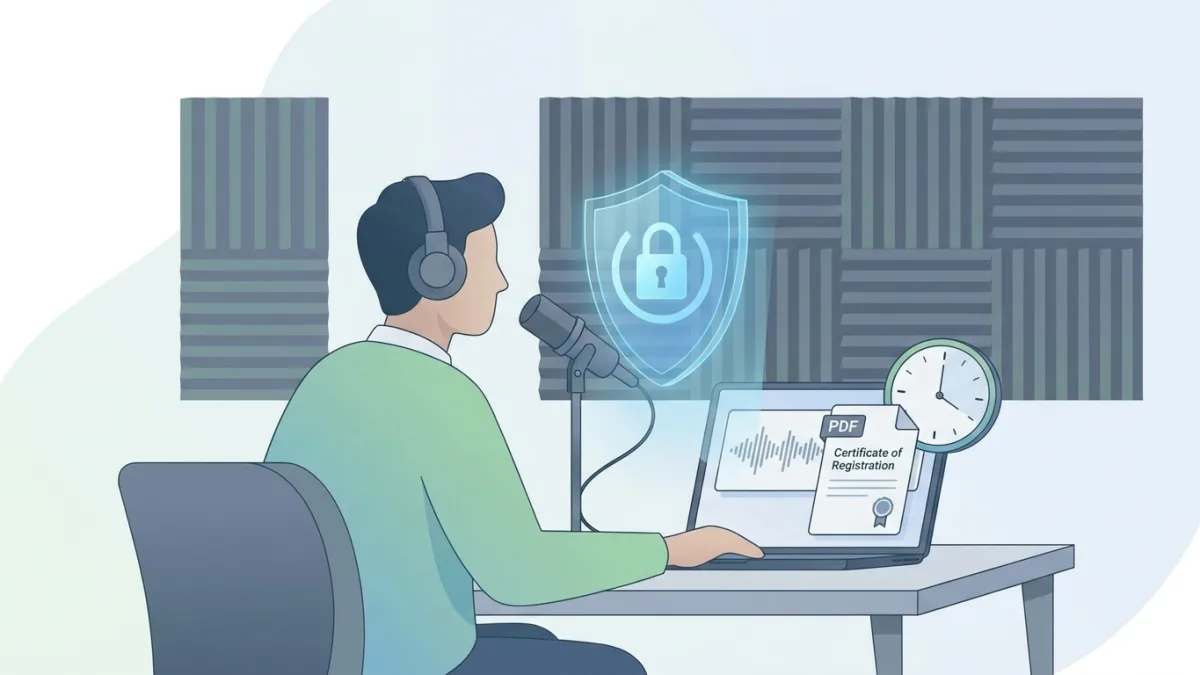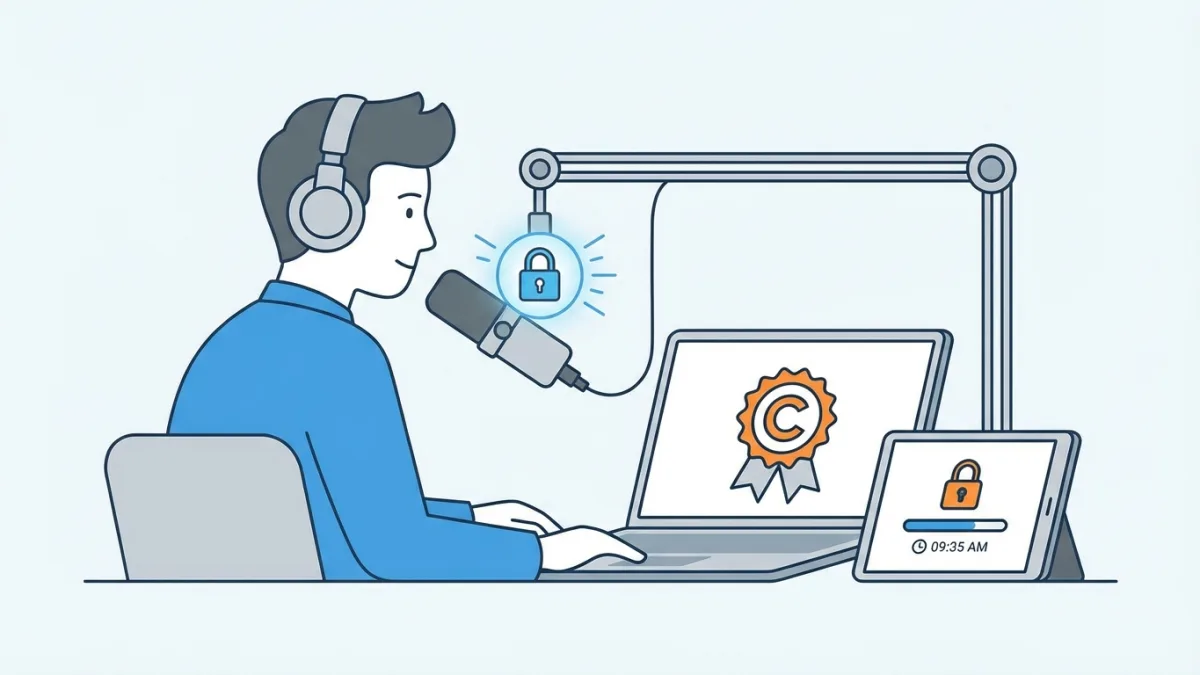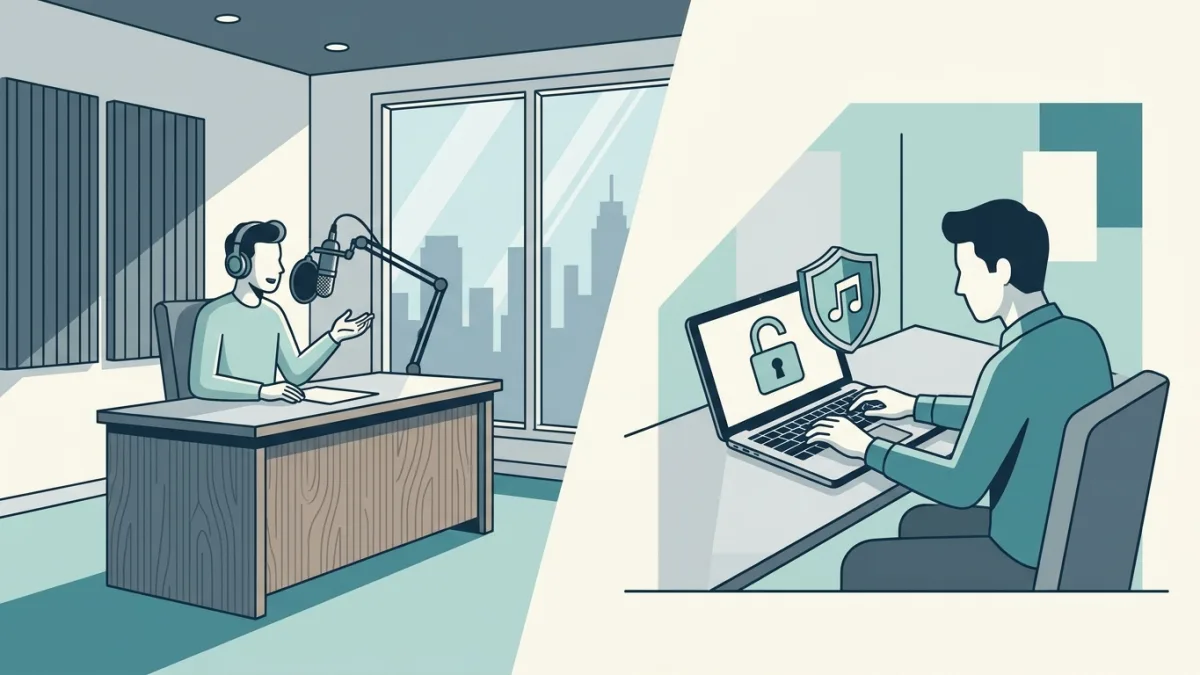
Learn how to protect an audio podcast with copyright. Discover the best ways to secure your episodes, prove prior existence, and prevent content theft easily.
Starting a podcast requires a significant investment of time, energy, and resources. From researching topics and writing scripts to recording, editing, and marketing, the process is demanding. As your audience grows and your show gains traction, the risk of content theft increases. Knowing how to protect an audio podcast with copyright is essential for any serious creator who wants to maintain control over their intellectual property.
Whether an unscrupulous third party re-uploads your episodes, steals your custom cover art, or plagiarizes your meticulously researched show notes, unauthorized use of your content can harm your brand and your revenue. In the digital age, audio content is easily downloaded, altered, and redistributed. Having a proactive strategy to secure your work is not just an option; it is a necessity.
In this comprehensive guide, we will explore the various layers of podcast copyright, how to establish reliable proof of prior existence, and the actionable steps you can take to safeguard your creative endeavors from copycats.
Understanding Podcast Intellectual Property
When you think about your podcast, you might view it as a single entity. However, from an intellectual property perspective, a podcast is a complex compilation of multiple creative works. To effectively Protect Your Podcast With Audio Copyright, you must understand the different assets involved.
The Sound Recording
The most obvious element of your podcast is the audio file itself. This sound recording encompasses your voice, the voices of your guests, sound effects, and any background music you have mixed into the track. The final master file represents a unique creative expression fixed in a tangible medium.
Scripts and Show Notes
Before you even press the record button, you likely have a script, an outline, or a list of interview questions. These written documents are literary works protected by copyright. Additionally, the detailed show notes you publish on your blog or podcast host are also protected text.
Visual Assets and Cover Art
Your podcast cover art is the visual face of your show. Whether you designed it yourself or hired a freelance graphic designer, this image is a distinct piece of intellectual property.
💡 Tip: To fully secure your brand, you should consider protecting each of these assets separately. A comprehensive approach ensures that if someone steals your logo but not your audio, you still have grounds to take action.
Why You Need to Protect Your Podcast Content
Many creators assume that simply publishing their podcast online is enough to secure their rights. While copyright automatically exists the moment a work is created, proving when you created it and that you are the original author can be incredibly difficult without formal documentation.
The Risk of Audio Plagiarism
With the rise of AI voice cloning and automated transcription tools, it has never been easier for bad actors to scrape your podcast, transcribe your episodes, and republish your content as their own blog posts or e-books. Alternatively, they might clip your audio and use it in their own media without permission.
Establishing Clear Authorship
If a dispute arises over who created a specific format, script, or audio segment first, you need strong evidence to support your claim. By taking steps to Why register your copyright?, you create a reliable timeline of your creative process.
⚠️ Warning: Never assume that the upload date on your RSS feed or podcast hosting platform is sufficient proof of authorship. Dates on third-party servers can sometimes be manipulated or lost if you migrate to a new host.

The Power of Digital Timestamping for Podcasters
To defend your podcast against infringement, you must be able to prove that your work existed at a specific point in time before the copycat's version appeared. This is where modern technology comes into play.
Traditional Methods vs. Modern Online Registration
In the past, creators relied on outdated methods to prove the date of their work's creation. One famous example is the "poor man's copyright," where a creator mails a copy of their work to themselves and leaves the envelope sealed. This method is highly unreliable and rarely holds up in modern disputes.
Another older method in some jurisdictions involves physical deposits, such as the Soleau envelope in France. While useful in its time, it is not optimized for digital media like large WAV files or MP4 video podcasts. You can read a detailed comparison in our article about the Soleau Envelope vs Modern Free Copyright.
Modern registration services offer significant advantages over these traditional methods. By using secure hashing algorithms, you generate proof that is immediately accessible, easily verifiable, and securely stored on redundant servers.
How Digital Timestamping Works
If you want to Prove Prior Existence Using Timestamping, you need a system that binds the exact date and time to your work. When you register a file, the system generates a unique digital signature based on the file's contents. This is known as a SHA-256 fingerprint. The file and its fingerprint are then subjected to digital timestamping, which permanently records the exact date and time of your deposit.
This process provides strong evidence of prior existence. If someone tries to claim they created the podcast episode before you did, your digitally timestamped file will show a clear, verifiable date of creation. You can learn more about How Digital Timestamping Protects Creators to understand the technical benefits.
International Protection Under the Berne Convention
Podcasts are inherently global. A show recorded in London can be downloaded in Tokyo, New York, and Sydney within seconds. Fortunately, copyright protection is also international.
Under the Berne Convention, an international treaty signed by 181 countries, a work created in one member country is automatically granted copyright protection in all other member countries. When you register your podcast and obtain a timestamp, that proof of prior existence is recognized across all these jurisdictions. This global reach is vital for podcasters whose audiences span multiple continents.
How to Register Your Podcast Audio
Securing your podcast is a straightforward process when you use a dedicated registration service like Copyright01. The platform allows you to protect various file types, ensuring all your podcast assets are covered.
Preparing Your Files for Deposit
Before you begin, gather the final versions of your files. This includes your MP3 or WAV audio files, your PDF scripts, and your JPEG or PNG cover art. Ensuring your files are finalized means the SHA-256 fingerprint will perfectly match the published work.
Using Copyright01 to Secure Your Work
Copyright01 makes it simple to establish prior existence. You can start by deciding to Create a free account, which gives you access to 3 free deposits. If you have a large back catalog of episodes, you can utilize credit packs starting from EUR 4.90, or opt for a subscription at EUR 9.90/month or EUR 79/year for regular uploads.
When you upload your audio file, the system uses server-side AES-256 encryption to process your work securely. Your deposits are preserved for a minimum of 10 years, ensuring long-term availability of your proof. To avoid critical errors in this process, be sure to review the 5 Fatal Online Copyright Deposit Mistakes.
Obtaining Your Documentation
Once the deposit is complete, you will receive a PDF certificate with the SHA-256 fingerprint and the digital timestamping details. You can easily Verify a certificate at any time to demonstrate your authorship. If you wish to publicly assert your rights, you can even add your show to the Public deposit registry.
| Podcast Asset | File Format | Type of Deposit | Protection Focus |
|---|---|---|---|
| Full Episode | MP3, WAV | Audio | Protects the specific sound recording and spoken performance. |
| Episode Script | PDF, DOCX | Text | Protects the written literary work and structured outline. |
| Show Cover Art | JPG, PNG | Image | Protects the visual branding and graphic design. |
| Video Podcast | MP4, MOV | Video | Protects the combined audiovisual recording of the show. |
Defending Your Podcast Against Infringement
Even with robust protection in place, you may eventually encounter a situation where someone uses your content without permission. Knowing how to react is crucial for maintaining the integrity of your podcast.
Identifying Unauthorized Use
Regularly search for your podcast name, unique episode titles, and specific phrases from your scripts. You can also use reverse image searches for your cover art. If you find your content hosted elsewhere, document the infringement immediately by taking screenshots and noting URLs.
Issuing Takedown Notices
Most podcast directories and hosting platforms comply with international copyright laws, such as the Digital Millennium Copyright Act (DMCA). If your audio is stolen, you can submit a formal takedown request to the platform hosting the infringing content.
When submitting a notice, you can attach your PDF certificate to provide strong evidence of your prior existence. For visual assets, the process is similar; you can read more about how to Remove Stolen Images With a DMCA Takedown. If a copycat creates a whole site mimicking your show, you might need to look into how to How to Shut Down a Website Copying Yours.
📋 Key takeaway: Always target the hosting provider rather than just the podcast directory. Apple Podcasts and Spotify are directories; they pull from an RSS feed hosted elsewhere (like Buzzsprout or Libsyn). You must send the takedown notice to the actual host to remove the audio files permanently.
Protecting Video Podcasts on YouTube
Many podcasters now record video alongside their audio to capitalize on YouTube's massive audience. This adds another layer of intellectual property: the audiovisual work. If you publish your podcast on video platforms, you face the additional risk of visual content theft. Copycats might download your video, trim it into short-form content for TikTok or Instagram, and monetize your face and voice.
If you discover your video podcast has been re-uploaded without permission, you can use the platform's internal copyright strike system. Having a registered deposit of your original video file will strengthen your claim significantly. For a detailed walkthrough on handling this specific issue, check out our guide on How to Remove a Stolen YouTube Video Fast.

Common Pitfalls in Audio Copyright
Many podcasters make critical errors early in their careers that complicate their intellectual property rights down the line. Avoiding these mistakes will save you significant legal headaches.
Neglecting Guest Release Forms
When you interview a guest, they hold a copyright interest in their spoken words. If you do not have them sign a guest release form, they could theoretically demand that you remove the episode later. A release form grants you the necessary permissions to edit, distribute, and monetize the recording.
Using Unlicensed Music and Sound Effects
Adding a catchy intro track or background music enhances production value, but using copyrighted music without a proper license is a fast track to getting your podcast removed from major directories. Always use royalty-free music or obtain explicit written permission from the copyright holder.
Failing to Understand the Limits of Protection
It is important to recognize the Authors Rights and Copyright Differences depending on your jurisdiction. Furthermore, copyright does not protect ideas, concepts, or broad podcast formats. It only protects the specific expression of those ideas—meaning your actual recordings and scripts. For more insights on what not to do, review these 5 Copyright Mistakes You Must Avoid.
Conclusion
Your podcast is a valuable asset built on your creativity, research, and unique voice. Learning how to protect an audio podcast with copyright is a critical step in treating your show like a professional business. By understanding the different elements of your intellectual property, utilizing digital timestamping to establish prior existence, and proactively registering your files, you can confidently share your voice with the world.
Do not wait until your content is stolen to think about protection. By taking action today and securing your audio files, scripts, and artwork, you ensure that your creative legacy remains firmly in your control. Start securing your episodes now and focus on what you do best: creating incredible audio content for your listeners.
Frequently Asked Questions
Does copyright protect my podcast idea or format?
No, copyright law does not protect mere ideas, concepts, or general podcast formats. It only protects the specific, tangible expression of those ideas, such as your actual recorded audio files, written scripts, and custom cover art.
How long does my podcast copyright protection last?
Generally, copyright lasts for the life of the author plus 70 years. However, when it comes to proving prior existence, maintaining your evidence is key. When you register with Copyright01, your deposits and proof are preserved for a minimum of 10 years.
Do I need to register every single podcast episode?
While it is highly recommended to register your most valuable and unique episodes, you can also adopt a bulk strategy. For instance, you can combine multiple episode scripts into a single PDF document for a text deposit, ensuring your written content is protected efficiently.
Can I protect a video podcast?
Yes. If you record video alongside your audio for platforms like YouTube, you can secure the audiovisual work by making a video deposit. This protects both the visual elements and the underlying sound recording.
Copyright01
Free copyright protection service. PDF certificate with SHA-256 fingerprint, recognised in 181 countries.