Learn how to secure your podcast copyright, protect your episodes, and defend your brand from theft with digital timestamping and prior existence proof.
The podcasting industry has experienced explosive growth, transforming from a niche hobby into a mainstream media powerhouse. As creators pour countless hours into researching, scripting, recording, and editing, the question of podcast copyright has never been more critical. Whether you are an independent creator or a growing media network, safeguarding your audio content, video episodes, and brand identity is essential to maintaining control over your creative output.
Understanding how intellectual property applies to your show can prevent unauthorized use, content theft, and brand dilution. In this comprehensive guide, we will explore the mechanisms of copyright protection, how to establish a reliable proof of prior existence, and the actionable steps you can take to secure your digital assets today. If you are ready to start protecting your work, you can Create a free account to secure your first uploads.
Understanding Podcast Copyright Fundamentals
A podcast is rarely just a single piece of content; it is a complex multimedia project. From a legal standpoint, a single podcast episode contains multiple layers of intellectual property that require distinct protection strategies.
The Layers of Podcast Intellectual Property
When you publish an episode, you are essentially distributing several copyrighted works simultaneously. Understanding Why register your copyright? starts with recognizing these individual elements:
- The Sound Recording (The Master): This is the actual audio file (MP3 or WAV) containing the voices, sound effects, and music mixed together.
- The Underlying Composition (The Script): If your podcast is scripted, the written text is protected as a literary work, much like a book or a blog post.
- The Visual Branding: Your cover art, logo, and promotional graphics are protected as visual works.
- The Video Element: If you record a video version of your podcast, the visual recording itself holds its own copyright.
💡 Tip: Always separate your assets when thinking about protection. Securing your final audio mix does not automatically secure the written script if someone decides to transcribe and publish your words as their own.
The Role of the Berne Convention
Copyright protection is inherently international, thanks to global treaties. When you create an original podcast episode and fix it in a tangible medium (like saving an audio file to your hard drive), you automatically hold the copyright.
This automatic protection is recognized across 181 countries under the Berne Convention. However, while the right exists automatically, proving when you created the work and that you are the original author can be incredibly difficult without independent documentation. This is where establishing a proof of prior existence becomes a critical step for serious podcasters.
Establishing Proof of Prior Existence
In the event of a dispute—such as another creator launching a show with your exact format, name, and scripted segments—the creator who can prove they had the content first usually prevails.
Moving Beyond Outdated Methods
In the past, creators relied on physical mailings or traditional envelopes to establish a date of creation. However, the digital age requires digital solutions. If you are curious about how traditional methods stack up against modern technology, you can read our breakdown of Soleau Envelope vs Modern Digital Registration.
Today, securing your files involves advanced technology. By Comparing 5 Proof of Prior Existence Methods, it becomes clear that modern digital platforms offer the most efficient and robust evidence for creators.
The Power of Digital Timestamping
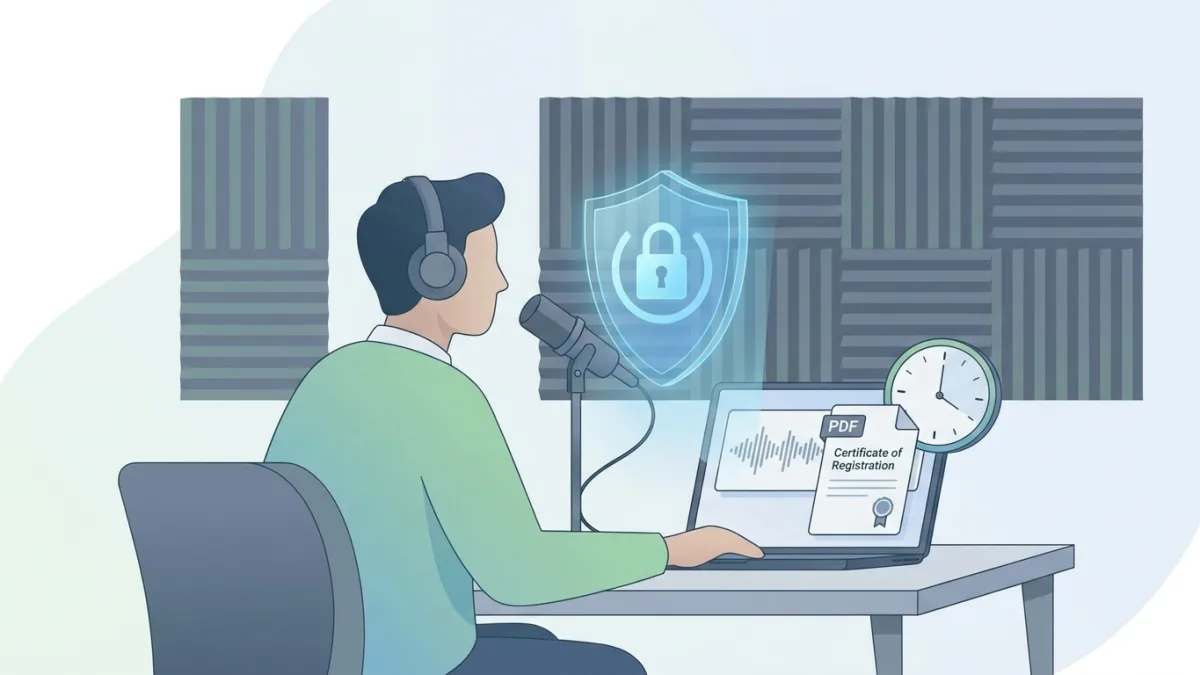
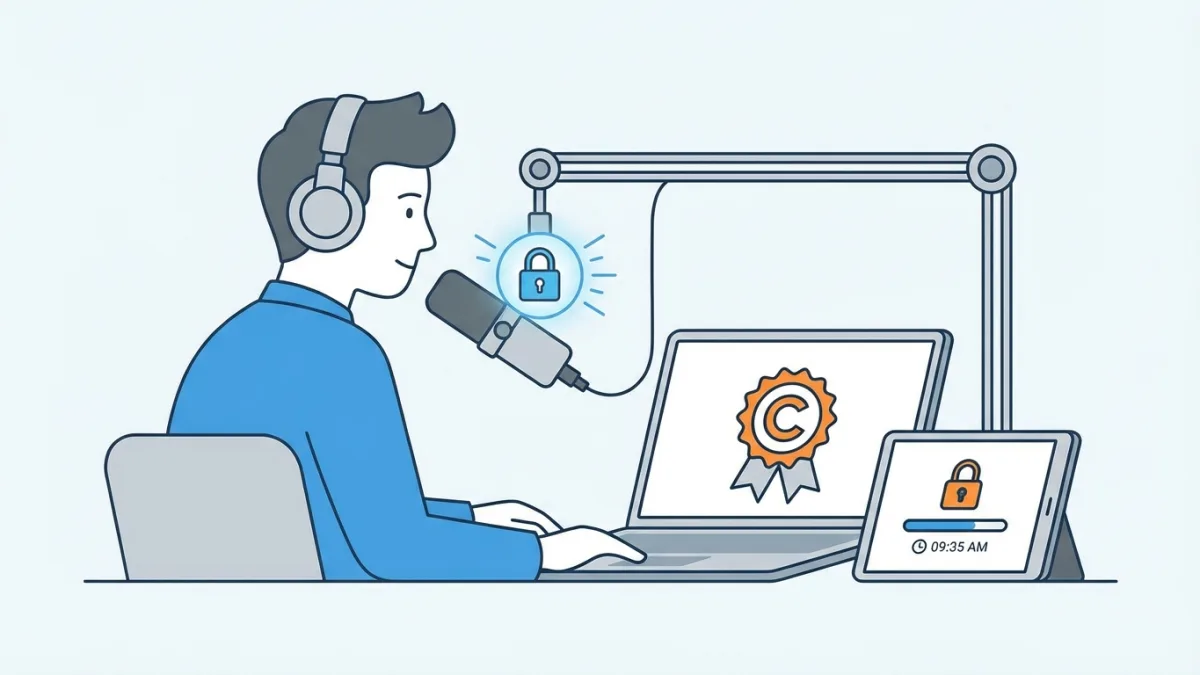
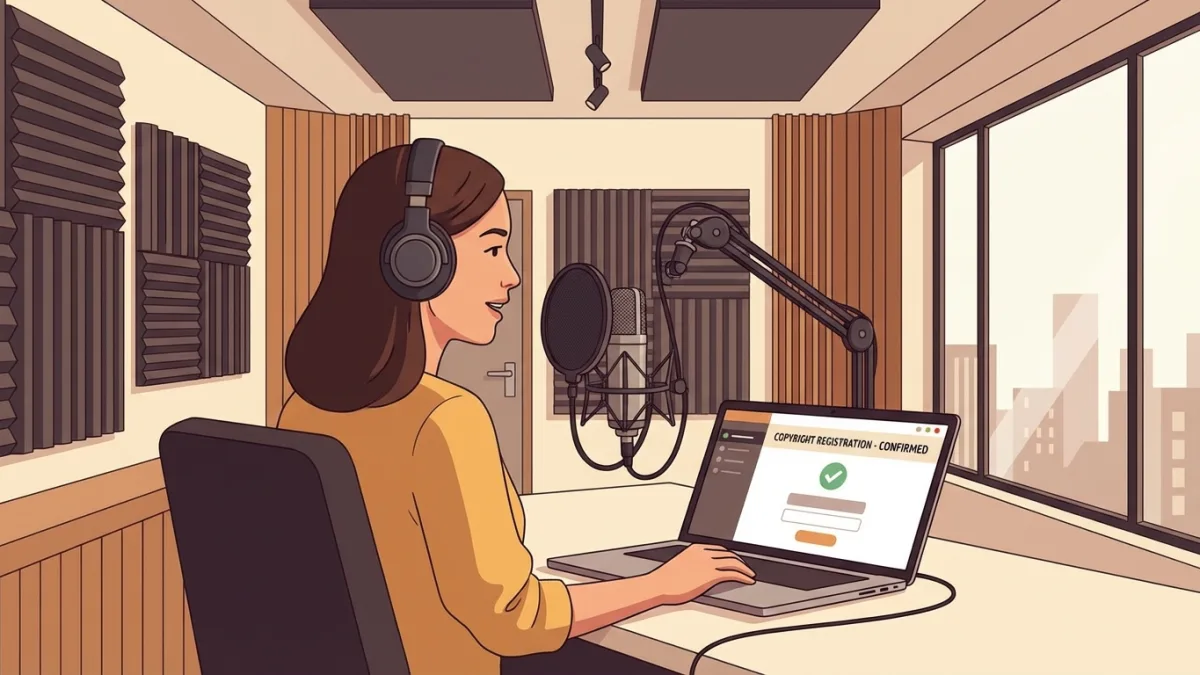
When you upload a podcast episode or script to a modern registration service, the file undergoes a specific technical process. The system generates a unique SHA-256 fingerprint—a digital signature unique to that exact file. This fingerprint is then combined with digital timestamping to create a precise record of the date and time the file was registered.
📋 Key takeaway: A digital timestamp links your specific audio file or script to a specific moment in time, providing strong evidence of your prior existence.
To dive deeper into the technical mechanics, learn more about Digital Timestamping and Copyright Evidence.
Protecting Your Podcast Brand Identity
Your podcast's brand is what listeners connect with before they even hit play. Protecting the visual and textual elements of your show is just as important as protecting the audio.
Securing Cover Art and Visual Assets
Your podcast cover art is the face of your show on platforms like Apple Podcasts and Spotify. It is highly susceptible to being copied by copycat shows trying to siphon your audience. To defend your visual branding, you should register your image files. For more strategies on protecting images, read our guide to Stop Social Media Photo Theft.
Safeguarding Show Notes and Website Content
Many podcasters publish extensive show notes, transcripts, and companion articles on their websites. This written content is excellent for SEO but is frequently scraped and republished by malicious websites. You can protect these texts by registering your website pages or text documents. If you notice your written content being stolen, use tools to Detect Website Plagiarism and Take Action.
The Elements of Podcast Protection
Here is a quick reference guide on how to protect the different components of your podcast:
| Podcast Element | Copyright Classification | Recommended Deposit Type | Protection Strategy |
|---|---|---|---|
| Spoken Audio | Sound Recording | Audio (MP3, WAV) | Deposit the final mixed episode before publishing via RSS. |
| Episode Script | Literary Work | Text / PDF | Register the script to protect the structure and written words. |
| Cover Art | Visual Work | Image (JPG, PNG) | Deposit the high-resolution artwork and logo variations. |
| Video Podcast | Audiovisual Work | Video (MP4) / YouTube | Register the video file or the specific YouTube link. |
| Show Notes | Literary Work | Text / Website | Register the text or the live URL of your podcast blog. |
Navigating Co-Hosts, Guests, and AI
Podcasting is often a collaborative effort, which introduces complex layers of ownership. Failing to clarify these relationships is a frequent source of disputes.
Co-Host and Guest Agreements
If you co-host a podcast, who owns the final audio? Without a written agreement, copyright law generally views the episode as a joint work, meaning both hosts have equal rights to use and monetize the content.
Similarly, guests own the rights to their spoken words. To avoid future complications, it is highly recommended to have guests sign a simple release form granting you the right to record, edit, and distribute their voice and likeness. Failing to secure these permissions is one of the major pitfalls to avoid; make sure you do not commit any of the 10 Critical Copyright Mistakes.
The Impact of Artificial Intelligence
Many podcasters now use AI tools to generate scripts, create cover art, or edit audio. However, content generated entirely by AI usually cannot be copyrighted, as copyright law requires human authorship. If you heavily rely on these tools, it is crucial to understand the AI Content and Copyright Rules Explained to ensure you actually own the rights to your show's assets.
Managing Music and External Assets
Using unauthorized music is the fastest way to get your podcast removed from major platforms.
Background Music and Intro Themes
If you use a popular song as your intro, you must have the appropriate licenses from both the composition owner and the sound recording owner. Most podcasters opt for royalty-free music or hire a composer to create an original theme. If you compose your own original music for the show, ensure you protect it properly; check out How to Protect Your Music in 2026.
⚠️ Warning: "Fair use" is highly misunderstood in the podcasting community. Playing a 10-second clip of a copyrighted song is not automatically protected by fair use and can result in immediate takedown notices.
Actionable Steps to Secure Your Podcast Content
Protecting your podcast does not have to be complicated or prohibitively expensive. Modern platforms have streamlined the process, allowing creators to secure their files in minutes.
How Registration Works
When you use a dedicated registration service, the process is straightforward:
- Prepare your files: Gather your audio files, video files, scripts, or cover art.
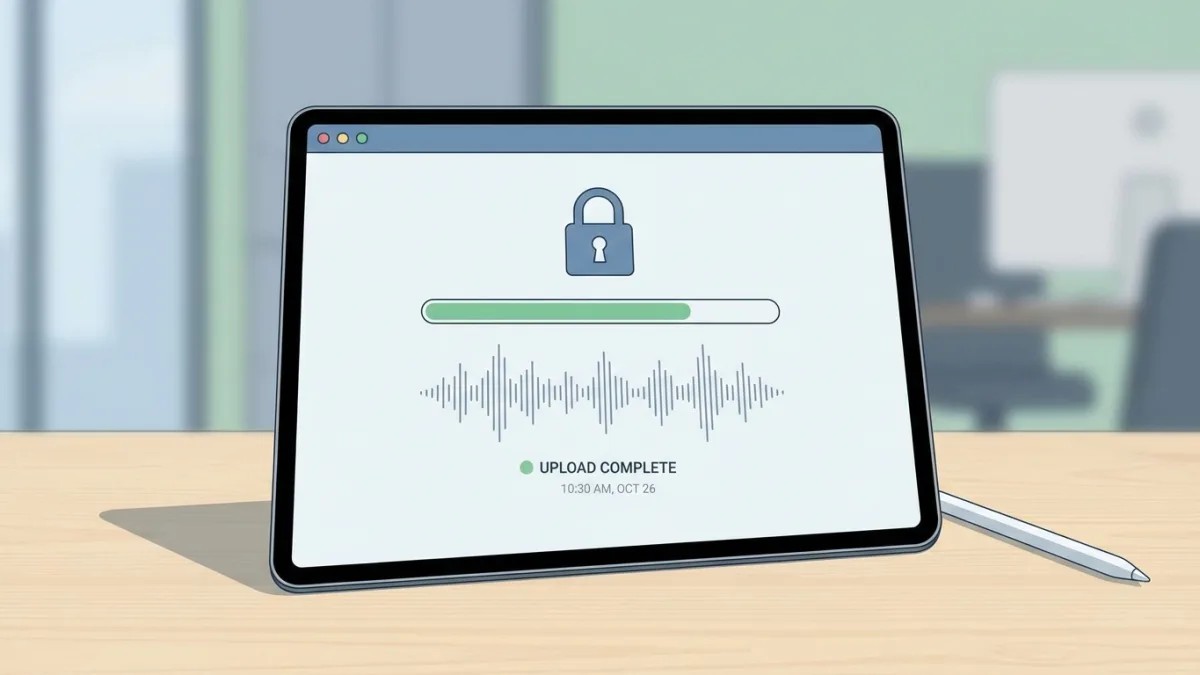
- Upload securely: The files are processed using server-side AES-256 encryption to ensure privacy.
- Generate the fingerprint: A unique SHA-256 fingerprint is created for each file.
- Receive your documentation: You receive a PDF certificate detailing the digital timestamping and the file's fingerprint.
This PDF certificate serves as your proof of prior existence. It allows third parties to Verify a certificate easily, adding a layer of professional deterrence against potential thieves.
Adapting Scripts and Books
If your podcast is an investigative series or a narrative audio drama, the script is your most valuable asset. The process of securing a comprehensive podcast script is very similar to How to Protect Your Book Before Publishing. You should register the written document before you even begin recording the audio.
Social Media and Promotional Clips
Podcasters rely heavily on social media to drive traffic. Snippets of your episodes shared on platforms like Instagram, Facebook, X (formerly Twitter), and TikTok are also vulnerable to being downloaded and reposted without credit. Fortunately, modern registration services allow you to deposit direct links to your social media content, securing these promotional assets.
Choosing the Right Protection Strategy
For creators looking to secure their episodes, Copyright01 offers a streamlined and accessible solution. New users can take advantage of 3 free deposits to secure their most important assets, such as their main cover art, pilot episode, and core show format.
For ongoing protection, podcasters can purchase credit packs starting from EUR 4.90, or opt for a subscription at EUR 9.90/month or EUR 79/year, which is ideal for shows releasing weekly episodes. All deposits are preserved for a minimum of 10 years, ensuring long-term access to your proof of prior existence.
If you want to evaluate how different services operate in this space, you can review the Best French Copyright Platforms Compared to understand the landscape of digital registration.
Additionally, creators who want to publicly assert their ownership can opt to list their protected works in our Public deposit registry, adding an extra layer of visibility and deterrence.
Conclusion
Your podcast is a valuable intellectual property asset. By understanding the different layers of copyright—from the audio recording to the cover art and scripts—you can implement a comprehensive protection strategy. Utilizing digital timestamping and securing a robust proof of prior existence empowers you to defend your brand, negotiate confidently with sponsors, and focus on what you do best: creating incredible audio content for your listeners.
Frequently Asked Questions (FAQ)
Can I copyright the title of my podcast?
Copyright law does not protect short phrases, names, or titles. To protect the specific name of your podcast, you would need to register it as a trademark. However, you can use copyright to protect the original cover art and logos associated with your title.
Do I need to register every single episode?
While your work is automatically protected upon creation, registering each episode provides individual proof of prior existence. For weekly or daily podcasts, a subscription plan is often the most cost-effective way to ensure every new audio file, video, and script is digitally timestamped before publication.
What happens if someone steals my podcast format?
Ideas and concepts cannot be copyrighted, only the tangible expression of those ideas. If someone copies your general theme, it may not be infringement. However, if they copy your exact scripted segments, specialized show notes, or original audio, having a registered proof of prior existence will be crucial in enforcing your rights.
Does this protection apply if my listeners are in other countries?
Yes. Because of the Berne Convention, the automatic copyright you hold upon creating your work is recognized in 181 countries. A digital timestamp provides international evidence of the exact date and time your file existed, supporting your claims globally.
Copyright01
Free copyright protection service. PDF certificate with SHA-256 fingerprint, recognised in 181 countries.